63 schools rebuilt, 81 nearing completion, ministry reports
Originally published by Jamaica Observer Read the original
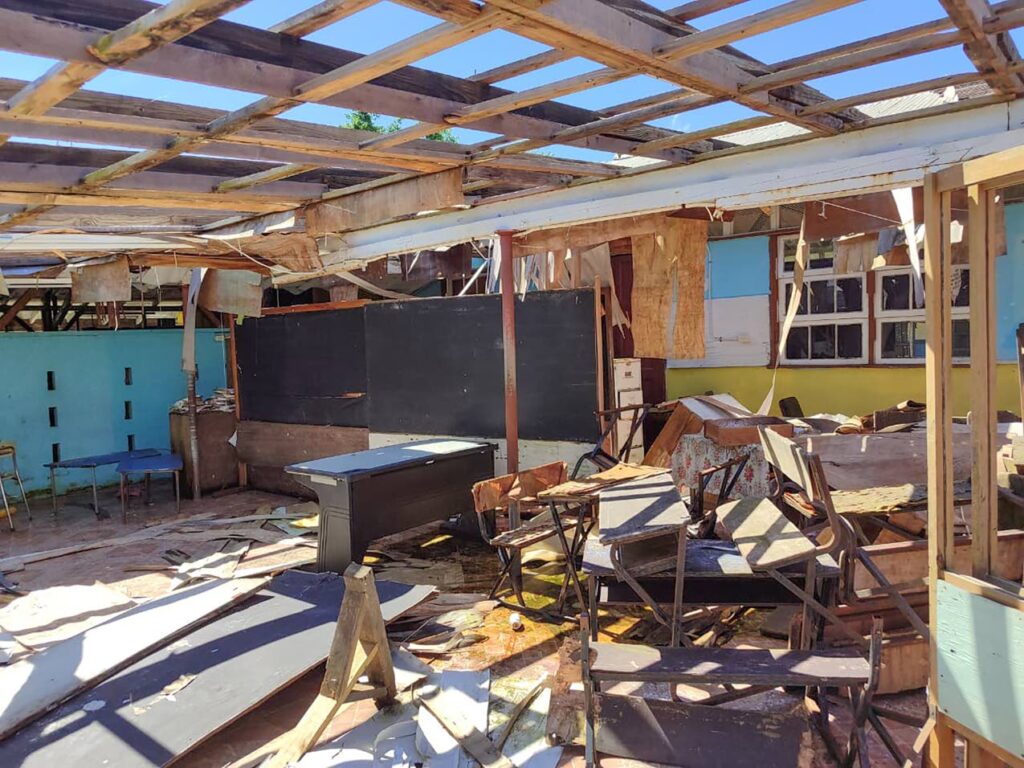
JUNIOR education minister Rhoda Moy Crawford says 63 priority-one schools damaged by Hurricane Melissa have been fully completed under the Government’s reconstruction programme, while another 81 are between 95 and 99 per cent complete.
She disclosed the figures at the quarterly press conference called by the Education Transformation Oversight Committee (ETOC) at The University of the West Indies’ Regional Headquarters on Thursday.
Crawford explained that the ministry is rebuilding schools to higher standards — including stronger roofs and improved ventilation — to reduce the risk of future storms causing similar damage.
A total of 682 schools across Jamaica were affected by the October 28, 2025 Category 5 hurricane, according to ETOC Chairman Dr Adrian Stokes, with the institutions placed into three categories based on severity of damage.
Priority-one schools were the most severely affected and received the highest level of attention under the recovery programme.
During the press conference Crawford reported that repairs to six priority-two schools and one priority-three school were completed.
The National Education Trust (NET) reported in September that 308 schools were classified as priority one, 265 as priority two, and 108 as priority three under the Hurricane Melissa school recovery programme.
At the time, NET Executive Director Latoya Harris Ghartey said all schools in the second and third categories were operational, although repair work was continuing, while the priority-one institutions required more extensive attention.
On Thursday Crawford said the reconstruction programme was taking longer in part because the ministry was not simply replacing damaged roofs and repairing buildings, but making improvements intended to protect schools against future storms.
“We’re not just rebuilding the schools in the same way we found them. We don’t want another hurricane to come — whether it’s [category] five, four, three, two or just sustained rainfall — and we are back where we started, because the same public will turn their attention to us at the ministry to say billions were spent and here we are again,” she said.
She identified shortages of skilled labour, difficulties obtaining building materials, and challenges with contractors as some of the factors affecting the pace of the work.
The improvements include stronger roofs, better windows, increased ventilation, and wheelchair access for students with disabilities.
Crawford also revealed that the ministry is seeking to make classrooms cooler through higher ceilings and the installation of ceiling fans.
Furthermore, Ghartey said on Thursday that the new building standards are based on the Jamaican building code, with additional measures intended to make school buildings more resilient.
She said the standards address ceiling height, window design, natural lighting, and cross-ventilation, while the minimum requirements for roofs had been raised following the hurricane.
“In Hurricane Melissa and its recovery, using those standards, we strengthened the structure where we could to convert a lot of our schools — that can take it — to slab because it’s more resilient, or we used steel frame where we can... For where we’re putting back zinc, we’re using longer sheets,” Harris Ghartey said.
She explained that the changes were also intended to make classrooms more comfortable for students and teachers, particularly given Jamaica’s tropical climate.
In the meantime, Crawford said the ministry had been visiting affected schools to monitor reconstruction and assess the work being done.
She said the ministry is determined to ensure that reconstructed schools can withstand future weather events, even as it works to return students to suitable learning environments.
“As the accountable officers we have to make sure we rebuild our schools in a more resilient way and, as fast as we can, we will try to exercise that. But time is not the number one driving factor for us at the ministry — it is making sure these schools are rebuilt in a more sustainable way,” she said.
Meanwhile, Stokes said $9.2 billion had been spent on the rehabilitation of schools damaged by Hurricane Melissa. He urged the ministry and its agencies to coordinate their efforts and draw on additional expertise where necessary to speed up the work without weakening oversight.
“We want the speed, we want the schools to be rehabilitated, we want the ministry to be agile. All of the capacity may not necessarily lie in one agency but we need to be smart enough to leverage capacity across the country and indeed to import the capacity, if necessary. We must get back our schools to an appropriate learning environment for our kids,” Stokes said.
