Caribbean News
Act now against El Nino or costs will double, UNDP warns
Nov 13, 2026 · Jamaica Observer
Originally published by Jamaica Observer Read the original
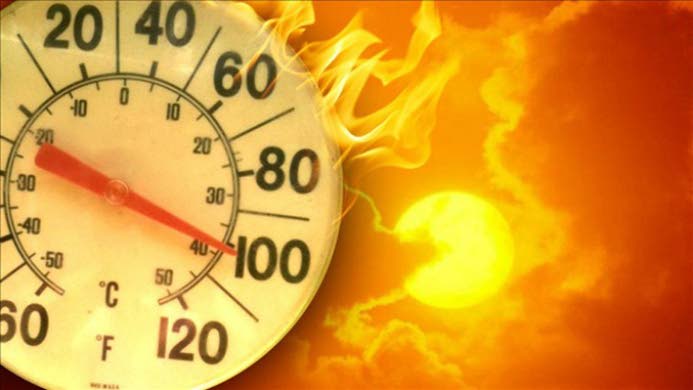
ANTALYA, Turkey (AFP) — Acting now to counter the devastating effects of the El Nino phenomenon will cost half as much as waiting, the head of the UN Development Programme told AFP Friday.
Alexander De Croo spoke to AFP at the UN climate conference in the Turkish resort of Antalya. One of the most contentious questions being debated here is how to fund action to meet that challenge.
"The need to hedge the impact of El Niño is $36 billion if you do it now," said De Croo.
"If you don't do it, the cost will be $73 billion. So the cost would be two times as high," he added.
"And that's the choice, right? Do we want to anticipate and help people or are we going to wait and live with the consequences?"
El Niño is a climatic phenomenon that comes every two to seven years, heating the waters of the Pacific Ocean from springtime. That causes major changes in wind patterns and air pressure, and rainfall across the world in the subsequent months.
This latest El Niño cycle has been exceptionally strong, disrupting weather around the globe.
How to fund action to meet the challenges raised is one of the most contentious questions at the COP31 climate talks.
"Not acting is the most expensive climate policy that you could have," warned De Croo.
He called on delegations and major players such as the International Monetary Fund to rise to the challenge by financing efforts by developing countries most vulnerable to El Nino's effects to mitigate its effects.
That kind of investment would save lives, protect crops and infrastructure and actually save money in the long term, he argued.
- Complex equation -
Developing countries want more financial support for this kind of work from richer nations because of their historic responsibility for global warming.
That is no easy ask, given the state of public finances in many wealthy countries, which are struggling with their debt burden and the costs of various wars, De Croo acknowledged.
But it was nevertheless a good investment, he argued: "Tackling climate insecurity also helps in other types of insecurity."
It is a complex equation, he argued, "especially for developing countries. Since Covid, they've never had time to recover".
After the Covid pandemic came the economic upheaval unleashed by the war in Ukraine and after that the closure of the Strait of Hormuz, "and now El Nino, and now the cost of financing".
And the cost of each compounded on top of the other, he added. The aim, then, is to work with developing countries to try to soften the financial blow.
That is part of the UNDP's ongoing work, to try to get money to the developing countries worst hit by El Nino.
These same countries regularly denounce the reluctance of public and private funders to help them without burying them in debt.
"The cost of capital sometimes is high, because there is a high level of uncertainty," De Croo acknowledged.
"So to curb that, you do policy reforms, you make sure that there is a legal framework which is stable... I mean, investment is not coming to places where there is no trust.
"So increasing the trust is something we do, I mean we work today with 47 countries in that domain."
A report published this week by the UNDP noted calculations by the African Development Bank of just how costly the current El Nino cycle could be.
It put the damage at $10 billion to $20 billion in African countries.
The United Nations Economic Commission for Latin America and the Caribbean estimated that El Nino could cause cumulative GDP losses of at least two per cent over three years.
That, they said, would push an additional 4.8 million people into poverty.
It is not too late, De Croo stressed. "We can still do it.
"We need to shift much more towards adaptation investments."
And however much that costs, the price of doing nothing will be "much, much higher".
