Barbados presses case for fairer global climate financing
Originally published by Jamaica Observer Read the original
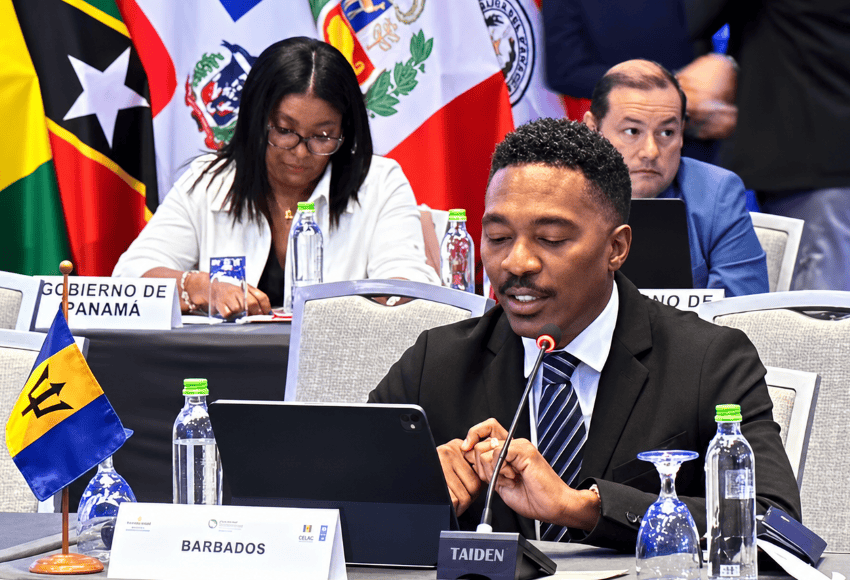
BRIDGETOWN, Barbados (CMC) — Barbados is calling for innovative development financing to be matched with institutional reform to help vulnerable countries withstand climate and economic shocks.
The country's Minister of People Empowerment and Elder Affairs Adrian Forde made the appeal while addressing the 18th Ministerial Forum on Development in Latin America and the Caribbean in Panama City, Panama, on Wednesday.
Speaking on the theme, “From Commitment to Action: State Capacities and Financing for Resilient Development”, Forde highlighted the challenges facing small island developing states (SIDS), particularly the shortfall in funding for climate adaptation.
He said annual global adaptation financing needs are projected to reach between US$310 billion and US$365 billion by 2035, while recent international public finance for adaptation amounted to only US$31 billion.
Forde said the shortfall disproportionately affects women, children, older people and other vulnerable groups.
“Through the Bridgetown Initiative, Barbados has called for a fairer and more accessible international financial architecture. Our position is simple: the countries least responsible for these crises should not carry most of the cost of resilient development,” he said.
Forde said Barbados had moved from advocacy to action through innovative financing arrangements, including a debt-for-nature conversion completed in 2022 and a debt-for-climate-resilience conversion in 2024 to support water security and climate adaptation.
“Today, we are pursuing debt-for-health conversions, together with multilateral development bank guarantees and bilateral infrastructure financing. We believe innovative financing can also serve social development,” he said.
However, Forde cautioned that access to financing alone would not guarantee better outcomes, arguing that countries also needed institutions capable of translating resources into improved services for their populations.
He said assessments of Barbados’ social protection system, conducted with the Caribbean Development Bank and the Inter-American Development Bank, identified strengths but also fragmented services, weak coordination, gaps in coverage and the need for better data and improved responses to crises.
In response, the Government established the Social Empowerment Agency in January 2026 to bring together agencies serving vulnerable families, children, older people and persons with disabilities.
Forde said the agency was intended to provide more integrated, client-centred services and strengthen the country’s ability to respond to economic shocks and natural disasters.
“The lesson from Barbados is clear. Innovative financing and institutional reform must advance together. We cannot finance resilient development without institutions that can deliver it, and institutions cannot transform without sustainable financing,” he said.
The forum, which also included the seventh meeting of the Presiding Officers of the Regional Conference on Social Development in Latin America and the Caribbean, concluded on Wednesday.
