BEYOND THE LENS
Originally published by Jamaica Observer Read the original
WHEN Dominica’s Olympic champion Thea LaFond and Trinidadian journalist Dennis Allen first discussed the new European broadcast guidelines, they pointed out a tricky puzzle: While tight, suggestive camera angles objectify female athletes, those same viral moments often help competitors build a following and secure paying sponsor deals.
Published by the European Broadcasting Union (EBU) and European Athletics, the Raising the Bar guidelines instruct camera operators to avoid extremely low-angle shots from behind, limit unnecessary slow-motion replays during athlete preparations, and use wider shots that focus on technical execution over physical body parts.
For the women inside and around the sport every day, this debate goes much deeper than camera angles. It touches on what they describe as a frustrating double standard — a female athlete’s financial survival often depends on her looks, even when her hard work and talent should be doing all the talking.
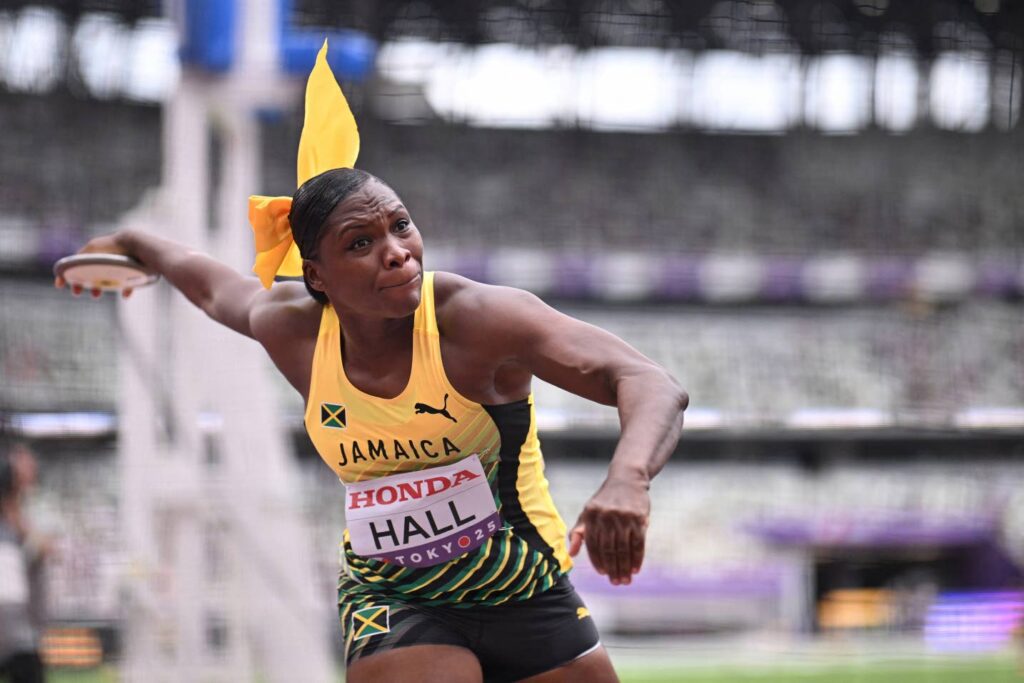
Reigning Commonwealth Games champion and national discus thrower Samantha Hall knows this struggle first-hand. She sees a clear gap in how male and female athletes are treated.
“I understand both sides of the argument,” Hall told the Sunday Observer. “As athletes we do like to see ourselves — especially for field events, we can see where we went wrong with our technique based on pictures — but at the same time, we don’t want to be seen as sexual figures. I hate that for women, this is how we have to earn money — that we have to look sexy, and not for our talents. For men, they don’t really have to do much; it’s just about their talents. They’re getting paid for their talents but for women, it’s not enough. You have to have that image with it.”
Hall’s words point to a wider issue in sports. While male athletes build their careers purely on distances, times and medals, women are expected to win medals and meet a specific standard of beauty.
Long before the cameras zoom in on the field, female track stars face non-stop public criticism over their appearance—from make-up and hair to body art. Criticism male athletes rarely hear.
“I’ve seen it for other athletes, especially like Elaine Thompson-Herah and Ashanti Moore, because they have tattoos in various places on their bodies,” Hall said. “I’ve seen comments like, ‘Why do they have these tattoos? It’s the reason why they can’t perform well.’ And I’m like, ‘That has nothing to do with their performances.’ But yeah, you always have people criticising females based on how they look — like their make-up is off, ‘Her hairstyle doesn’t look neat on her’, ‘Her outfit doesn’t fit her’. They’re always judging female athletes based on their looks.”
Even off the screen, off-hand comments can be intrusive. Hall shared that people sometimes approach her to talk about her physique rather than her throws.
Yet Hall handles this pressure with incredible grace. Rather than letting outside noise get to her, she chooses to own her style and feel confident on her own terms. “It does affect me, but not in a negative way,” she said. “I want to impress my fans, so if this is what the fans want then I have to dress to impress them. At the end of the day, it’s all about fashion; they like your sense of style. For Shelly-Ann [Fraser-Pryce], it’s all about her wigs; they like her style of wigs. For me, if they talk about my bottom it doesn’t really affect me in any way. I don’t feel bad about it. I try to dress appropriately, but at the same time I want to feel sexy as well.”
Hall says other broadcasters around the world will eventually adopt Europe’s cleaner camera rules by 2028, to keep athletes respected and comfortable. But media experts say changing camera angles won’t fix deep-rooted cultural habits overnight.
Jamaica’s Elaine Thompson Herah reacts as she crosses the finishing line to win the women’s 4x100m relay final during the Gaborone 26 World Athletics Relays at the National Stadium in Gaborone on May 3, 2026. (Photo: AFP)
Melena Helias, a Kingston based French sports journalist who has covered track and field for both local Jamaican outlets and France’s premier sports newspaper L’Équipe, welcomes the new European guidelines as a solid first step. “My first reaction was quite positive,” Helias told the Observer. “That said, it’s a shame that it has come to the point where a guide on this is needed but I commend EBU Sport for their work. It won’t solve the problem of the sexualisation of sportswomen, or of inequality and stereotypes in sport, but it’s a good start.” Helias reminds us that women have had to fight for basic space in sports history. Because track and field doesn’t offer massive multimillion-dollar contracts like football or basketball, athletes often have to rely on their public image to survive financially. “A male athlete attracts sponsors thanks to his results and his personality, among other things,” Helias said. “A female athlete, on top of her results, needs to be perceived as beautiful. That’s precisely the paradox: There isn’t that much money in athletics compared to other sports so you have to capitalise on what sells. And I certainly don’t blame female athletes who use their assets or their beauty on social media to attract sponsors; it’s actually quite logical. I’d just like appearance to be a less omnipresent criterion in the way women are perceived.” Speaking up against objectification isn’t always easy, either. Even inside the press box Helias admits that as a woman in a heavily male-dominated career, finding the courage to call out inappropriate remarks can be a challenge. “Unfortunately, no,” Helias said when asked if she feels she has a safe platform to speak out. “I’d even say that I’ve heard, more than once, remarks that outraged me — comments about female athletes — but I didn’t dare say anything. It’s not always easy to find your place in sports journalism; we’re still very much a minority. It’s one thing to have confidence in your abilities and knowledge but it’s another to assert yourself, stand up for yourself, and express your opinions. I’m hopeful that all of this will improve, but it won’t happen overnight.” When asked if Caribbean broadcasters will follow their European peers, Helias says protecting young athletes — especially minors competing in high school meets — should be a top priority. Ultimately, she believes that while better camera rules help, the real change has to happen inside the minds of the people watching. “We can change the guidelines but social norms, mentalities, what is or isn’t acceptable, that’s another matter.”Melena Helias is a French journalist, based in Kingston, and has covered athletics locally and internationally since 2018. (Photo: NAJPHOTOZ)
