Boosting the battle against breast cancer
Originally published by Jamaica Observer Read the original
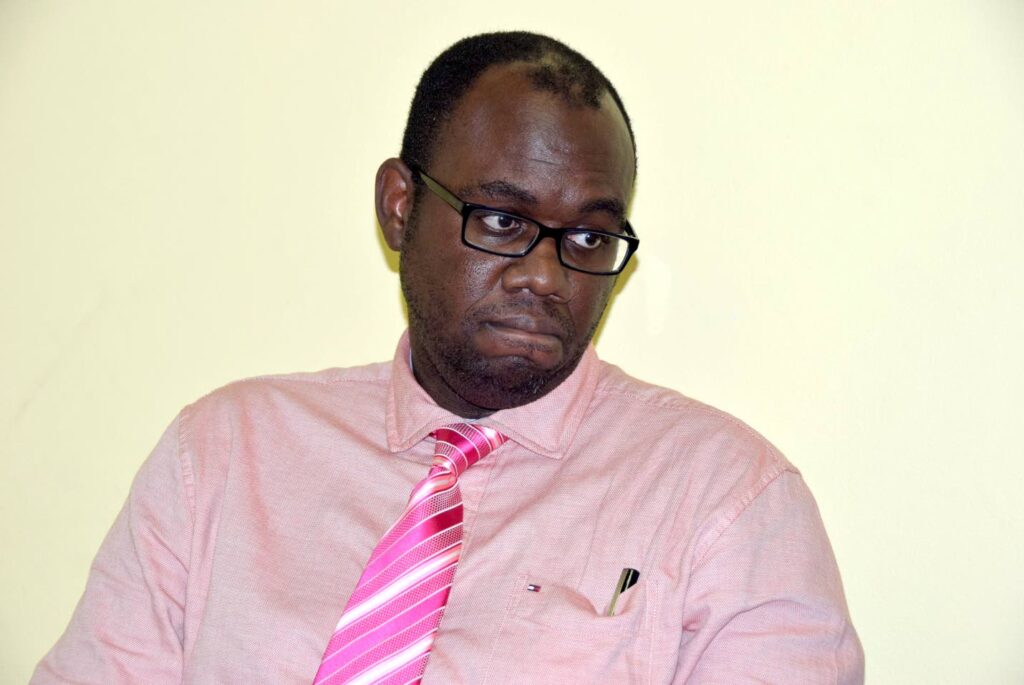
WITH the increasingly high number of Jamaican women affected by breast cancer, and at an earlier age than the global average, Government Senator Dr Elon Thompson has proposed a five-part plan, headed by a national, organised screening programme, to tackle the problem that is devastating families.
Thompson, a trained urologist who is at the forefront of prostate cancer awareness and treatment, unveiled his plan in the Senate last Friday when he rose on the adjournment to talk about an issue that has personally affected him — he revealed that three of his aunts were diagnosed with breast cancer, two of whom have since died.
He told the Senate that, “awareness without capacity breeds frustration. So I respectfully put forward five practical asks”.
The lawmaker said the organised screening programme is not a campaign, but rather “a programme with a defined target population, call and recall, a central register, and published coverage figures each year so this Senate can hold all of us accountable”.
He also proposed a public audit of mammography capacity, asking, “How many machines are there in our public hospitals today? How many are working? What are the waiting times by parish?
“We cannot fix what we do not measure,” he told the Parliament.
Thirdly, Thompson wants an expedited decision on the Jamaica Cancer Society’s grant application for a replacement mammography machine. He also wants a “stable arrangement” so the society, which he noted carries a national burden, is not left to rely on telethons for core equipment.
Significantly, Thompson wants a guaranteed pathway from abnormal result to treatment.
“Clear time standards for biopsy, diagnosis, and the start of treatment, supported by patient navigators, so that no woman with a suspicious finding is lost in the system,” he said.
The fifth plank in the plan is what Thompson called “a strengthened cancer registry and support for local research”. This, he said, would help to explain why Jamaican women present younger and with more aggressive disease, so national guidelines reflect Jamaican realities.
Thompson said his commitment was to see through the creation of a policy paper on cancer screening, remarking, “I do not intend simply to make requests and sit down. I wish to place on record today my intention to support the development of a policy paper to be drafted with colleagues in medicine, public health, and civil society, setting out practical, costed recommendations to improve cancer screening in Jamaica.
“That paper will build on the five points I have outlined. It will look at screening, not only for breast cancer, but for the other cancers we can detect early, among them cervical, prostate, and colorectal cancer. It will examine how we finance screening equipment and keep it working, how we reach rural communities, how we use our health centres and the National Health Fund more effectively, and how we partner with organisations such as NGOs [non-governmental organisations] and private organisations,” he said.
Thompson told his fellow lawmakers that it was his intention, in short order, to seek to move a motion for the establishment of a joint select committee of Parliament to examine and deliberate upon the policy research and its findings, with a view to informing meaningful recommendations for consideration and action.
The uncomfortable truth is that Jamaica still does not have a national, organised breast cancer screening programme.
“I trust that this initiative will receive the support of colleagues on both sides of the aisle in recognition of the importance of the matter before us,” he said. Despite the increasing numbers and mortality rate, Thompson insisted that “none of this is beyond us. We have the clinicians. We have the civil society partners. What we need is coordination, funding, and political will”. Pointing out that breast cancer touches nearly every family in Jamaica, Thompson acknowledged the importance of October being observed as Breast Cancer Awareness Month. “Across this country our buildings, our offices, and our churches are turning pink. And that is good. But I want to say plainly...that pink is not a policy. Ribbons do not read mammograms. Awareness must now become access,” he insisted. Getting personal, the senator and medical doctor said, “Permit me to speak as a nephew.” He then detailed how his father’s roots are in Cornpiece Settlement, Hayes, Clarendon, where two of his father’s sisters — his aunts — “women who helped to shape the man I am, were diagnosed with breast cancer. “And on my mother’s side, her youngest sibling, my aunt who made her life in the United States, received that same diagnosis. Three aunts, three women from one family. Two of them are no longer with us. “I have sat with my family through the waiting, the treatment, and the grief, and I have noticed something that every Jamaican family touched by this disease will recognise: The question is never only ‘Why her?’ It is ‘Could it have been found sooner?’ “ Thompson continued. Stating that he carries their memory with him in the Senate, Thompson said: “When I speak of statistics...I ask this Senate to remember that behind every number is an aunt, a mother, a sister, a daughter from a district like Cornpiece or a community like yours.” “Every week I sit across from patients and families receiving news no one wants to hear. The hardest conversations are not about disease that could not be found, they are about disease that was found too late,” he added. Thompson said the scale of the problem should give senators cause to pause and reflect. He shared that in 2022, according to the Global Cancer Observatory, Jamaica recorded 1,327 new cases of breast cancer among women, about 35 per cent of all cancers in women. In that same period, roughly 684 Jamaican women died of the disease — nearly two women every single day. “Breast cancer remains the leading cause of cancer death among Jamaican women. And our case fatality rate — the proportion of women diagnosed who go on to die of the disease — has been estimated at between 41 and 51 per cent. In countries with organised screening, that figure is far lower,” Thompson said. He also noted that younger women are being diagnosed with the debilitating disease, pointing out that the average age at presentation in Jamaica is about 54 years, eight years younger than in the United States. The senator also shared data from the Kingston Public Hospital, which shows that about 60 per cent of women presenting with breast cancer are between 25 and 59 years old. “These are women in the prime of their working lives, holding our households, our classrooms, and our businesses together. Perhaps most troubling, approximately 40 per cent of Jamaican women with breast cancer present with locally advanced disease. That is not a biology problem, that is an access problem,” he said.
Thompson said despite the numbers, the uncomfortable truth is that Jamaica still does not have a national, organised breast cancer screening programme.
“We have guidelines, we have dedicated NGOs, we have generous corporate partners, but we do not have a system that invites every eligible woman to be screened, tracks whether she was screened, and ensures that an abnormal result leads quickly to diagnosis and treatment,” he pointed out.
Thompson acknowledged what he said was the the important work of the Ministry of Health and Wellness, the National Health Fund, and civil society partners in improving access to cancer screening and treatment. He cited that initiatives such as the mammography subsidy represent meaningful progress in reducing financial barriers to screening. But, he said, affordability alone does not guarantee access, particularly where the services themselves are unavailable.
He lamented that this October, the gap is not theoretical as the Jamaica Cancer Society, which for 70 years has carried a disproportionate share of the nation’s screening load, entered Breast Cancer Awareness Month without a single functioning mammography machine. Thompson said the society’s only machine has been out of service since August 29 and that replacing it will cost more than $35 million.
“Think about what that means. We are spending this month urging women to get screened while the very institution so many of them rely on has had to turn them away and send them elsewhere. A woman in Hayes, Clarendon, or Westmoreland, or St Thomas should have access to a mammogram,” he said.
Speaking as a urologist, Thompson, who recently used the Senate to urge men to get screened for prostate cancer, noted that breast cancer does occur in men.
“It is rare, but it is real, and because men do not expect it, it is often found late. Any man who finds a lump in the chest, a change in the nipple, or discharge must have it examined,” he said.
And the government lawmaker said there is a further link that families need to understand. He explained that the same inherited gene mutations that raise a woman’s risk of breast cancer — BRCA1 and BRCA2 — also raise a man’s risk of aggressive prostate cancer.
,“A family history of breast cancer, like the one in my own family, is therefore not only the women’s business — it is the whole family’s business. When we talk about cancer at home, the men need to be listening too,” he said.
Thompson closed by urging every woman listening to: “Know your body. Know your family history. If you notice a lump, a change in shape, skin dimpling, nipple changes or discharge, do not wait, and do not let fear or cost stop you from asking for help. Speak to your doctor about when screening is right for you, especially if breast cancer runs in your family.”
To employers, he said: “Give your staff the time to get screened. A morning off for a mammogram is cheaper than losing a valued colleague.
“And I encourage all Jamaicans to support the efforts of our civil society partners this month, including Reach to Recovery’s Pink Run at Emancipation Park on October 25th and the Jamaica Cancer Society’s work to restore its screening services.
“I end by honouring the survivors, the warriors still in treatment,; the families who have lost a mother, a sister, a wife, a daughter, or an aunt; and the nurses, doctors, technicians, and volunteers who stand with them.


