Brazil votes in nail-biter polls closely watched by Trump
Originally published by Jamaica Observer Read the original
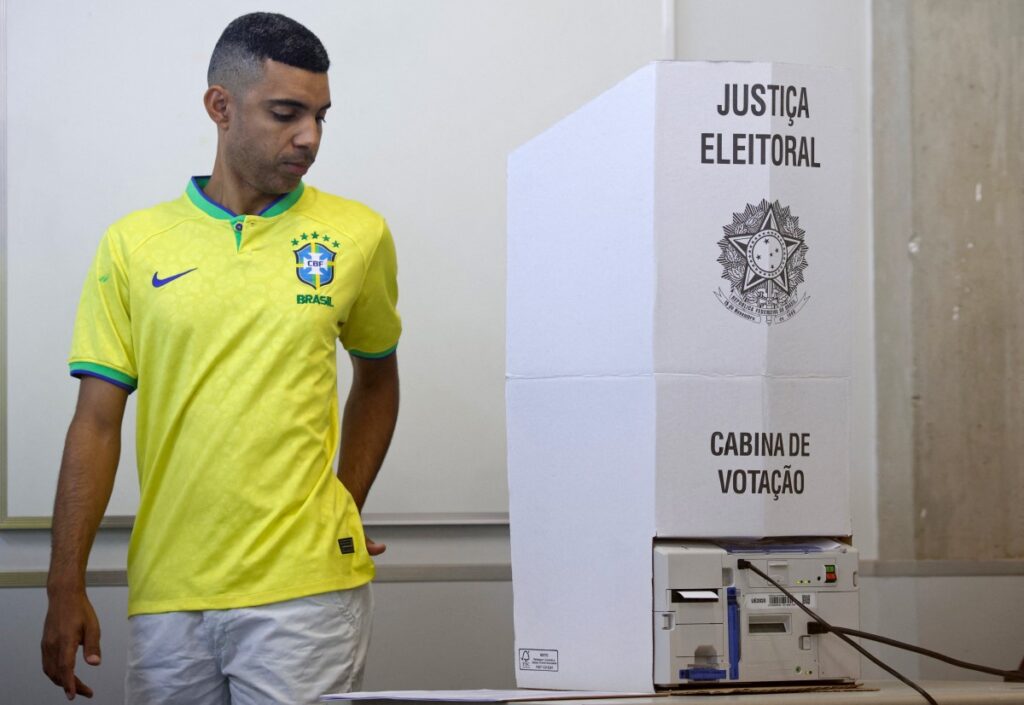
BRASÍLIA, Brazil (AFP) — Brazilians started voting Sunday in a knife-edge race between President Luiz Inacio Lula da Silva and Flavio Bolsonaro, in an election to decide whether Latin America's biggest nation follows a regional swing to the right championed by US President Donald Trump.
From villages deep in the Amazon rainforest to the agricultural heartlands in the south and sprawling urban favelas, Brazilians are facing a familiar cast -- with many forced to pick who they least dislike.
At almost 81 years old, the veteran leftist Lula is seeking a fourth and final term in office, warning voters that Brazil's sovereignty is at stake due to pressure from Trump.
"The people will have to choose between strengthening the democratic regime and barbarism," Lula said after voting in the state of Sao Paulo.
He is facing a tough battle with right-wing senator Bolsonaro, 45, the son of former president Jair Bolsonaro, who is serving a 27-year sentence for attempting a coup after his failed 2022 re-election bid.
Flavio Bolsonaro has centered his campaign on a message of change, while vowing to crack down on crime, a major concern among voters.
"Brazil cannot bear any more suffering, such high taxes, so many women killed. I want to free the Brazilian people," he said after voting in Rio de Janeiro.
Opinion polls show neither candidate is likely to score more than the 50 percent -- the threshold required to win in the first round on Sunday and are neck-and-neck in an October 25 runoff.
Both candidates have extremely high rejection rates in the deeply polarized nation.
"We're basically in a situation where we're voting for the lesser of two evils," said Janaina Oliveira, 45, a financial administrator in Rio de Janeiro, who picked Bolsonaro.
Oscarina de Oliveira, a 62-year-old caregiver, told AFP she had planned to vote for Lula as she always has, but "when I got there, I switched to Bolsonaro. Just to see what happens, to see if anything changes."
Brazil uses electronic voting machines, and results are expected within a few hours after polls close at 5pm (2000 GMT).