CAFFE in crisis
Originally published by Jamaica Observer Read the original
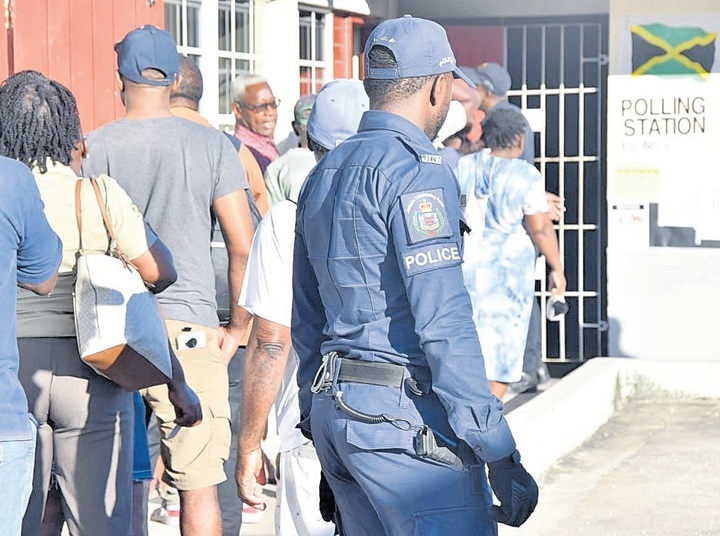
AFTER almost 30 years of monitoring elections in Jamaica, the internationally acclaimed agency Citizens Action for Free and Fair Elections (CAFFE) is now cash-strapped and desperately in need of assistance from the private sector to continue observing the country’s democratic process.
CAFFE is still navigating the financial fallout from the Donald Trump Administration’s 2025 withdrawal of United States Agency for International Development (USAID) funding from non-governmental organisations globally.
Speaking at a Jamaica Observer Press Club at the agency’s New Kingston office last Thursday, CAFFE Chair Grace Baston said its financial position has deteriorated further since the September 2025 General Election.
For that poll, CAFFE had initially aimed to recruit 1,000 volunteers on a budget of approximately $15 million.
Frozen funding, however, forced the organisation to halve its target to about 500.
The shortfall has heightened concerns about its capacity to monitor future local government elections, by-elections, and the country’s next general election.
Baston warned that such a setback could erode the democratic gains the country has made.
“There is no doubting the work of the ECJ (Electoral Commission of Jamaica) and the EOJ (Electoral Office of Jamaica).
There has been remarkable progress in those electoral processes; we are the first to give credit.
That being said, we believe strongly [that a] democracy not monitored is democracy threatened.
“CAFFE’s presence has made a huge difference.
The respect people have for the CAFFE observer entering a polling station; the confidence they have in what we are going to say, or what we pronounce about the quality of the conduct of the poll — it is extremely important.
[If] you ease up on that you are inviting a return to what was before,” she insisted.
The election watchdog was established in 1997 amid lingering political strife and fears that Jamaica’s democratic process could be undermined, based on the experiences in the 1980s and early 1990s.
Although the country has moved beyond those dangers, Baston said new threats have emerged, demanding continued vigilance.
“Once, the big threat was overvoting in a polling station — [you have] 100 people on the list and 150 people voting — or the stuffing of a box.
There are other threats now, and we are working hard to make sure we can monitor those.
They are difficult.
One of the new things coming on that we have to think about is going to be precisely this AI (artificial intelligence) that you hear talked about so much,” Baston said.
“How are elections going to be free and fair if campaigning is going to involve the use of deepfake videos? How are we going to hold politicians accountable to make sure that is not happening? The public is being duped because of the power of artificial intelligence in political campaigning.
I am saying not only do we need to be there to prevent the recurrence of the old things that used to threaten our democracy, but there are new threats that we must be prepared for,” charged Baston.
CAFFE Deputy Chairman Anton Thompson also named voter apathy as a major threat to democracy, noting that the agency had established clubs in schools on a $5-million annual budget to foster political awareness and engagement among young people.
However, he told the Sunday Observer that budget cuts have since forced approximately 85 per cent of more than 40 clubs to close.
“We have about half a dozen active clubs, which is far less than we had when we launched this.
And when we launched this with some funding we were able to hire somebody to energise the schools, talk to them, arrange for them to meet.
I met with several schools online — because it was still COVID time — encouraged them, and told them what we were trying to do,” he said.
Thompson added that turnover among school and student leaders had also contributed to the closure of some clubs.
Additionally, many of CAFFE’s volunteers are sixthform students who are trained by the agency at their respective schools and receive a stipend for their civic service.
Baston added that the enthusiasm and dedication that she had seen from engaged students emphasised the need to keep the programme going.
“This is 2026.
The average young person can’t take himself or herself away from their phone for five minutes,” she said.
“When you see these young people making their way to polling locations at six o’clock in the morning because they take so seriously their duty to be there to observe the set-up of the poll.
Once you engage them; once you begin raising their awareness and their consciousness of how precious, how hard-won our democracy was, how fragile it is; once you begin engaging them, their energy and their interest levels are so impressive.
That is why the lack of the resources to have the clubs active is so painful, so difficult,” lamented Baston.
For his part, former Chairman Dr Lloyd Barnett warned that the volunteer count, having been reduced for the September 2025 General Election, could shrink further unless the organisation secures additional funding.
“We are not going to get it from the European Union or USAID anymore.
It’s clear that just like the election monitoring, it has to be Jamaicans.
And as we have said, we have been grateful to Jamaicans...
the commercial interests have been helpful [but] we need more help because of the absence of a major part of our funding from the international sources,” he explained.
“That is why we have been appealing to them.
We have a strong programme in which we are trying to convince them that it’s in their interest, and in the interest of all Jamaica, that they should participate,” added Barnett.
He maintained that the right to choose the country’s leadership is a cornerstone of democracy, and urged the private sector to help ensure that CAFFE’s election-monitoring work does not disappear.
“The electoral system is at the foundation of democracy, and democracy means the Government is of the people, by the people, for the people...
It is in everybody’s interest that democracy should be preserved, and the preservation of elections is the first step in preserving democracy.
You can’t have a democracy without free and fair elections, and that’s why we can’t afford to have CAFFE die,” charged Barnett.