Cemex begins US$52m NMIA apron reconstruction
Originally published by Jamaica Observer Read the original
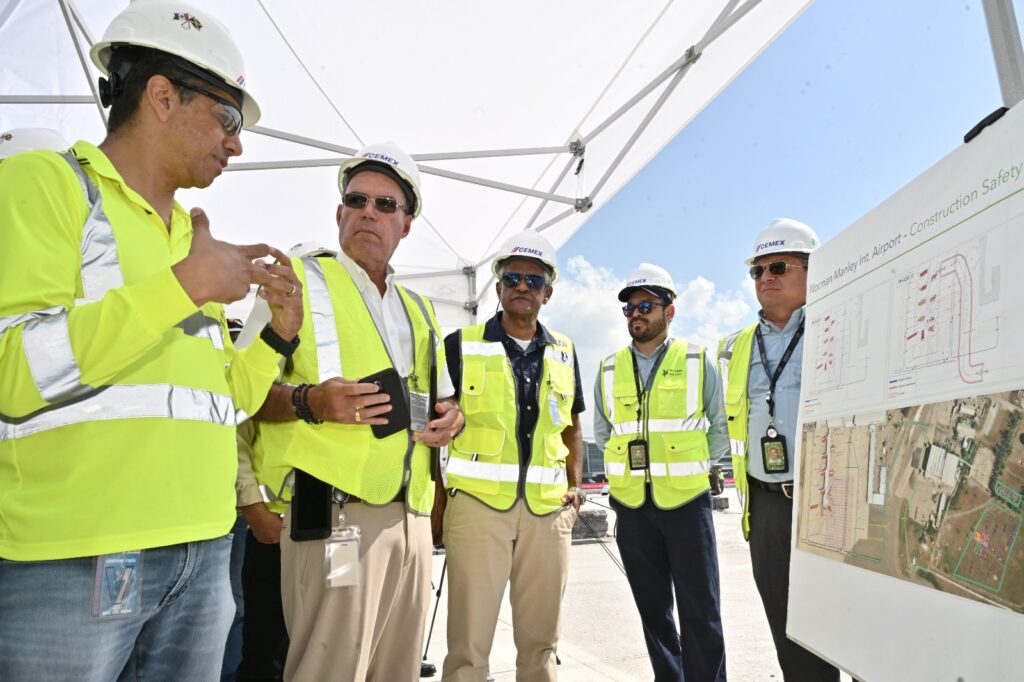
KINGSTON, Jamaica — Cemex has begun the first phase of a US$51.85 million (approximately J$8.1 billion) project to reconstruct and upgrade the aircraft apron at Norman Manley International Airport (NMIA) in Kingston, marking a major step in the airport's planned modernisation.
The project, which is part-funded by the Airports Authority of Jamaica (AAJ), is being led by PAC Kingston Airport Limited (PACKAL), operator of NMIA and a subsidiary of Mexican airport operator Grupo Aeroportuario del Pacífico (GAP).
The project will see the full reconstruction of NMIA's 109,270-square-metre operational apron, with Cemex serving as general contractor. The apron is where aircraft park to load and unload passengers and cargo, refuel and receive ground services.
Works under way include demolishing sections of the existing concrete pavement and replacing them with new concrete slabs. Construction is being carried out in eight phases to keep the airport fully operational.
During a tour of the project on September 15, Cemex Jamaica Country Manager and Managing Director of Caribbean Cement, Jorge Martinez, said the project is providing an opportunity to introduce advanced construction technology to Jamaica while strengthening Cemex's partnership with PACKAL.
"I feel very proud of this partnership," Martinez said, noting that the technology being deployed could also be applied to highways, rural roads and other infrastructure projects in Jamaica. He also welcomed the transfer of technical knowledge between Cemex and Jamaican contractors.
The project is currently supporting 154 jobs — 56 direct and 98 indirect — and Cemex has engaged four local subcontractors for aggregates, machinery, haulage and electrical works.
Meanwhile, Minister of Energy, Transport and Telecommunications Daryl Vaz, who also toured the project at PACKAL's invitation, said he was satisfied with the safety measures in place to protect workers and maintain airport operations, as well as the quality of the work.
Vaz described the investment as a "state-of-the-art" project that could extend the airport's capacity and relevance for the next 35 to 40 years, helping to strengthen Jamaica's tourism product.
"With the specifications for this in place, we can carry this airport into the future in terms of aviation. This is significant and far-reaching," he said.
He said the improvements form part of the concession agreement between GAP and the Government of Jamaica. He also commended the AAJ, Cemex and other project partners for the pace of construction despite the technical requirements of the 18-month contract.
"This shows that we are moving apace with world standards. This, for me, is very significant," he said.
AAJ Chairman Douglas Lindo described the project as a "magnificent demonstration of partnership" between Jamaica and Mexico. He also highlighted the transfer of technical skills as Jamaican workers and contractors collaborate with the international project team.
For his part, PACKAL Chief Executive Officer Hector Cortes likewise highlighted the project's skills-transfer component, noting that the company is committed to creating value for Jamaicans and the local market.
According to project details presented by PACKAL, the new, thicker concrete pavement is designed to accommodate next-generation aircraft, including the Airbus A321neo and A321XLR. The project also includes an upgraded storm drainage system.
The apron reconstruction is being undertaken alongside the airport's runway expansion, with the combined works expected to modernise NMIA.