Committee questions role of cops in entertainment permits
Originally published by Jamaica Observer Read the original
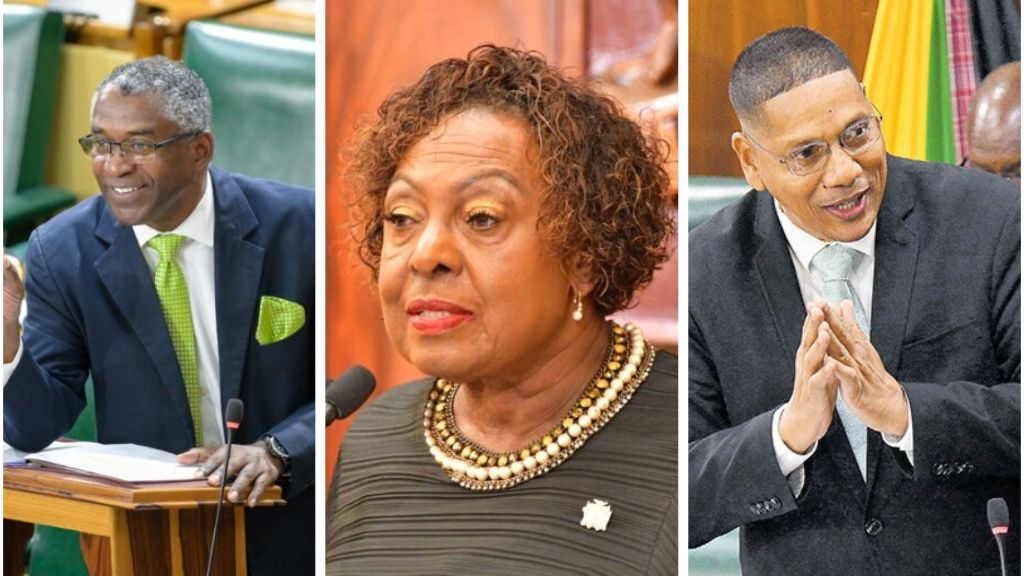
Members of the Joint Select Committee reviewing the Green Paper on the National Policy for Culture, Entertainment and the Creative Economy 2025–2035 are calling into question the Jamaica Constabulary Force’s (JCF) role in deciding whether entertainment events can proceed, amid concerns about inconsistent decisions and limited explanations for rejected applications.
The issue arose on Wednesday as the committee examined the JCF’s recommendations for regulating entertainment zones and managing events, with members raising concerns about how permits are granted, why some are refused and whether organisers have a fair opportunity to challenge decisions.
The discussion also prompted Culture Minister Olivia Grange to reveal that a permit for an anniversary event honouring a well-known Jamaican football personality had been withdrawn about an hour before it was due to begin, despite preparations already being in place.
Grange said the incident illustrated the need for public authorities to exercise their powers fairly, even as she acknowledged that the relationship between the entertainment sector and the police had improved.
The committee’s concerns followed a presentation by head of legal affairs at the JCF, Senior Superintendent of Police Arielle Brown Blake, who called for a clearer legal framework governing entertainment zones, venue approvals and individual events.
Brown Blake said the proposed framework should distinguish between designating an area as an entertainment zone, approving a venue and granting permission for a particular event.
The JCF also recommended that the law be updated to address sound management, venue inspections and the responsibilities of promoters and venue operators for public safety.
Government Senator Kavan Gayle subsequently questioned how the police assessed security threats and whether the rules were being applied consistently across divisions.
He said event promoters needed clear guidelines from the outset rather than facing different requirements depending on where they applied. He also raised concerns about uncertainty over the circumstances in which police could stop an event after approving it.
The discussion then turned to whether the same rules were being applied fairly to large commercial events and smaller community gatherings.
Opposition Senator Allan Bernard asked whether the JCF maintained records of entertainment permit applications, approvals, refusals, restrictions and complaints about enforcement, including information that could help the committee assess whether decisions were consistent across different types of events.
He also questioned whether applicants should receive written reasons when permits were refused or restrictive conditions imposed, and whether decisions should be subject to an accessible review process.
Bernard said uncertainty could be costly for promoters who had already spent money preparing for an event before being told that permission would not be granted.
The concerns were echoed by Member of Parliament for Kingston Central Donovan Williams, who questioned whether police commanders should remain the sole decision-makers on entertainment permits.
Williams cited complaints from communities about permits being refused for cultural gatherings, including nine-nights, and questioned whether organisers were always given a clear basis for those decisions.
“The JCF, in my view, is not to be the sole determinant of whether an event is kept. This is my view, and I probably need to look at some other jurisdictions. My view is that… the intelligence that the JCF is picking up, their security risk brief ought to form part of the decision-making, but there ought to be another entity or body, a collaborative body or entity that makes the decision. That is my view, and I might get a lot of slap for it today, but that is just my view, because how many people in our inner city are going to appeal to the commissioner to keep an event? How many people?” he said.
“Yes, the big large scale promoters with a lot of capital and time and attorneys can instruct attorneys to go and appeal within seven days to the commissioner. How many little promoters in the inner city are going to say, ‘boy, all right, I'm going to write the commissioner’? They are not bothering with that,” Williams added.
Responding to the concerns, Brown Blake said the same law governed the events that required permits, but that decisions were based on the circumstances surrounding each application.
She said the police considered intelligence, reports from divisional intelligence units and information from other sources when assessing whether an event could pose a threat to public safety or order.
She acknowledged that applicants might not know all the information informing a decision, but said the force had to balance transparency with the need to protect sensitive security information.
She also reminded the committee that the Noise Abatement Act provides a route for challenging a refusal or conditions attached to a permit. Under the law, an aggrieved applicant may appeal in writing to the commissioner of police within seven days of the decision. The commissioner may revoke, vary or uphold the decision, subject to conditions considered necessary.
However, Brown Blake admitted that applicants should receive a general explanation for a refusal, even where specific intelligence could not be disclosed.
Brown Blake also accepted the call for more consistent decisions, saying existing internal guidance could be strengthened through the proposed policy and further direction from the police high command.
“We already have policy guiding it, but certainly we can tighten the reins so that there is uniform decision-making because we're not trying to kill the culture. In fact, we are trying to preserve it and preserve the lives of persons who are celebrating the culture and help them to have a longer life so that they can really celebrate the culture, and that is the aim,” she said.
In her contribution, Grange said most permit applications and requests for extensions reaching her office had been approved, estimating the figure at about 90 per cent. However, she acknowledged that some communities continued to complain about repeated refusals and uncertainty.
She said a one-stop-shop system had operated during the COVID-19 period, bringing together the JCF, the Office of Disaster Preparedness and Emergency Management, her ministry and municipal corporations to deal with approvals.
Grange said the arrangement had worked efficiently by allowing agencies to resolve problems together and proposed that it be reintroduced. She also said the JCF should be included in the working group dealing with the sector.
