Crackdown on delinquents
Originally published by Jamaica Observer Read the original
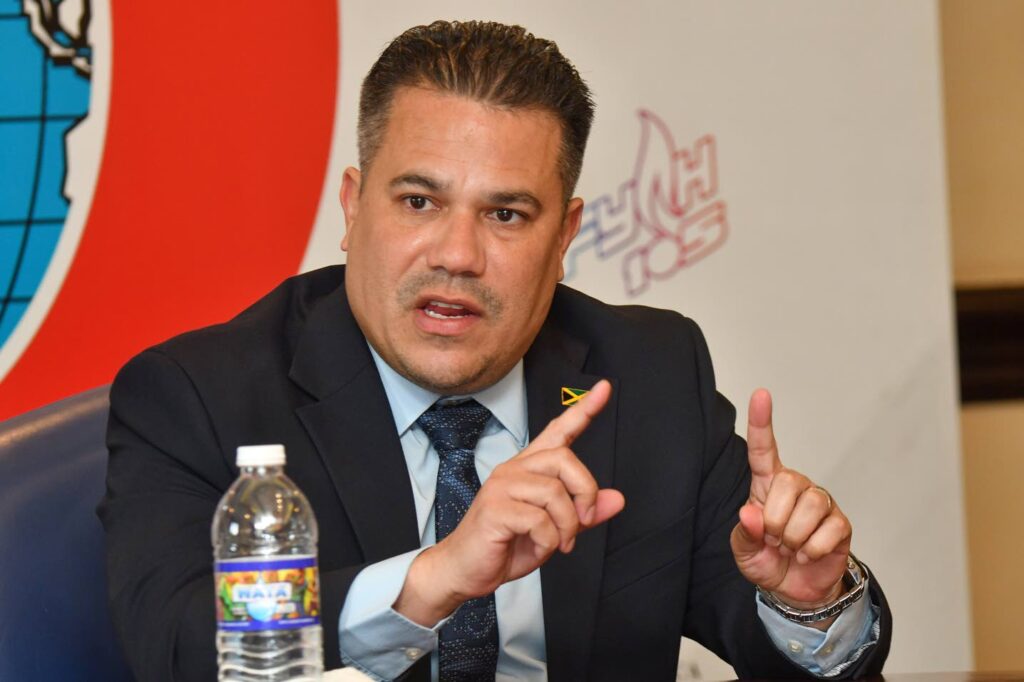
THE National Water Commission (NWC) says it is aggressively pursuing registered customers who can afford to settle their overdue bills but refuse to pay, with thousands already disconnected and placed on repayment programmes.
Water, Environment and Climate Change Minister Matthew Samuda said customers making occasional payments should not assume they will escape action as the utility moves to recover outstanding revenue.
Speaking at a Jamaica Observer Press Club at the newspaper’s St Andrew headquarters on Wednesday, Samuda said the commission has traditionally given customers room to address their arrears once they were making payments. However, he said, enforcement has intensified since its debt amnesty.
“Over the last year, I’d say post the amnesty, those who didn’t come forward and say they have these issues, we’ve had thousands who have been disconnected and been put on a six-month programme to clear their space,” he said.
The NWC had implemented general and micro small and medium enterprises (MSME) amnesty programmes ending on May 31, 2025 and December 31, 2025, respectively.
The general amnesty provided write-offs of up to 100 per cent for vulnerable groups pensioners, Programme of Advancement Through Health and Education (PATH) beneficiaries, disabled individuals and graduated discounts for residential accounts. Additionally, MSMEs benefited from a 50 per cent waiver on qualified arrears and reconnection fee write-offs for eligible establishments.
The water minister pointed to the amnesty’s success as an effort to help customers resolve long-standing liabilities and return to regular payment. He said approximately 14,000 customers had been brought back into the formal system, while the commission was working through issues involving another 16,000.
Against that backdrop, the water minister argued that there was a stark difference between those who simply cannot afford to pay the fees charged and those who refuse to pay, even while capable of doing so.
“So we’ve tried the first route, which is to be nice for those who did not engage during that process because we’re still going through approximately 16,000 persons to resolve some of these long-standing issues,” he said.
“If we detect theft in an area and at a facility based on consumption that obviously could pay for it, I assure you we’ll enforce, we’ll enforce hard,” warned Samuda.
SHAW...the commission has teams actively pursuing outstanding payments, even if those efforts are not widely publicised (Photo: Naphtali Junior)
Adding to the conversation, NWC Board Chairman Michael Shaw said the commission has teams actively pursuing outstanding payments, even if those efforts are not widely publicised. “Maybe it is because we’re not putting the persons on the front page of the paper or on social media, but we have a team out there aggressively going to collect our funds because we need it for our cash flow,” Shaw said. He disclosed that they had been seriously pursuing delinquents, noting that the NWC’s revenue collection rate moved from 2.4 to 3.5 per cent monthly. “There’s no, for the most part, new water supply systems. It was people who were avoiding paying it and we had a strategic plan to go after those — particularly condominiums, commercial customers, and so on — to make sure that they were paying their portion,” he clarified. He acknowledged, however, that the essential nature of water influences how the commission deals with customers. “We’re probably not as aggressive in actually treating with customers because of this commodity, water. You have to treat it a little differently. But I think we are probably being strategic about it,” he explained. The crackdown on registered customers who continue to avoid payments comes as the NWC is navigating a revenue position that has deteriorated over time, particularly in relation to customer payments. Appearing before Parliament’s Public Accounts Committee on Tuesday, the utility’s chief financial officer, Fabian Christie, acknowledged that the utility has undertaken several initiatives to recover outstanding payments and bring indebted customers back into the formal system. Alongside those collection efforts, the commission is seeking regulatory approval for a 51 per cent increase in water and sewerage rates to help finance operations and critical investments over the next five years. It is also pursuing an islandwide programme to reduce water losses, which remain a significant drain on its finances.
