Culture shift needed to curb risky motorcycle riding —JCF
Originally published by Jamaica Observer Read the original
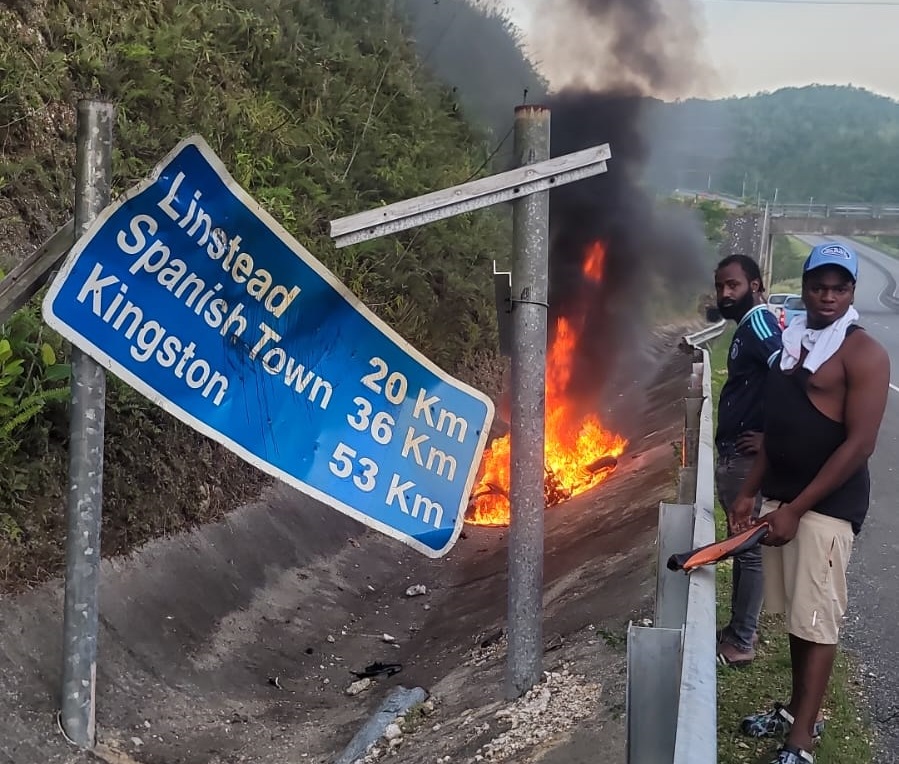
KINGSTON, Jamaica — Changing the culture around motorcycle use, particularly among young men, is identified as critical to reducing unsafe riding practices and road fatalities in Jamaica.
Deputy Superintendent of Police (DSP) and operations officer for the Traffic Enforcement Division of the Jamaica Constabulary Force (JCF), Marcus Graham, tells JIS News that some young riders engage in risky behaviour because they do not fully appreciate the potential consequences of their actions.
"There are the joy riders; they just seem not to want to abide by the law. They think that if I just get on my motorcycle and am being pursued by the officer, I'll just ride and escape. That is how they're thinking," he notes.
He adds that some riders also dismiss the need for protective gear when making short trips.
"I think it's just the overall culture of Jamaicans, especially motorcyclists, not to wear a protective helmet. And they just ride a bike without shirt and in slippers. It's just a culture," Graham added.
Graham says road users between 18 and 29 years old are the most vulnerable, with many motorcycle riders falling within this age group.
For her part, General Manager of JN Foundation Claudine Allen tells JIS News that she believes the issue goes beyond compliance with traffic laws and requires an examination of the social influences that shape the behaviour of young men.
"The behaviour of our young men, including motorcycle drivers, is really indicative of certain other social issues that we have, how we raise our young boys to take risks," she says.
Both the JN Foundation and the JCF are members of the National Helmet Wearing Coalition (NHWC), a multi-sector partnership which has advanced the establishment of national helmet standards for Jamaica.
Through the NHWC and other road-safety initiatives, stakeholders are seeking to address not only enforcement but the attitudes and behaviours that contribute to unsafe motorcycle use.
Allen notes that risk-taking among young motorcycle riders is not unique to Jamaica.
""This kind of joy-riding culture that doesn't really embrace safety isn't unique to Jamaica. It is not that we're saying that something is solely wrong with our young men why they behave these ways. It is a human condition," she says.
She points to findings from a baseline survey conducted by the NHWC, which involved approximately 500 motorcyclists, most of whom were between 18 and 29 years old.
"When you look at that period in a young man's life, this is where he becomes the man he's going to be, the foundation is set, and he starts to take action and decision towards the kind of life he wants to live," Allen says.
According to her, the motorcycle can sometimes become a symbol of status and acceptance among peers.
"Typically, what we see among the motorcycle drivers is that the decisions that they make are decisions which they hope will take them to a place where they are respected, where they belong, and they feel a part of a group," she says.
"You have them utilising the motorcycle as a status grab. I can't buy a car, but I have a bike, and I want you to see that I'm daring and fast and I ride my bike, and so that earns him a sort of admiration and respect among his peers," Allen adds.
She says a culture of safety must be developed from an early age, rather than introduced only after young people begin riding motorcycles.
"We're also seeing, too, where we never raise these young men appreciating a culture of safety," she says.
Allen notes that this is reflected in attitudes towards helmet use, with some motorcyclists believing that protective equipment is unnecessary when travelling short distances.
"The baseline survey also told us that people tend to say, 'I don't need to wear a helmet because my journey is not going to be long. I'm going around the corner'," she says.
However, she stresses that familiarity with a route does not eliminate the risk of a crash.
"You know where most crashes happen? Around the corner from where you live, in the community that you live, the places you do business every day," Allen says.
"So, that drive that is only 10 minutes is where you need to ensure that you are safest, because the risks that you take are higher when you do your everyday things," she adds.
Graham says riders must also consider the impact that a crash can have on their families and their own future.
"They are not thinking about the long-term effect of what should happen in case I meet in an accident. My family suffers. I will go to the hospital if I survive and I'll suffer," he says.
Allen argues that changing attitudes towards safety will require a shift in how responsible riding is perceived, particularly among young men.
"We have to look at how we socialise our young men generally. We have to look at how we sort of introduce this idea of safety," she says.
"Safety is not cowardice. Choosing to wear a helmet does not mean that you're a lesser man or that you are not tough. It means that you are safe," she adds.
She says young men should be encouraged to see responsible riding as something that can coexist with confidence and respect.
"We also need to find a way to establish that you can be respected and admired for things that are within the law. It does not take away from your prowess or your masculinity. You're not a sissy by choosing to ride in an orderly way at a safe speed and wearing a helmet," Allen says.
— JIS
Deputy Superintendent of Police (DSP) and Operations Officer for the Traffic Enforcement Division of the Jamaica Constabulary Force (JCF), Marcus Graham
General Manager of JN Foundation, Claudine Allen