Defence challenges JP’s credibility
Originally published by Jamaica Observer Read the original
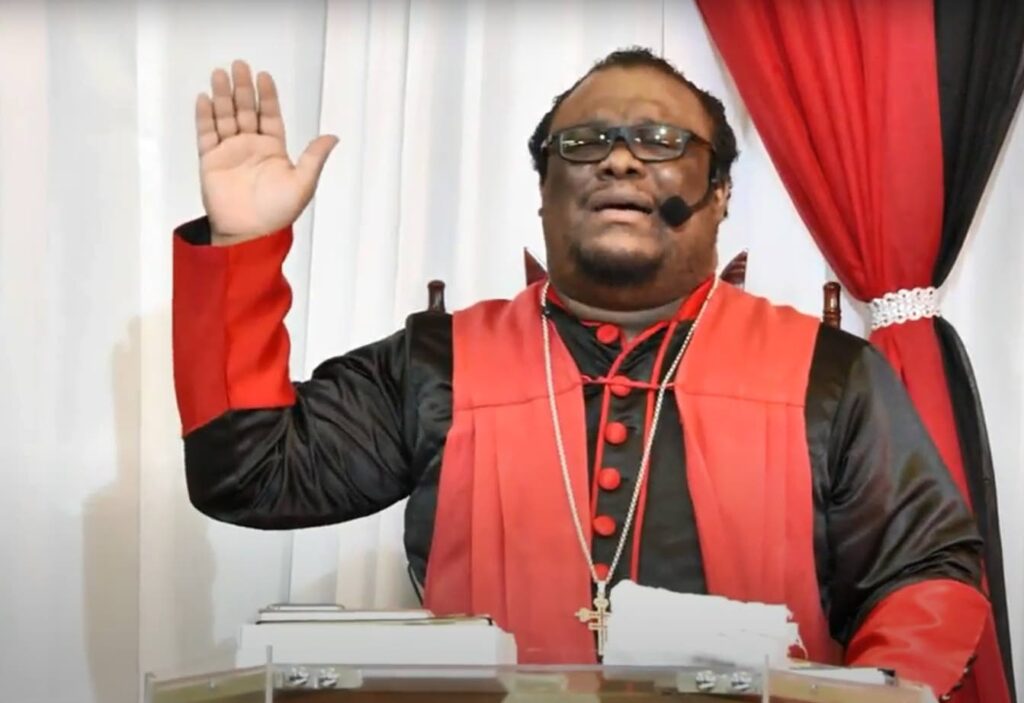
The defence in the Andre Ruddock murder trial on Monday tried to discredit the evidence of a justice of the peace (JP) by questioning whether he knew a video camera was rolling during what was supposed to be a private conversation between himself, her client and another JP on October 18, 2021.
Ruddock is on trial for murder in relation to the October 17, 2021 human sacrifice type killing of 39-year-old Taneka Gardner at Pathways International Kingdom Restoration Ministries in Albion, St James.
He was allegedly acting on orders from his now-deceased pastor Kevin Smith.
Ruddock was subsequently arrested and taken to Freeport Police Station in Montego Bay, St James, where he allegedly gave a caution statement confessing to the killing. After he gave that statement, allegedly of his own free will, Ruddock answered 42 questions that were posed to him by detectives in the presence of the JPs.
In the answers he gave to those questions, Ruddock explained that he was the one responsible for cutting Gardner’s throat and that he did it because the pastor told him to do so.
Prior to the taking of the caution statement and the question-and-answer session, Ruddock was supposed to be given a private moment with the JPs. However, the evidence that came out in court in the presence of the seven jurors indicated that the camera was rolling during the time when the detectives had left the room on the request of the JPs.
The private session was captured on video, which the jurors have seen and heard in court.
During what was supposed to be a private session, the JPs asked Ruddock if he was well and if he had been abused in any way while in custody. Ruddock told the JPs that he was fine and that he was not forced to give a statement. He indicated to them that he just wanted to do the right thing and to tell exactly what occurred at the church. He pointed out that he wanted to get things off his chest by confessing.
Defence attorney Venice Brown asked the witness if it was intended for the detectives to hear what he and the other JP was saying to Ruddock during the private session.
“The mere fact [that] we asked them to leave the room, it would have been for privacy with the person,” the witness responded.
The attorney asked him if when he mentioned the word privacy, he meant that he did not want the detectives to hear what they were saying to Ruddock prior to the caution statement and the question-and-answer session.
“That would have been the intention,” the witness said.
Brown then asked, “Why did you not want them to hear what you were saying to Mr Ruddock?”
The witness responded: “For Mr Ruddock to feel free and to speak freely.”
Brown then asked if the recorder was in fact operating at the time, if that would amount to privacy.
“I can’t say if the camera was on; however, if the information was for evidence, then it would be treated the same whether it is recorded or not,” the witness replied.
The attorney then pivoted her questions to focus on a statement that the JP gave to the police on October 27, 2021 in relation to the interview with Ruddock on October 18, 2021.
Brown asked the witness if he would agree that, when he gave that statement, the information surrounding the caution statement and the question-and-answer session would have been fresher in his mind than it is now in 2026.
“For the most part,” the witness agreed.
The attorney pressed further, asking the witness if he recalled a previous question she posed to him regarding the introduction of persons in the room prior to the private session, the caution statement, and the question-and-answer session.
“Do you recall earlier when I asked you if when the introduction of the persons in the room was being recorded, your answer was that you cannot 100 per cent recall?”
“Yes,” the witness said.
“Do you recall telling the police in your statement dated the 27th of October 2021 that Officer Bond proceeded to introduce everyone inside the room on camera?” Brown asked the witness.
He responded saying that he could not recall if he said the introduction was done on camera or not.
Brown asked him if he wanted to refresh his memory from the statement he had given the police in 2021.
After the witness looked at the statement and confirmed that it was the same statement he had given to the police, Brown invited him to look at lines 16 to 18.
“Do you now recall telling the police in that statement that Officer Bond proceeded to introduce everyone on camera?” the attorney asked.
“Yes, that is what I wrote at that time, yes,” the witness responded.
Brown pressed further.
“Having read your statement, do you now remember that the camera was on while everyone in the room was being introduced before the caution statement?”
The witness replied: “I have read the statement. We are now in 2026. If I wrote in 2021 that the camera was on then obviously, it was on but I can’t tell you here now that I remembered. It’s been a while.”
“Obviously, at that time I would have been of the assumption that the camera was on, but I didn’t physically check the camera,” he said.
The attorney asked him since he was operating under the assumption that the camera was on, if he had asked the detectives to turn it off.
“Just to point this out, when I used the term ‘assumption’, I was speaking of now. Back then I am not sure if I was told that the camera was on. I don’t recall telling Officer Bond or Officer Stanley to turn the camera off,” the witness told the court.
The trial resumes today when it is expected that the main witness in the case will return to the stand to identify photographs that were taken by the police at the scene of the crime.
