FAO equips Jamaican farmers with adapted greenhouse technologies
Originally published by Jamaica Observer Read the original
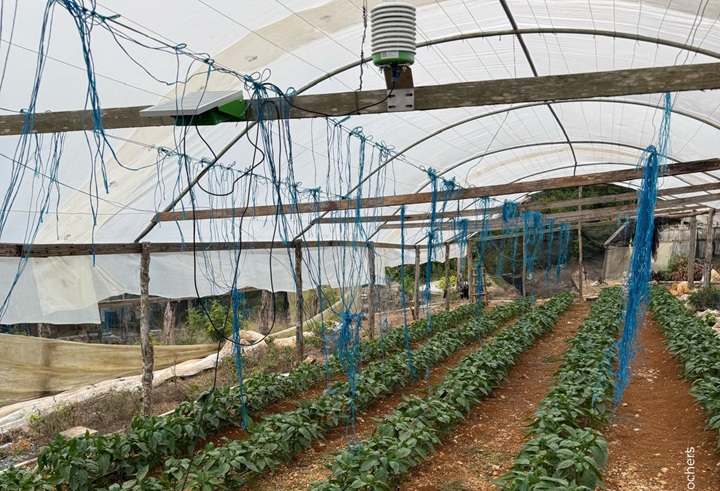
SEVERAL vegetable farmers across Jamaica are now combining adapted greenhouse covering materials and digital sensors to improve growing conditions and support more efficient crop production.
These efforts are supported by the United Nations Food and Agriculture Organization (FAO) project “Digital Solutions to Improve Horticultural Crop Management in the Caribbean”, which is nearing completion.
In a media release on Friday the FAO said, the project was implemented in collaboration with Jamaica’s Ministry of Agriculture, Fisheries and Mining, the project has provided beneficiary farmers with adapted greenhouse covering materials and environmental, soil and water sensors, together with technical guidance on their installation, use and application in crop management under protected cultivation systems.
The adapted covering materials were introduced to help farmers manage high temperatures that can affect crop production under protected structures, a common challenge for vegetable production across the Caribbean.
Farmers using the materials have reported noticeably cooler growing conditions and improvements in crop performance.
“The anti-thermic plastic has made a huge difference.
It keeps the greenhouse cooler and takes some of the harsh heat off the plants.
The sweet peppers are doing much better, and you can really see the difference in the plants,” said Conroy Cole, farmer in St Ann.
In Manchester, farmer Diandra Rowe reported a reduction in greenhouse temperatures of at least 2 degrees Celsius (°C) following the installation of the adapted covering materials.
“Even though this has been one of the hottest and driest summers I’ve experienced in 12 years of farming, my yields have been significantly better than in previous years.
It has also made working in the greenhouse much more comfortable,” said Rowe.
The introduction of adapted greenhouse covering materials has also opened up new business opportunities in Jamaica, with some farmers independently importing and distributing these materials to other growers, helping to expand access to the technology beyond the project beneficiaries.
Digital sensors are also 0providing farmers with site-specific information on environmental, soil and water conditions to guide irrigation, nutrient management and other crop management decisions.
Across beneficiary sites, these technologies have been applied in diverse horticultural systems, alongside practical guidance on ventilation, shading, irrigation and fertigation management.
Rowe added, “The digital sensors have given us much-needed insight into exactly what is happening inside our growing spaces in real time.
A soil sensor installed in a greenhouse in Jamaica tracks moisture, temperature, pH and nutrient levels, giving farmers live data to guide crop management decisions.
Being able to access the data remotely means we can make better-informed decisions and adjust our practices where needed.” The project also provided technical guidance and refresher training to help farmers and extension personnel interpret data generated by the environmental, soil and water sensors. This included practical guidance on monitoring growing conditions and using sensor readings to support adjustments to irrigation, nutrient management and other day-to-day crop management practices. “The real value of these technologies comes from using them together. The adapted greenhouse covering helps create better growing conditions, while digital sensors provide farmers with the information to adjust irrigation, nutrient management and other practices based on actual growing conditions. Together, they can support more efficient and productive protected agriculture,” said Anne Desrochers, FAO plant production and protection specialist and lead technical officer for the project. Several beneficiary farmers were also affected by Hurricane Melissa, with damage to protected structures and temporary disruptions to production. Many are now rebuilding and working to resume production, with project- supported technologies being reinstalled or incorporated into rehabilitated greenhouse systems. The FAO team says it is now consolidating lessons from beneficiary sites and documenting farmer experiences and production results. These findings will help inform future efforts to scale up digital and climate-responsive technologies for horticultural production in Jamaica.