GET SLAVERY HISTORY RIGHT
Originally published by Jamaica Observer Read the original
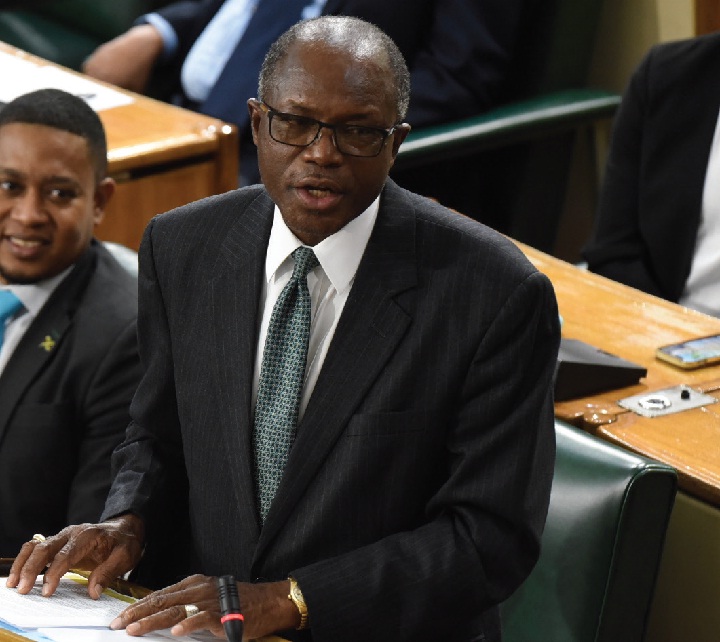
THE Global Afrikan Congress (GAC) has pointedly told Government Member of Parliament Everald Warmington that he has a “misinformed understanding” of history in relation to the transatlantic slave trade and has urged him to apologise for his recent comments on the issue in the legislature.
Additionally, the organisation recommended that he undertake a process of what it calls “historical self-repair” and directed him to the works of historians, scholars and writers who have examined the history of Africa, the Caribbean, European expansion, slavery, colonialism, and resistance.
In an open letter to the St Catherine South Western Member of Parliament, the GAC, described as an international umbrella organisation created by and for Africans and people of African descent, challenged Warmington’s comments relating to Jamaica’s petition to King Charles III and the King’s referral of the appeal to the Judicial Committee of the Privy Council.
The petition asks the Privy Council to make determinations on Britain’s seizure, transportation, chattelisation, and enslavement of Jamaica’s ancestors from the mid-17th century to 1834. On September 22, after Culture Minister Olivia Grange — who led a delegation that delivered the petition to Buckingham Palace on September 7 — informed Parliament that King Charles has referred the petition to the Privy Council, Warmington said he found the delegation’s visit to London embarrassing.
“I’m embarrassed at the spectacle of the photo ops in London. We went there and [it] remind me of this nursery rhyme: Pussycat, Pussycat where have you been? I’ve been to London to see the king.
Pussycat, Pussycat what did you do there? I left a petition on the empty chair,” Warmington declared in the House.
“We keep on speaking of the buyers of the slaves, but nobody speaks of the sellers of the slave. The white man didn’t go to Africa and pick up enslaved people and take them across here.
They were caught by black people who sold them to the white man to come here,” he added. In response, the GAC said Warmington displayed a “subjective and derisive formulation of history”.
“We respect your right to your own interpretation of history, though it is a colonial formulation and historically falsified to justify their crimes.
However, we vigorously assert that you don’t have the right to rewrite history based on your obviously misinformed understanding of it,” the organisation said in the letter signed by its Ambassador General Cikiah Thomas.
“The problem is not that you have raised the question of African involvement in the history of the slave trade.
The problem is that you have presented an extraordinarily complex historical system of European invasion, military coercion, commercial expansion, warfare, forced transportation, plantation enslavement, colonial law, and racial ideology as though a simple distinction between African sellers and European buyers can adequately explain it,” the GAC said.
The group argued that there was no market for buying and selling free Africans. “On the contrary, there was coercion at bayonet point by Europeans to forcibly coerce Africans to round up other Africans, not for sale but for European appeasement; and forcible capture for the enslaved person awaiting ships.
Hence, your depiction of a market in Africans is not only based on misinformation, but it is also an example of how many of us have internationalised racism.”
The GAC insisted that the history of the transatlantic slave trade cannot properly be understood by asking only who physically captured a particular African and who purchased that person.
Rather, much larger and more insightful questions needed to be asked, such as who created the enormous transatlantic demand for enslaved labour; who organised the Atlantic commercial system for African labour; who financed and insured the voyages of European ships and their cargoes; who controlled the ships and shipping networks; who established and protected the plantation economy; who developed colonial laws defining Africans and their descendants as property; who accumulated wealth from the system, and where is the wealth; who defended the enslavement of Africans through colonial governments and legislatures; and who maintained the system through military and imperial power?
“Unfortunately, contrary to your simplistic and infantile responses in our country’s Parliament, the cited questions cannot be answered by simply saying that Africans sold Africans,” the GAC told Warmington.
It said that the colonial miseducation and misconception that Warmington demonstrated as an MP requires clarification for him and “other black folks who may think, like you, that the existing African communities did not resist the massive European invasion and encroachment on those communities.
Thus, it must be underscored that African societies fought against the capture and enslavement of their peoples.”
The GAC said that had Warmington taken some time to inform himself about the vicious history of the European invasion of Africa he would have learned that Africans resisted that invasion and that limitless numbers of Africans were slaughtered.
In relation to Jamaica’s petition to King Charles, the GAC said it was unclear what Warmington found embarrassing about a legitimate action regarding reparation. “Are you embarrassed about asking legal questions and holding white power structures accountable? Are you embarrassed about asking questions that make white people uncomfortable?” the GAC asked the MP.
“Specifically, the legal questions raised in the petition concern whether the seizure, transportation, and enslavement of Africans in Jamaica under British rule were lawful under English law; whether those practices breached relevant international obligations; and whether the United Kingdom has a legal obligation to provide a reparatory remedy to Jamaica.
What is there to be embarrassed about these fundamental questions of justice regarding African humanity?” the GAC said. It noted that the petition has now become a legal matter, and told Warmington that the least he could and should do “is allow due process of the law and the historical evidence to be examined”.