GIVE SPORT SOMEWHERE TO DO BUSINESS!
Originally published by Jamaica Observer Read the original
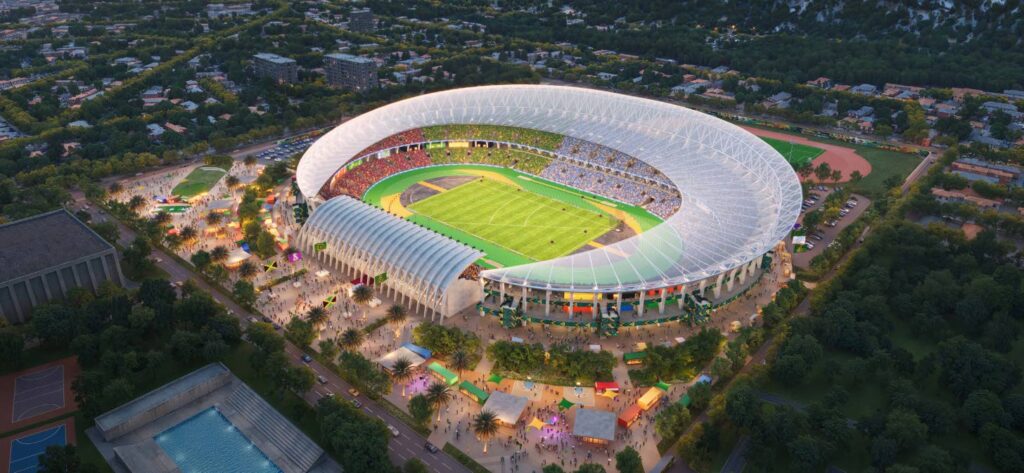
Facilitate 10 properly structured, commercially operated, multipurpose sports hubs over the next 10 years and we will materially change the economics of Jamaican sport.
That is the proposition. One viable sports hub every year; strategically distributed across Cornwall, Middlesex and Surrey; built around existing assets where possible; developed through public-private partnerships where appropriate; and operated as businesses rather than permanent burdens on the public purse. It is ambitious, but it is practical.
More importantly, we can do it.
In my previous contribution to the Jamaica Observer I argued that we can win in Concacaf, but only if we build the sports economy. I contended that if Jamaica is serious about moving sport from national passion to a productive industry, that responsibility cannot sit with sport alone. Government, corporate Jamaica, international federations and member associations, our Diaspora and fans, and sport’s own internal stakeholders all have distinct roles to play. Having established the destination, the next phase of the conversation must be about how we actually get there.
Let us begin with the Government. The others will follow systematically.
The Government’s most consequential role is not operating professional sport, but creating the enabling environment in which it can flourish commercially. Infrastructure sits at the centre of that opportunity, connecting athletes and audiences with sponsors, broadcasters, businesses and communities.
Tickets need somewhere to be sold, sponsors need somewhere to activate, broadcasters need somewhere to produce, vendors need customers, clubs need somewhere to earn, athletes need somewhere to perform, and communities need somewhere to participate. Put simply, the sports economy needs somewhere to do business.
The encouraging part is that Jamaica does not need to start from zero. Much of the foundation already exists.
Our task is to identify the right assets, upgrade them intelligently, commercialise them, connect them, and replicate what works.
Catherine Hall, via Yoni Epstein and company, provides perhaps the clearest indication of what is possible. The St James Municipal Corporation has entered into a long-term arrangement for the redevelopment and operation of the Montego Bay Sports Complex, with football, athletics, swimming, racquet sports, health and wellness, and other commercial activities contemplated. What is important about
Catherine Hall is not simply the redevelopment of another stadium. It is the underlying recognition that a sporting facility cannot survive by opening its gates only when there is a major event.
The asset has to work throughout the week. Catherine Hall therefore must become the prototype for the sports economy we say we want.
Look elsewhere and the possibilities become even clearer. Drax Hall in St Ann has already been contemplated by Government as a potential public-private sporting development. Ferdie Neita Sports Complex in Portmore is an established football facility with the bones of a strong community sporting asset. Anthony Spaulding Sports Complex sits in one of Jamaica’s most culturally important football communities and has already attracted meaningful private investment. The Harbour View complex represents another established football enterprise with infrastructure and a surrounding sporting ecosystem. These facilities are not necessarily a prescribed first five; they demonstrate that the bones are already here!
Across Jamaica there are government properties, municipal facilities, community grounds, and privately controlled sporting assets that could form part of a coordinated national network. Some need seating, others need lights, improved playing surfaces, changing rooms, technology, broadcast infrastructure or commercial spaces.
Almost all need stronger and more sustainable operating models. The answer, therefore, is not simply to build more stadiums.
It is to develop sports economy incubators.
A 3,000-seat stadium used twice per month will struggle to sustain itself. A multipurpose hub operating seven days per week presents a very different economic proposition.
Football can be the anchor tenant, but football cannot be the only customer.
On Sunday evening, the main field may host Jamaica Premier League football; by
Monday morning that same property should already be earning again through recreational sport, schools, academies, gyms, wellness programmes, rehabilitation services, corporate leagues, restaurants, concessions, meetings, entertainment and community activity.
That is where recreational sport becomes an important part of the economic model. It provides customers when professional sport is not playing. Solar energy and water harvesting can reduce operating costs. High-speed connectivity and proper broadcast positions can turn facilities into media assets. Hospitality, food and beverage, retail, advertising and naming rights can generate additional income.
Commercial spaces can accommodate businesses that benefit from being part of the sporting ecosystem.
The principle is simple: Every facility must have an investor-ready business plan before it has a blueprint. Government’s intervention, therefore, is not necessarily to pay for everything. Its role is to help de-risk the beginning.
Government possesses assets and capabilities that individual sporting organisations cannot easily assemble: land, planning authority, enabling infrastructure, fiscal policy, diplomatic relationships, and the ability to structure national programmes. Those assets can be used to provide longterm leases and concessions where appropriate, bring underutilised sporting properties into productive use, establish minimum standards, and create transparent structures capable of attracting private capital. Government creates the conditions; professional operators should then be allowed to operate.
There are international precedents for this type of thinking.
Singapore has deliberately integrated elite sport, community participation, entertainment and commercial activity into its sporting infrastructure strategy. London used the 2012 Olympic Games not simply to stage sport but as a catalyst for regeneration, transportation, housing, commercial development and long-term economic activity. Jamaica does not need to copy either model. Our circumstances are different. What we should adopt is the principle — intelligently conceived sporting investments should still be working even after the major event ends. That is called a “productive asset”.
There is even local evidence at the Anthony Spaulding Sports Complex. Look at the seats in the grandstand. Their connection to the Atlanta 1996 Olympic Games is a powerful reminder of what legacy infrastructure can mean.
Thirty years later, another sporting community, in another country, thousands of miles away, is still benefiting.
This is also why FIFAPresident Gianni Infantino’s engagement with Jamaica should be viewed beyond the ceremony of a high-level visit.
Relationships at that level give a small country something immensely valuable: access. They give us access to people who will listen; and potentially to expertise, technical networks, institutions and conversations that individual clubs and sporting bodies may struggle to access independently. We should use those intelligently.
One per year. Ten years. Ten functioning sports economy hubs across Jamaica. That is the bold ask! Consider what that network could unlock.
The multiplier is significant. Professional sport gets better homes; youth and community sport gain quality facilities; regional tournaments and sports tourism become easier to package; while sponsors, broadcasters, clubs and small businesses gain better platforms from which to earn. That is where infrastructure becomes economy: every ticket, meal, membership, academy registration, hotel stay, sponsorship, broadcast, rental and merchandise sale becomes a transaction. More activity creates more transactions; more transactions create businesses, jobs and investment. Infrastructure creates activity. Activity creates transactions. Transactions create economies.
That is ultimately the proposition. Government cannot build the sports economy alone, nor should it try. But it can create the platform upon which everyone else participates.
Fix what we have.
Commercialise what can work. Build where genuine gaps exist. Create the investment framework around it.
We have already proven that Jamaica can produce greatness through sport.
The next frontier is proving that we can build prosperity around it. If we align the assets, capital, expertise and people already available to us, sport can become more than something Jamaica is famous for — it can become an industry Jamaicans earn from.
Owen Hill is the chief executive officer of Professional Football Jamaica Limited.