Growing appetite for the snip
Originally published by Jamaica Observer Read the original
SOME are fathers who say their families are complete. Others are young men in their 20s and 30s who have decided that they never want children. They are among men seeking vasectomies in the Corporate Area, where some urologists say interest and requests are rising in their private practices.
The slight but notable increase suggests that more men are embracing an active role in contraception, say urologists, who point to varied motivations behind their patients’ decisions.
Consultant Urologist Dr Belinda Morrison-Blidgen, co-owner of the newly opened Urology and Cardiothoracic Centre in St Andrew, told the Jamaica Observer that while she has not observed a similar trend in the public health system, requests for the procedure have increased at her private practice.
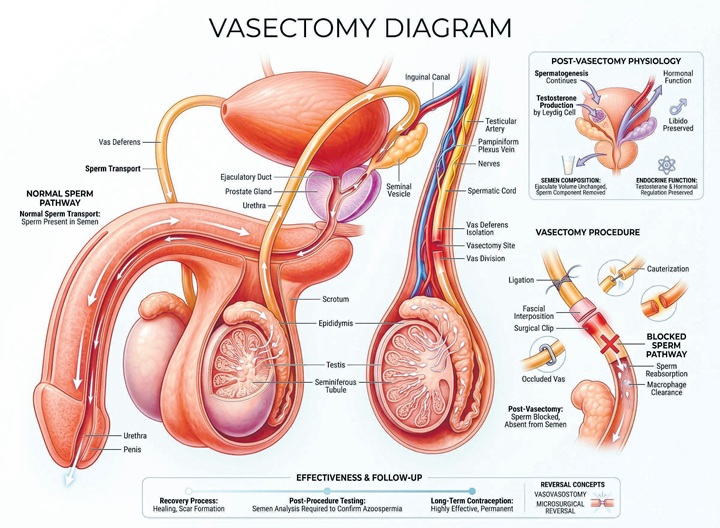
Known colloquially as the snip, the procedure involves the cutting and then clamping or sealing of the vas deferens, a tube on each testicle that carries sperm to the urethra.
Morrison-Blidgen estimates that she now performs 10 vasectomies annually, a figure she acknowledged may appear modest, but represents a significant shift from a time when she performed none.
MORRISON-BLIDGEN... some men are choosing vasectomies to ease the burden on their wives, who have experienced side effects from other contraceptive methods (Photo: Garfield Robinson)
“For the men who already have children, they tend to say that they’ve had enough and they don’t want any more. And that’s usually after they’ve had like two or three children,” she said, adding that those patients also cite the expense of child-rearing as motivation for electing the procedure. For some, the decision is also about sharing a responsibility traditionally left to women. Morrison-Blidgen said some men are choosing vasectomies to ease the burden on their wives, who have experienced side effects from other contraceptive methods. “The men may have to put on a condom, but the women really are the ones who use permanent methods like implants or tubal ligation. Some of these women have side effects from those options. Women who take the pill, implants or hormonal options, they may have side effects,” she said. According to the American College of Obstetricians and Gynaecologists (ACOG), hormonal birth control like pills, patches, and vaginal rings often cause mild, temporary side effects, including spotting between periods, mild nausea, headaches, sore breasts, and weight gain. Conversely, hormone-free options do not alter the body’s chemistry but can cause some discomfort where they are placed. According to the Mayo Clinic, a non-hormonal copper intrauterine device (IUD) avoids side effects like mood swings or nausea, but it can result in heavier menstruation and worse cramps.Perhaps the more intriguing aspect of the growing interest, Dr Belinda Morrison-Blidgen noted, is that young, childless men are also seeking vasectomies, having decided they do not want children at all. (Photo: Adobe stock)
“A lot of my patients are married men, and they are sympathetic to their wives and the side effects that they have from these pills or injectables, and they say, okay, they’re going to take that stress away from them,” Morrison-Blidgen said. “The joy of it for the men is that with the vasectomy, it’s a local outpatient procedure done under local anaesthetic. So they don’t have to be put to sleep and it’s very quick, quick recovery time, minimal side effects, and it’s effective. So, they’ve opted to do that,” explained Morrison-Blidgen. But perhaps the more intriguing aspect of the growing interest, she noted, is that young, childless men are also seeking vasectomies, having decided they do not want children at all. “I’ve had a few of them who are in relationships, they’re not married, but they’ve just decided they do not want to have children at all. A lot of times they do not come with their partners, it’s just that they’ve never seen themselves having children and they don’t want it to ever happen. These are men in their 20s and 30s who have made this decision, and I have to respect that,” she said. Morrison-Blidgen further noted that men who come seeking the operation are usually well informed about the process and are just hoping to move on with their sexual life without having to worry about pregnancies or their partners experiencing side effects.THOMPSON... interest is definitely more than, let’s say five, six years ago, but in terms of the actual procedure, some persons are not necessarily sold for whatever reason
“Most of the patients who come, they have already done their reading, and their background information is there. So, they know it is permanent. They know it’s simple and easy. They know that nobody can even tell that they’ve done it easily because it doesn’t change your rectal function. “It doesn’t change your semen volume. You will still ejaculate; you still have a normal semen volume. It’s just that there will be no sperm in that semen,” she said, adding that while a reversal is possible, the men who visit her practice want a permanent solution. Dr Elon Thompson, owner of Westminster Medical Centre in St Andrew, told the Sunday Observer that relative to his private practice, those going through with the procedures are middle-aged men, who have children. “Mostly they would be referrals or people who have developed a need, having thought about it and consulted with their partner, that this is the direction in which they would want to go. But in terms of referrals for vasectomy, I would say, maybe three in a sixmonth period. But most times it is patients that I am already managing that are interested in doing it,” he noted. The consultant urologist, who is also a Government senator, shared that he has seen growing interest among younger men, though many may decide against the procedure after learning more about it. “Interest is one thing and actually doing the procedure is another. So, persons will want to find out what the process is, cost, and things like that and get an idea of what will happen after the procedure: ‘Will I have any pain? Will I have any side effects?’ — those things before they make their final decision. I will say interest is definitely more than, let’s say five, six years ago, but in terms of the actual procedure, some persons are not necessarily sold for whatever reason,” he explained. Reasons for electing the operation varied among his patients, he noted. But the most central motive, Thompson said, was to prevent pregnancies. “The main benefit clearly is if someone has satisfied themselves along with their partner, of course, that they want no children or no more children. This is probably one of the most elective of procedures because persons really have to come forward to have it done after having a discussion with their partner. And it has to be an informed discussion and decision on the part of the patient,” Thompson said, adding that some patients chose vasectomies because they considered the procedure less risky than the female alternative, tubal ligation. One father of two teenagers told the Sunday Observer that the idea of getting a vasectomy gained traction over dinner as friends who had already had the procedure shared their experiences. The man, who is between 40 and 50 years old, said that the prospect of going home the same day appealed to him. He also wanted to enjoy his sex life with his wife without worrying about another pregnancy. He said condoms and the pill had not worked well for them, and a vasectomy would cost less than having his wife’s tubes tied. “A handful of people recommended that this was one of the best ways they found work best in their marriage. And it was easy to do. It was a one-day procedure versus being in the hospital for three, four, five days,” he explained. What he had not counted on was the pain. He recalled feeling a tugging sensation in his lower abdomen during the procedure, which he said took nearly two hours. “It’s local anaesthesia so you might have a little bit of pain. None of that was explained by my friends. So, what was supposed to be like a 45-minute to an hour session, it ended up being like an hour and a half, almost two hours for me, which was a little rough,” he recalled. The recovery, however, was a matter of days and much simpler than what his wife would have to endure with a tubal ligation, he reasoned. “I don’t think I even needed the medication for more than two days. I normally run and I was able to run a 3K in maybe a week after the whole thing,” he told the Sunday Observer. He encouraged other men who feel their families are complete to consider a vasectomy, weigh the costs, and check what their insurance covers. “I think if you look at that option and the weigh the pros and the cons as the man, it’s beneficial, because the woman has to go through so much more,” he said. “I know Jamaicans are still of the mindset that ‘man fi breed woman’ and all sorts of things. But to be honest, as much as Minister [of Health and Wellness] Tufton says we need to have more children, children are expensive. “So, for those of us who are in committed relationships and planned for kids, if you want to... also have sex without the fear of pregnancy, condoms that you’re allergic to, or pills that cause people to put on weight or have side effects, this is one of the best approaches to take because you don’t have to worry about any of that,” he said, while urging men and their partners to be aware of their status, stressing that a vasectomy does not prevent sexually transmitted diseases. In August this year a BBC story on why more men in their 20s in England are having vascetomies, reported National Health Service data showing that 26,385 vasectomies were performed at hospitals and clinics during 2024-25. “This was 16 per cent more than in 2023-24,” the BBC report said. “Men aged 35-39 had more procedures than any other age group, about 8,400 in 2024-25,” the report added. Additionally, the BBC reported that “there had also been a slight rise on the previous year in younger men choosing to have the snip — about 950 vasectomies were performed on men aged under 30 in England during 2024-25”.