Guilty by report?
Originally published by Jamaica Observer Read the original
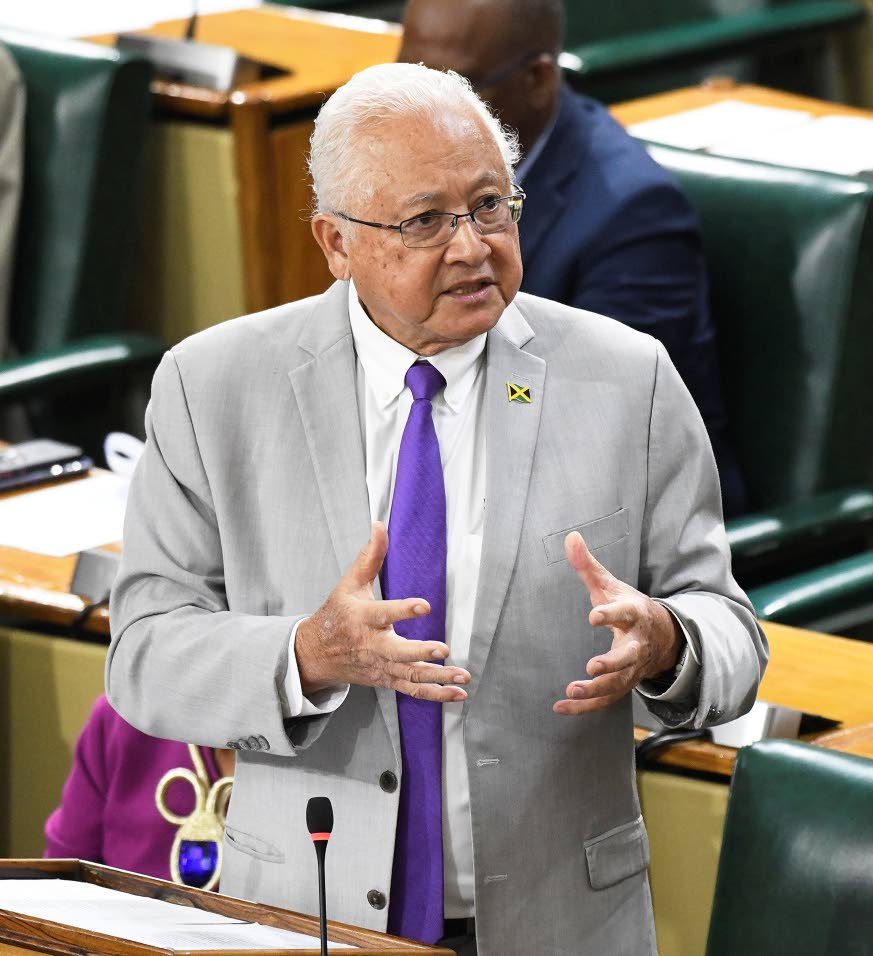
JUSTICE Minister Delroy Chuck has questioned whether the Integrity Commission’s (IC’s) practice of publicly identifying categories of people whose matters have been referred to it could fuel perceptions of corruption, even when those matters do not result in findings of wrongdoing.
Speaking at Wednesday’s meeting of Parliament’s Integrity Commission Oversight Committee, Chuck argued that reporting such figures could create an impression of widespread corruption even when investigations might not lead to charges.
“You must say how many investigations you have started and so on, but when you start, if you see in your report that you’re investigating permanent secretaries, you have… 18 or so permanent secretaries, even if you have three where you’re investigating, all of them come under scrutiny, and so when you say you’re investigating six, nine parliamentarians, every single one of us come under scrutiny,” he expressed.
The minister questioned whether the commission’s reporting approach was helping or hurting Jamaica’s efforts to fight corruption, arguing that the public needed to see clear results from investigations, rather than repeated references to matters still being examined.
He also questioned whether the country was getting value for money from the anti-corruption body, given the resources spent on its work and the need to demonstrate progress in tackling corruption.
“Because all I’m really saying is, yes, if there is corruption, expose it, find it, but… far too many of your reports are actually saying you are investigating, and at the end of the day nothing comes of it, or you don’t hear about it, and I am concerned, because when people speak about corruption, they should at least be able to say we have investigated these, we have charged so many for failing to report,” Chuck said.
However, Opposition spokesman on finance Julian Robinson rejected the suggestion that the commission should be blamed for the effects of its reporting, arguing that public accountability required it to explain the work it was doing and the progress of its investigations.
Robinson said the commission had to report on the nature of matters referred to it, while the public should also question why so many matters were being brought to its attention.
“As far as I know, you get to an investigation, having gone through a process, and you have met a particular threshold to determine that somebody
should be investigated. Part of your accountability mandate must be to report where you are in a process, which means whether it is public officials, parliamentarians, you must indicate of the number, how many have reached so-and-so, so I don’t share the view that the issue is with the Integrity Commission. If there are a lot of people under investigation, then the issue must be why are there so many people under investigation?” Robinson questioned.
The debate prompted director of investigation at the Integrity Commission Kevon Stephenson to explain the distinction between matters referred to the commission and cases that proceed to a formal investigation.
Stephenson said not every complaint or referral led to an investigation, as each matter had to be assessed before a decision was made. He told the committee that only a small fraction of matters referred to the commission proceeded to investigation.
“I think the public could appreciate that when matters are reported to the commission as under [Section] One of the Second Schedule, there is no guarantee that those complaints will be investigated, because an assessment has to be done on each of those complaints for a decision to be made under Section 47 of the legislation as to whether an investigation will be conducted,” Stephenson said.
He added that investigations could also be discontinued if the evidence did not provide a sufficient basis to continue. In those circumstances, the director of investigation was required to issue findings to the commission, but those findings were not made public.
Stephenson said reports reached Parliament when a completed investigation found a breach of a code, policy or law. He also explained that the annual report’s description of matters referred to the commission should not be interpreted as a list of cases actively under investigation.
Stephenson suggested that if Parliament is dissatisfied with what the law required the commission to include in its annual report, any change in policy would need to be reflected in legislation.
In the meantime, committee Chairman Pearnel Charles Jr said the concerns about reputational damage had to be considered without restricting the commission’s work.
“The commission must fearlessly carry out its work. But fear perhaps can be spelled in two ways, F-E-A-R and F-A-I-R. So as you fearlessly carry it out, it must be fair to the persons who you may have thoughts of, but not established evidence about,” Charles Jr said.
Furthermore, director of information and complaints at the commission Joeth Jones also criticised the media for what she described as a failure to give sufficient attention to positive compliance findings in the commission’s reports.
Jones said parliamentarians had performed relatively well in meeting their statutory obligations, but argued that this aspect of the commission’s work was not receiving adequate coverage.
“The media does not pick up that,” Jones told the committee, referring to the group’s compliance performance.
