Hard truths
Originally published by Jamaica Observer Read the original
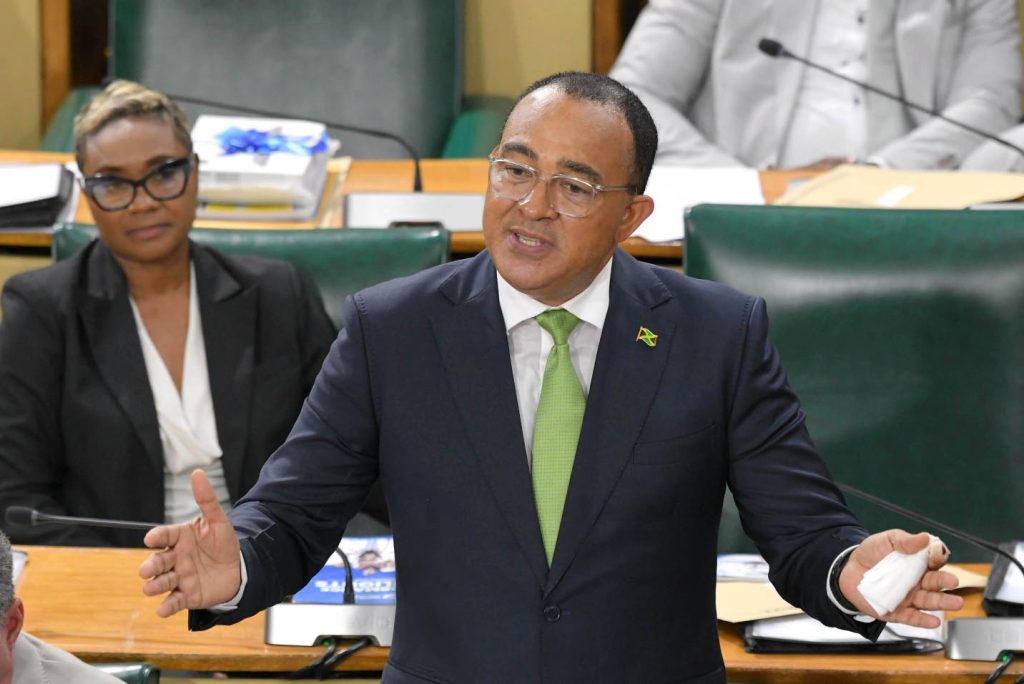
THE latest review of Jamaica’s public health sector presents a mixed bag of progress and troubling setbacks, with improvements in infrastructure and staffing overshadowed by soaring medicine costs, weaknesses in primary health care, and persistently high maternal and neonatal deaths.
Most alarming is the finding that complications from non-communicable diseases (NCDs) account for nearly four in every five deaths in Jamaica, while too many patients are turning up at hospitals with conditions already at an advanced stage.
The findings are contained in the Jamaica Health Public Expenditure Review, prepared by the World Bank at the request of the Planning Institute of Jamaica (PIOJ) and the Ministry of Health and Wellness, covering the years 2016 to 2022.
Health and Wellness Minister Dr Christopher Tufton, who presented aspects of the report, along with the Government’s response, to Parliament on Tuesday, did not shy away from the findings, describing the review as “candid” and declaring that the Government accepts its conclusions.
“The review asks how much Jamaica spends on health, how well that money is spent, and what results it buys for our people,” Tufton explained.
He noted that the review measures Jamaica’s progress against the World Bank’s 2017 review, and compares the island’s performance with countries of similar demographic profiles.
He told Parliament that NCDs cause close to 80 per cent of deaths, maternal and neonatal mortality remain too high, and Jamaica’s per capita health expenditure is still below that of comparable countries, including Brazil, Grenada, Guyana, St Lucia, Dominica, Suriname, and Colombia.
Too much of the country’s health care spending, he acknowledged, is also being channelled into expensive late-stage hospital care, while medicine costs have risen rapidly.
“We need more nurses and more doctors in our health centres. And our service level agreements with the regional health authorities are not yet used to their full potential to hold the system accountable,” Tufton acknowledged.
According to the minister, “None of these findings comes as a surprise to the ministry. They validate the internal assessment that the ministry itself undertook, which led to the development of Vision for Health 2030, our 10-year strategic plan.
“That assessment told us that a health system built for acute and infectious disease must be reoriented towards prevention, primary healthcare and the management of chronic illness; that our workforce must grow and be deployed where it is needed most; that our facilities need sustained investment and maintenance; and that we need stronger governance and accountability for results,” said Tufton.
He posited that, working independently, the bank has reached the same conclusions.
“That tells us that we have diagnosed the problem correctly and that we are on the right road,” he said before reminding of the steps the ministry has taken over the past 10 years to address each of the bank’s findings.
“The ministry has not waited. Over the past decade we have acted on each of these fronts,” said Tufton.
On the matter of prevention, he reminded of the ‘Jamaica Moves’ programme launched in 2017 to tackle physical inactivity, poor diet, and the risk factors for NCDs. He also reminded of the ‘Know Your Numbers’ campaign, which encourages Jamaicans to have annual health checks and understand what he values mean for their health status.
On primary care, Tufton said the health and wellness ministry adopted the Primary Health Care Policy and, through the Health Systems Strengthening Programme, with support from the Inter-American Development Bank and the European Union, was upgrading health centres into comprehensive facilities. These include the Greater Portmore Health Centre, and redeveloping Spanish Town Hospital.
“On mothers and children, the Programme for the Reduction of Maternal and Child Mortality strengthened high-dependency and neonatal care in our hospitals; and the Western Child and Adolescent Hospital in Montego Bay, a gift of the People’s Republic of China, will be the first hospital of its kind in the English-speaking Caribbean,” said Tufton.
“On infrastructure, we have rehabilitated the Cornwall Regional Hospital and, following Hurricane Melissa, we are working with the National Reconstruction and Resilience Authority to rebuild the Black River, Falmouth, and Noel Holmes hospitals to a more resilient standard,” he added.
Tufton told the Parliament that the National Health Fund (NHF) integrated the NHF Card and the Jamaica Drugs for the Elderly Programme in 2020, simplifying access for patients.
Regarding human resources, he said “The review rightly identifies people as the foundation of any health system.” He said the ministry is focused on training more health care workers, retaining those already employed, and deploying them to primary care and underserved communities.
Tufton argued that the review records real progress, and he asked his fellow lawmakers to note it. He also stressed that Jamaica stands out in the region for the priority it places on health, highlighting that by 2021/22 the ministry’s spending had reached 16 per cent of central government expenditure, a larger share than almost every other Caribbean country.
Tufton also pointed out that the burden on households has fallen as the Government now finances 68 per cent of current health spending, up from below 40 per cent in 2012. He said out-of-pocket payments have fallen to 15 per cent, below the international threshold of 20 per cent.
He also cited investment in health facilities, sharing that capital spending more than doubled in real terms between 2015/16 and 2019/20, while spending on the maintenance and upgrading of facilities rose by 150 per cent.
Additionally, Tufton noted that more Jamaicans were getting their medicines, with NHF prescriptions rising from 1.5 million to 2.7 million, enrolment growing by 86 per cent, and prescription fill rates growing from 85 to 92 per cent.
Tufton said the health workforce has grown, with 1,996 posts for medical officers established since 2016.
“Of note is that there has been a 30 per cent increase in doctors in primary care, in keeping with the reform of primary health care, moving from 338 in 2023 to 432 in 2025.
Arguing that the World Bank’s central message is that money alone is not enough, Tufton said, “We must obtain more value from the investments we have already made”.
Opposition spokesman on health Dr Alfred Dawes latched on to that point, telling Tufton, “As I listened the minister’s presentation, it just drives home the point that we have been making — spending more money on health does not equate to better health care.”
