Haunted House?
Originally published by Jamaica Observer Read the original
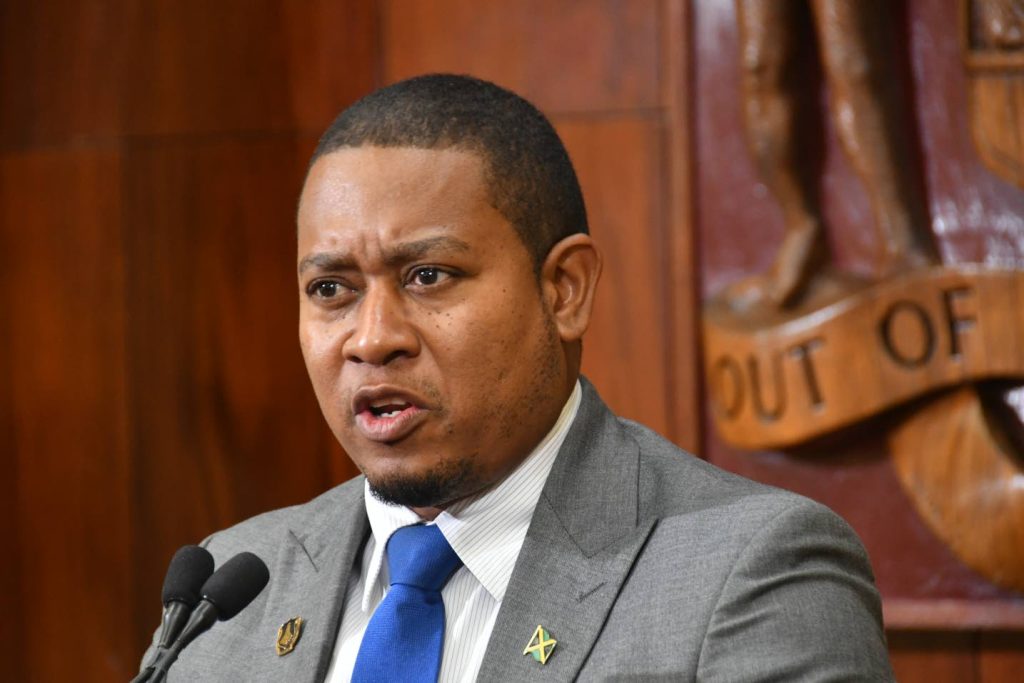
WHAT should be a place for elected representatives to challenge one another through debate has been interrupted, on several occasions over the past year, by protests, walkouts and heated exchanges, with Tuesday’s confrontation over the Cuba censure motion being the latest flashpoint.
However, Leader of Government Business Floyd Green and Leader of Opposition Business Phillip Paulwell have expressed contrasting views over what is driving the repeated breakdowns in order.
In separate interviews on Wednesday with the Jamaica Observer following Tuesday’s sitting, Green blamed what he described as a lack of discipline and leadership among Opposition members, while Paulwell argued that the management of Parliament, particularly the Speaker’s handling of proceedings, was increasingly putting the Opposition at a disadvantage.
Their contrasting accounts have brought into focus the growing strain between the two sides of the House and raised questions about whether the country’s Parliament can return to more orderly proceedings.
Green said members of Parliament were responsible for maintaining proper conduct, even when disagreeing with decisions made by the Speaker or other parliamentary authorities.
“I think what we have happening too much is that, where a decision is made and it does not find favour with the Opposition, they resort to some form of protest, and that is more than unfortunate, that is unparliamentary, quite frankly, and should not be the approach,” he told the Observer after speaking at a post-Cabinet press briefing on Wednesday.
Green said he could not recall a previous period in Jamaica’s parliamentary history when an Opposition had responded to unfavourable decisions by attempting to halt proceedings.
He pointed to past Opposition responses, including walking out of the chamber or holding press conferences, as ways of expressing disagreement without stopping the business of Parliament.
PAULWELL... argued that the repeated confrontations were rooted in how Parliament was being managed, and the treatment of the Opposition.
He also rejected the suggestion that the problem was with the House itself, instead placing responsibility on the Opposition’s leadership to ensure its members followed parliamentary rules. “It’s a challenge with the Opposition not appreciating that they too are bound by the principles of the House, and it’s unfortunate because every opposition wants to be Government, and when you set a precedent like this it just creates a very difficult situation,” he said. Green said the way forward was for Opposition leader Mark Golding to exercise greater control over his members and encourage them to use other avenues when they felt aggrieved by a parliamentary decision. He also suggested that Golding was sometimes contributing to the conduct he was criticising, making it difficult for him to correct the behaviour of his members and also blamed him for not allowing Paulwell to do his job as leader of opposition business effectively. However, Paulwell rejected Green’s assessment, arguing that the repeated confrontations were rooted in how Parliament was being managed and the treatment of the Opposition. He said the minority had been increasingly disadvantaged over the past year, particularly in its efforts to question decisions and hold the Government accountable. “Well, I believe that the Parliament has declined into a state of disrepute, and it has to do with largely the management of the Parliament, all the affairs of the Parliament. I believe from our standpoint that we are seeing greater oppression of the minority in Parliament over the last year or so, when in fact there has always been a presumption that to enable greater accountability, and transparency, great leeway ought to be given to the minority in Parliament,” he said. Paulwell said the interpretation of the standing orders, which govern how the House conducts its business could place Opposition members at a disadvantage depending on how the Speaker applies them.Members of Parliament at the sitting of the House of Representatives on November 3, 2026. What should be a place for elected representatives to challenge one another through debate has, on several occasions over the past year, been interrupted by protests, walkouts and heated exchanges.
He argued that the Speaker, who has the final authority to interpret the rules in the chamber, should remain above the political rivalry between Government and Opposition members. “What I think has happened, and it might be due to the inexperience of the leader of government business, is that the Speaker is now embroiled in the cut and thrust of the democratic process that results from the two-party rivalry and competition,” he said. “Now, the practice of the past, the leaders of Government business and Opposition business, they work things out, and it is true that he and I have a cordial relationship, and I believe that if he and I are allowed to manage the affairs of the Parliament, things wouldn’t go much further. But it cannot be that the Speaker, who is to be the final arbiter, the umpire, that person ought not to be engaged in the rivalry,” Paulwell added. He said he had previously called for regular meetings involving himself, Green and Speaker Juliet Holness to settle disagreements away from the public proceedings of the House. He also rejected Green’s suggestion that he was unable to maintain discipline among Opposition members, pointing to his own experience serving as both leader of Government business and leader of Opposition business. “That is absolute nonsense, there are only a few persons on their side with the level of experience that I have, having served as leader of Government business for years, and also leader of Opposition business, and what has happened in the past is for the leader of opposition business and government business to work out the accommodation and the facilitation, and to make sure that there is greater harmony in the running of the Parliament,” he expressed. Paulwell is therefore calling for a cooling-off period and renewed discussions involving the parliamentary business leaders, with the possibility of Prime Minister Andrew Holness and Golding also participating. He said the matter could be addressed through renewed engagement between the country’s political leaders, including as part of the Vale Royal talks on constitutional reform.