‘I was not pressured’, says Holness re Jamaica’s UN vote on Cuba
Originally published by Jamaica Observer Read the original
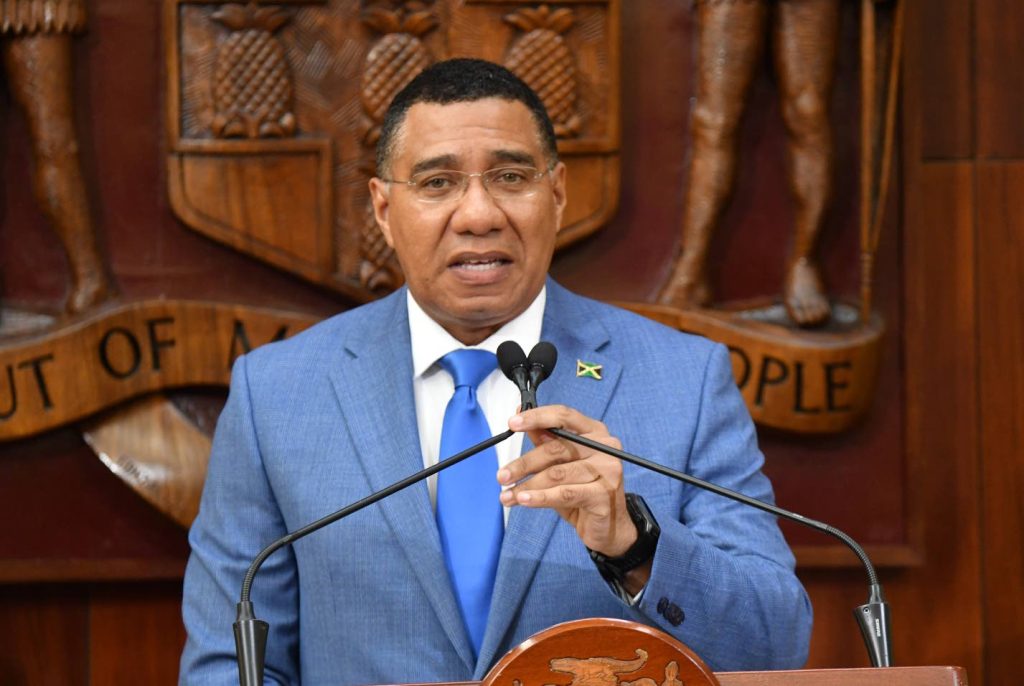
KINGSTON, Jamaica — Prime Minister Dr Andrew Holness has told Parliament that he was not pressured by the United States (US) Government to change Jamaica's vote on the US embargo against Cuba on October 28.
There has been speculation about whether the Holness administration was pressured by the US when Jamaica’s delegation to the United Nations abstained from the vote calling for the United States to remove its more than six-decade long economic embargo against the Spanish-speaking country.
The parliamentary Opposition went as far as to accuse the Government of deception as the Parliament had, a day earlier on October 27, debated a motion calling for the removal of the embargo. It got the usual bipartisan support that it had received over the past 15 years. The Government was also accused of selling out the Cuban people, an argument the prime minister has dismissed.
Holness faced questions on the matter during Tuesday’s sitting of the House of Representatives. He was asked by Opposition Leader Mark Golding, “What pressure was brought on Jamaica or on you, or on anybody in your Government, to change the position that Jamaica has been consistent on, at the UN, in supporting the motion for the termination of the embargo and instead abstaining on that matter?”
“Certainly no pressure was brought on me. No one threatened me or anything like that,” Holness responded.
“And I just want to be very clear that Jamaica is not the country that you would threaten. That’s not our history, that’s not who we are,” Holness added.
Golding had framed the question in the context of the Prime Minister of Antigua and Barbuda Gaston Browne stating publicly that his country changed its intended support for the UN resolution concerning Cuba following a warning from the United States about the possible effect on the ongoing negotiations regarding visas for nationals wanting to visit the North American country.
“We had decided to support Cuba on a resolution recently and changed our position because we had a call from the [US] State Department advising us that they’re making progress in the negotiations and if we supported Cuba, that it would undermine the negotiations, so we changed our position,” Browne told listeners to his weekly radio programme earlier this month.
“Our instructions to the ambassador in New York was to abstain; I noticed he did not show up, I don’t know what happened, but we changed our position because of certain things that were said and we’re still trying, but it’s not something we have any control over,” Browne added in a report carried by the Caribbean Media Corporation.
On Tuesday, Holness told Golding that, “I took careful note of the Antiguan Prime Minister’s position and I wish to say clearly to the people of Jamaica that we don’t share the same circumstances as Antigua. We have conducted our foreign policy in a much different way, where we have deliberately sought to avoid unnecessary conflict. We have been focused on our economic independence. We have been focused on building partnerships that support the best interest of the Jamaican people while preserving our principles and dignity.”