In Hellshire Hills, a NEPA ranger’s wild ride to save Jamaica’s iguana
Originally published by Jamaica Observer Read the original
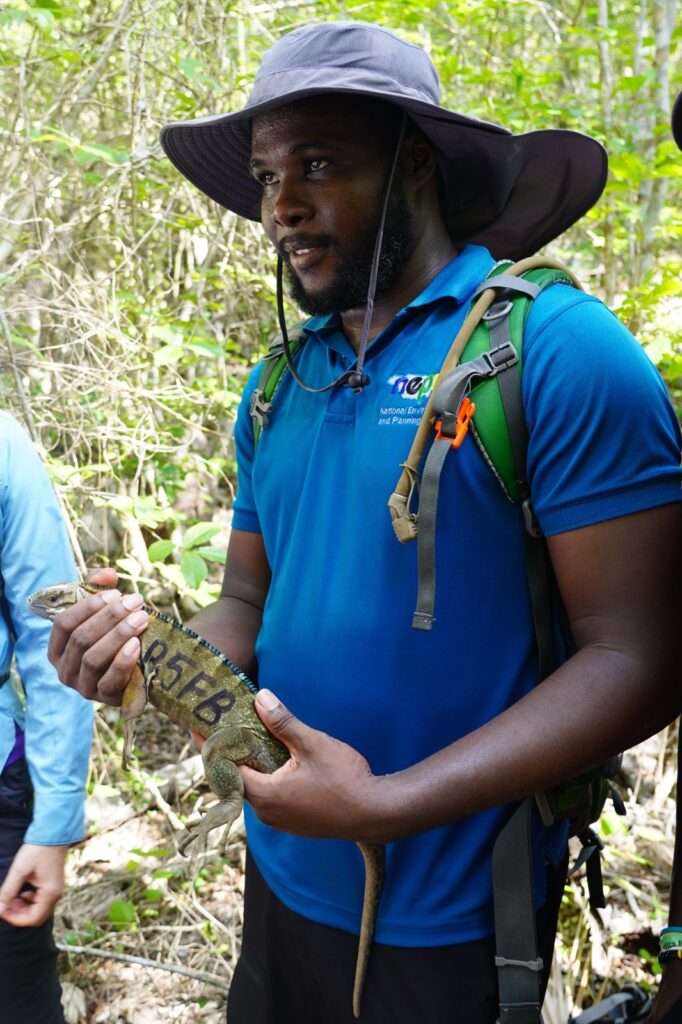
From close encounters with snakes to gruelling days tracking endangered reptiles, life in the Hellshire Hills has been anything but ordinary for the rangers helping to restore Jamaica's endangered iguana population, which recently reached the milestone of 1,000 releases.
One of those rangers, Oneil Wilson has been part of the conservation project since 2019, developing a deep appreciation for the wildlife and demanding work involved in protecting the species.
His journey into the field began with a neighbour who worked at National Environment and Planning Agency (NEPA) and often shared stories about his outdoor assignments and experiences in nature.
“Growing up with him, he was always telling me about being outdoors, doing fieldwork, and how excited and enthusiastic he was about doing all different, various works in the field,” Wilson recalled.
One day, the neighbour took him along on a field expedition, and he was hooked.
Wilson has been working on the Jamaican iguana conservation project as a field technician since 2019. His responsibilities include patrolling designated sections of the Hellshire Hills, monitoring traps and helping to protect the endangered reptiles.
With just four rangers assigned to the area, each has responsibility for a particular section, which can contain approximately 100 traps.
Their daily routine involves inspecting and cleaning the traps and baiting them with fish oil or red herring as part of efforts to monitor and capture predators that threaten the iguanas.
But the work requires more than an interest in wildlife. Wilson said physical fitness, patience and the right mindset were essential.
“Sometimes you go out, you set your goals, and you might not meet that target. Like if you're saying you're going to catch something, it may take days. So sometimes it's a lot of grueling work being a ranger,” he explained.
While further education can be beneficial, Wilson said the job also relied heavily on practical experience and training from fellow rangers. At minimum, however, secondary education is required.
Wilson's seven years on the project have allowed him to witness the steady progress of Jamaica's efforts to restore its endemic Jamaican iguana population.
READ: NEPA to release 1,000th Jamaican iguana into the wild
He said the journey towards the recent milestone of 1,000 iguanas released into the wild had been a lengthy process, involving years of adjustments to conservation techniques.
When the programme began in the early 1990s, the first rangers had limited equipment and experience, making the process particularly challenging.
In those early years, only about five hatchlings were collected annually for the head-start programme, which raises young iguanas in protected conditions before returning them to the wild.
Over time, collaboration involving the International Iguana Foundation, Hope Zoo and other partners helped improve the methods used to monitor traps, nesting and hatching seasons.
The annual number of iguanas released gradually increased from about five to 10, then 50, and eventually approximately 150.
Wilson said the recent milestone was particularly meaningful because it was something he had been told about when he first joined the project.
“The first thing they ever told me was that we really need to hit that 1,000th milestone, and that was seven years ago,” he said.
“To actually be here and go through that process and be a part of that process also is really, really phenomenal. It's an amazing feeling. A lot of hard work, a lot of sweat, but we actually did it.”
On Saturday, NEPA, in collaboration with Hope Zoo, celebrated the release of the 1,000th Jamaican iguana, marking a significant achievement in the country's conservation efforts.
Life in the Hellshire Hills, however, is not without its hazards, and Wilson has had a few encounters he is unlikely to forget.
During one assignment involving radar tracking, which allows rangers to monitor hatchlings' movements and survival rates, he was following a young iguana with a student when he had an unfortunate accident.
Armed with a machete and a GPS device, Wilson misstepped and fell on the blade.
“I nearly lost my finger,” he recalled.
On another occasion, he received an unexpected visitor while staying at his tent in the hills.
Rangers are required to live in tents while carrying out their assignments, with no cabins or other permanent accommodation.
Wilson said he was outside his tent brushing his teeth one night when he felt something touch his forehead.
“I felt something touch me on my forehead, or should I say kiss me on my forehead,” he said.
His eyes had not yet adjusted to the darkness, so he used the light on his phone to investigate.
“I saw the snake dress back and came back for another smooch, I guess,” he recalled, laughing.
The visitor was a yellow boa, one of the many animals inhabiting the area.
Such encounters, he said, are part of the realities of working so closely with nature.
The demands of the job also mean spending weeks away from his family and adjusting to a lifestyle that is vastly different from that of most people.
Wilson, who has a wife and young son, acknowledged that his absence is sometimes difficult for them, particularly when special occasions are missed.
However, he said his family understands the nature of his work, and arrangements can be made for him to take time off for important events.
Despite the separation, he has grown accustomed to the quiet and solitude of the hills.
“Honestly, at times, I feel like society and I don't mix because it's mainly about wildlife,” he said.
He explained that after spending extended periods in the forest, returning home can feel like an adjustment, as he has become more accustomed to the peace and quiet of the natural environment.
For Wilson, the experience has strengthened his appreciation for wildlife and the importance of conservation.
He also wants Jamaicans to better understand what the 1,000th release represents, noting that it does not mean 1,000 iguanas are being released at once or that the island will suddenly become overrun with the reptiles.
Rather, it represents decades of work, from the programme's early beginnings around 1990 to the milestone achieved in 2026.
He described the Jamaican iguana as a gentle creature that plays an important role in maintaining the health of the forest.
For a man who once became captivated by a neighbour's stories of life in the wilderness, the opportunity to contribute to the survival of the species has become a deeply rewarding experience.
“Words can't explain how I feel, honestly speaking, but it's an amazing feeling,” he said.