Integrity advocates support State funding for CAFFE, but with guardrails
Originally published by Jamaica Observer Read the original
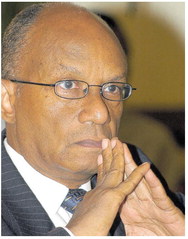
SOME governance integrity advocates believe that the Jamaican Government could provide a financial lifeline for Citizens Action for Free and Fair Elections (CAFFE), but offered differing positions on how State subvention should be administered.
As the electoral watchdog group continues to seek private sector assistance amid financial challenges following the withdrawal of US funding, Dr Trevor Munroe, founding director of National Integrity Action and former vice-chair of CAFFE, argued that Government funding could be a crucial source of support to its survival.
Speaking with the Jamaica Observer last Monday, Munroe noted that CAFFE plays an integral role in safeguarding the integrity of Jamaica’s polls, and warned that inadequate funding could undermine the country’s democratic process.
“The recent narrowing of the funding base of CAFFE potentially weakens our citizens’ critical role in maintaining the electoral foundation of Jamaica’s democracy. It also undermines the important role that the organisation can and is seeking to play in building public awareness on the importance of voting as well as in the exercise of our other democratic rights,” he said.
CALDER... State funding can assist but should not be [the] sole or primary source, in order to protect and preserve independence
CAFFE, established in 1997, has monitored seven general elections, seven local government polls, and several by-elections and re-run elections. Since 2025, however, the watchdog group has faced severe financial challenges following the Donald Trump Administration’s withdrawal of United States Agency for International Development (USAID) funding from non-governmental organisations globally. The frozen funding has heightened concerns about CAFFE’s capacity to monitor future elections. “In these circumstances it is essential for Jamaica’s taxpayers to provide a budgetary allocation to help sustain CAFFE, possibly through a line item in the budget for the Electoral Commission of Jamaica (ECJ),” Munroe reasoned. While acknowledging that ethical concerns could arise from the executive arm of government interfering in the operations of neutral bodies, Munroe argued that CAFFE’s integrity depends on its ability to maintain impartiality towards political affiliations.THWAITES... other independent public interest organisations receive Government support while remaining autonomous, provided that proper accountability safeguards are maintained
“For example, alertness to ethical concerns is always demanded when neutral regulatory bodies, like the NEPA [National Environment and Planning Agency] and the judiciary — the latter an independent co-equal branch of the Jamaican State — are financed by the Jamaican taxpayer through the Government budget,” he pointed out. “If and when Government oversteps its bounds, it is an alert citizenry and robust neutral bodies’ resistance that deters and blocks interference, thereby putting Government back in its proper place,” said Munroe. He added that he does not anticipate CAFFE facing such complications, noting that its funding from USAID had been channelled through the executive branch of the US Government without influencing the organisation’s performance. “It was up to CAFFE and USAID to ensure that the conditions of, and the actual dispensation of funds did not violate CAFFE’s independence nor neutrality in the exercise of its responsibilities. So it must [also] be with funding provided by other international partners [eg the European Union] or by the Jamaican Government,” he argued. “In this latter case the funding would come through the ECJ budget, and CAFFE would have to ensure that its utilisation would be consistent with independent election monitoring — excluding political considerations and being mindful of ethical concerns,” Munroe said. Meanwhile Jeanette Calder, executive director and founder of the Jamaica Accountability Meter Portal, argued that while Government subvention to neutral agencies is not a foreign concept, it must be instituted at no risk to CAFFE’s autonomy. Calder argued that if Government funding is considered, then it should not be the observatory group’s main or only source of financing. “CAFFE serves an important, independent monitoring role of the State’s elections processes. State funding can assist but [should] not be [the] sole or primary source, in order to protect and preserve independence. State funding would best be for CAFFE’s discretionary use where it determines best,” she said. Attorney and former politician Ronald Thwaites shared similar sentiments, stating that it is “perfectly reasonable” for the Government to subsidise CAFFE’s monitoring and surveillance operations. Expanding on his position, Thwaites told the Sunday Observer that it was embarrassing for CAFFE to have relied on international funding rather than support of the Government and private sector. “I would also want to hope that Government’s interests would not be singular, and that the private sector and all of us, in different ways, would want to support CAFFE. “I’ve been a little embarrassed that we were depending on foreign sources to help us to keep our elections clean and fair, so the moment has come now where we have to take care of our own interests. And that should be a combination of Jamaican donations — no doubt including people from the Diaspora and also, very appropriately, a subvention from Government,” he argued. Addressing concerns that State funding could compromise a neutral body, Thwaites said other independent public interest organisations receive Government support while remaining autonomous, provided that proper accountability safeguards are maintained. “The Integrity Commission does that. Various other bodies that are for the public good but are not connected with any State agency also receive those monies. The question of the ethical considerations would only apply in terms of the use of the private sector, and it is not beyond us to ensure that we give proper accounting,” he said.