‘It a mash wi up’
Originally published by Jamaica Observer Read the original
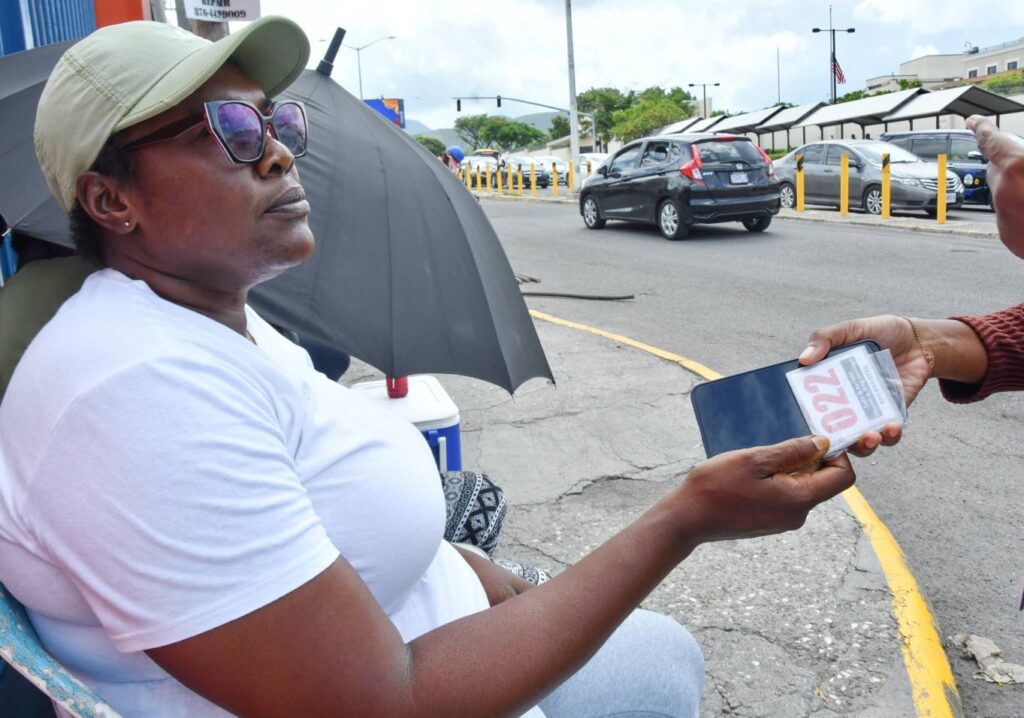
AT least two Kingston entrepreneurs whose livelihoods depend on charging US Embassy visitors a fee to store their mobile devices or provide them with phone calls are requesting a meeting with embassy officials, seeking ways to adapt after a new policy permitting applicants to bring cellphones inside the facility.
The applicants themselves have expressed mixed views about the policy change, with some welcoming the move, rejoicing that they no longer have to pay people outside the embassy to keep their devices while inside, and others expressing scepticism.
Cellphones are just one of the many items now permitted within the walls of the US Embassy. In an advisory on September 1 the embassy said small quantities of baby formula, baby food, milk, diapers, and baby carriers that can pass through an X-ray machine are now permitted. Other items include money, belts, watches, keys, earbuds, medical devices, and non-liquid medication, which must be declared before security screening.
Prohibited items include computers, intelligent eyewear, and other electronic devices, inclusive of media devices, such as compact discs (CDs), thumb drives, memory cards, flash drives, headphones, and speakers. Additionally, cameras or video equipment, flashlights, lighters and matches, weapons, knives, and other sharp objects are not allowed. Alcoholic beverages, purses larger than 18 inches, liquids, lotions, oils, and gels are also not allowed inside.
Cellphone holders tag devices with an identification number to ensure safety and security of devices.
But for Nicole Watson, a vendor who, for more than 15 years, has made a living holding on to cellphones for visa applicants, the move to allow previously banned cellphones is most troubling. “It’s something that we all live off [of]. I don’t know what transpired; it’s odd. We are out here to help each and every one. You have good, and you have bad, but we would just like the embassy to look over things or draw us in a meeting because this is our daily bread. If there are bad apples out here that they need to talk to, they can talk to them to keep the things flowing because we have kids to go to school,” she told the Jamaica Observer, lamenting the cost of living. Watson said the change has destroyed her business. “It a mash we up; it crush up, it gone,” she bemoaned. “I normally have around four buses that come to me in the morning time from May Pen, Mandeville, Savanna-la-Mar, and Montego Bay. I reach here like five in the morning time, or if them call me four o’clock, I will reach down. If possible, I would get 30 people for the day, because I’m known down here, so people just come... On a good day, about 500 or 600 persons come to them [at the embassy], so I can get at least 35 people. Now, everybody passes,” she said. Watson shared that she typically charges $1,000 to store cellphones, $300 for phone calls, and $500 for WhatsApp phone calls, money she said added up to support her and her children, but now she is barely making ends meet. “It’s hard because the sun is hot and business is slow,” she said. A look around the area outside the embassy proved her words to be true, as many other runners sat in the sun along the side of the road across from the embassy, eagerly awaiting business that never came. Watson had just two phones in her bag; she said she got them from loyal customers who still support her business. “Because I am out here long time, I will have my clients who come and I will say, ‘Alright, just give me a lunch money and gwaan,’ but from people hear what is going on now they just move along. We nuh bother press anybody; we just make them move along,” she told the Sunday Observer. Despite slow business, Watson said she will not leave the area. Instead, she will continue to sell phone cards and beverages. “Food have to eat, and gas have to buy. Me nah go do no nine-to-five work because me nah work for $17,000 a week. I cyaan bother with that because that can’t buy gas put in car,” she reasoned. Another vendor, who chose to remain anonymous, expressed concern that she would not be able to take care of her children. “My son inna 10 grade and my daughter inna eight grade, and it’s this send them go [to] school... I start it from them in basic school, then primary school, and now high school... I don’t know how me a go manage,” she said. “A me alone a take care of them, no father, no nothing. Me nuh have no help,” she bemoaned. “It mash up. If we can talk to them and bring it back, that would be good, but I don’t think talking a go bring it back either. We just have to have in our mind what else we are going to do after,” she said. Outside the embassy, applicants and family members sat patiently, awaiting their appointment. For some, the move to allow cellphones was welcomed, but one man was sceptical. “When I came here last week and I heard about it, I told the person, ‘Don’t take your phone inside there’, ” he said, adding that he planned to leave his phone in his car. However, for a woman who gave her name as Jennifer, she loved the idea of not having to stress about where she would store her cellphone. “The first time I came here I had to pay somebody to keep my phone outside, so it’s a good idea. At the time, I did not know that I could not bring in lotion and stuff in my bag, so when I got here I had to throw away things, so it’s good. At least we don’t have to pay money out here now because sometimes they charge $1,500 to hold the phone, and that can buy credit. It’s a good move,” she told the Sunday Observer.