‘It would have been much worse’
Originally published by Jamaica Observer Read the original
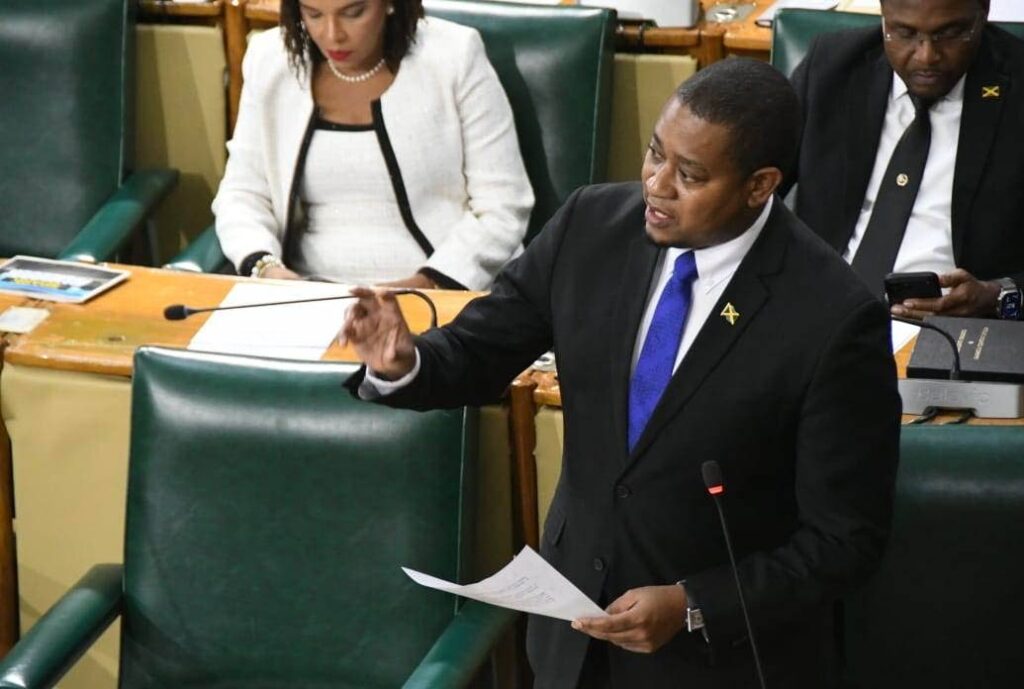
KINGSTON, Jamaica — With a combined allocation of nearly $260 million to combat the drought that has affected much of the country this year, Agriculture Minister Floyd Green has noted that the effect of the dry spell would have been much worse if the Government had not intervened.
Green made the comment in the House of Representatives on November 3 when he announced that there will be adequate eggs, poultry and vegetables, among other crops for Christmas.
“Our assessment is that, despite the severity of the drought and the significant impact it has had on production, Jamaica is positioned to have adequate supplies across most of our major food lines for the Christmas period.
“There will be tighter availability in some individual commodities, but the overall production outlook is encouraging,” said Green.
He told the House that it was important to put the severity of the drought into context. “This was no ordinary dry spell. The conditions Jamaica has been experiencing are unlike a normal drought cycle. We have been affected by exceptionally dry conditions which significantly disrupted our usual rainfall patterns”.
Green said what made the situation particularly concerning was its timing as Jamaica was experiencing worsening drought conditions during what should have been the country’s wet season. Rainfall across the island in September and October was below the 30-year average. “That is significant because water availability is critical to agricultural production. Water sources were under pressure. Rainfall was significantly below normal and farmers were trying to establish and maintain crops through one of the most difficult dry periods we have faced,” Green highlighted.
He reminded that the Meteorological Service recorded below-normal rainfall for April and May and, by the end of June, St Elizabeth, St James and St Mary were experiencing drought conditions, while Manchester and St Catherine were approaching drought thresholds. The situation worsened during July and August when 12 parishes recorded negative Standardised Precipitation Index values, and rainfall across all parishes was below the levels recorded during the corresponding period in 2025.
Green said the Government’s response saw “significant resources” mobilised to respond to the water crisis. This included a $149 million allocation for a drought mitigation programme which focused on increasing farmers' access to water and helping them retain moisture in the soil. As conditions persisted, an additional $60 million was directed towards water trucking, storage, drip irrigation support, and catchment ponds.
“We subsequently announced a further $50 million specifically targeting water storage and drip irrigation systems. Through RADA (Rural Agricultural Development Authority), more than 1,900 truckloads of water were delivered across eight drought-affected parishes. Approximately 3,600 water tanks and nearly 1,400 drip irrigation kits were distributed, while work was undertaken on more than 30 individual and communal ponds with combined storage capacity exceeding seven million gallons,” Green informed.
He shared that approximately 1,700 farmers participated in more than 300 extension sessions between April and August, helping them to better manage crops under the difficult conditions.
Remarking that “the interventions mattered,” Green stated that, “given the scale of the conditions we faced, the outcome could have been considerably worse had we not moved when we did”.
Noting that production had declined, the agriculture minister said the drought was too severe and too prolonged for agriculture to emerge unaffected. Green cited that the agricultural sector had already entered 2026 in recovery mode following the significant impact of Hurricane Melissa.
-Lynford Simpson
