Jamaica makes strides in draughts 100-square board
Originally published by Jamaica Observer Read the original
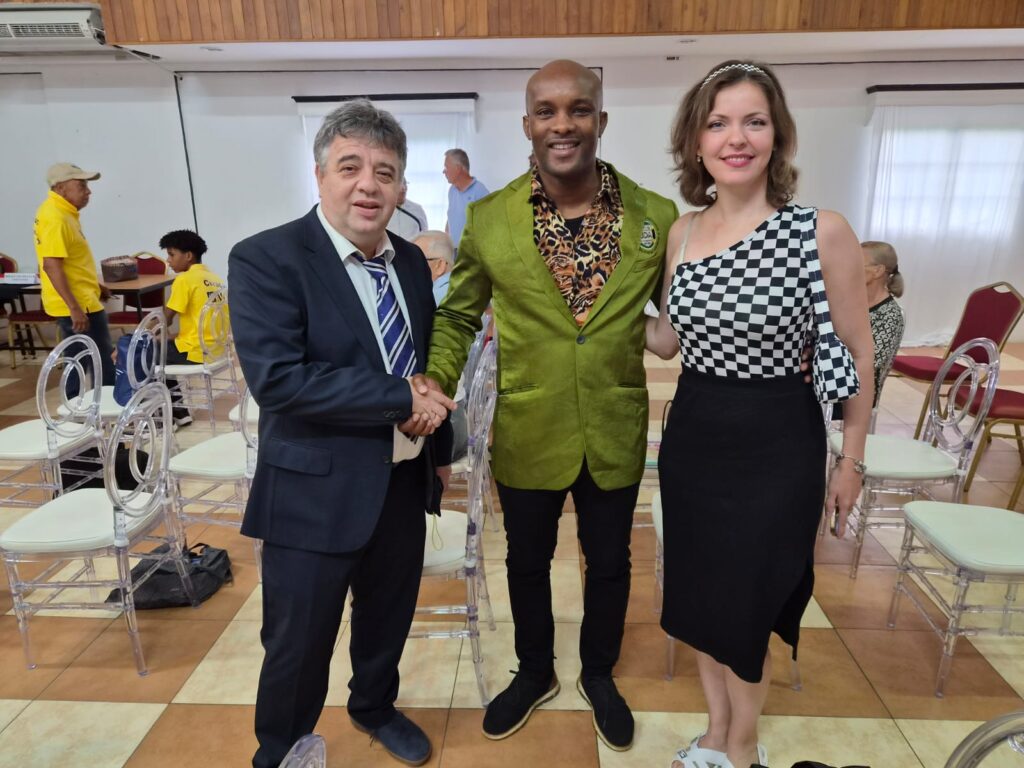
Jamaica recently participated in the Tobago 10×10 International Draughts-100 Open World Cup 2026, gaining valuable competitive experience, new international relationships and study material.
President of the Jamaica Draughts Association (JDA), Jermaine Delattibudiere, Jamaica’s sole participant at the event, said the group now has a deeper appreciation of how many of the world’s leading players develop together.
Delattibudiere entered the tournament as a relative newcomer to the 100-square discipline, having built most of his competitive experience in Jamaican Draughts, Pool Checkers, Russian Shashki and other forms of Draughts-64.
His participation forms part of the JDA’s wider effort to establish a stronger Jamaican pathway into international draughts while preserving and strengthening the country’s traditional 8×8 draughts-64 game.
The tournament attracted a strong international field featuring international grandmasters (gmi), international masters (mi), federation masters (mf) and candidate masters (CMF) from Europe, the Caribbean and the Americas.
Among the leading names was the Netherlands’ International Grandmaster Jan Groenendijk, the reigning world champion, who retained his title after finishing level on points with compatriot Jitse Slump and prevailing on the applicable tie-break.
Groenendijk won the men’s classic, with former world champion International Grandmaster Alexander Shvartsman of Israel taking second and International Grandmaster Martijn van IJzendoorn of the Netherlands placing third.
Dutch International Grandmaster Jitse Slump took the Blitz title with 16 points. Fellow Dutch players - International Grandmasters Wouter Sipma and Simon Harmsma followed in second and third with 14 and 13 points, respectively.
The women’s competition also featured high-level international talent. International Master Viktoriya Motrichko of Ukraine captured first place in the women’s classic, followed by International Master Natalia Sadowska of Poland. Candidate Master Galina Petukhova of the United States was third.
The Caribbean’s emerging generation was also on display, with Zelena Mohammed of Trinidad and Tobago winning the female youth category, while Prince Mauricio of Curaçao captured the male youth title.
Delattibudiere’s participation represented another important step for Jamaica in gaining practical exposure to this higher international level.
He scored seven points in the classic and the blitz, finishing ahead of several players with considerably greater experience. His seven blitz points also established a new Jamaican World Cup Blitz benchmark, improving on the six points previously scored by Delroy ‘Tailor’ Bailey in the United States.
One of his standout blitz victories came against American Candidate Master Galina Petukhova, where he produced a carefully concealed five-piece combination, known locally as a ‘five-shot’ stroke, to decide the game.
Delattibudiere shared that one of the most important lessons from Tobago came not only from competition, but from observing the culture of some of the strongest players in the world.
“Throughout the tournament, I observed that many of the international grandmasters and international masters were willing to discuss positions, revisit mistakes, analyse games together and share ideas rather than treating knowledge as something that had to be closely guarded,” he said.
Delattibudiere believes that is a lesson with particular relevance for Jamaica.
“As the JDA seeks to improve the standard of both Draughts-64 and International Draughts-100, its strongest players can play an important role by analysing together, sharing patterns and ideas, reviewing games constructively and helping developing players understand why mistakes occurred,” he suggested.
Near the conclusion of the tournament, Delattibudiere also purchased several International Draughts books directly from International Grandmaster Alexander Shvartsman, one of the most accomplished players in the history of the sport.
Among the material acquired were volumes from Johan Krajenbrink’s Common Positional Play series, which Delattibudiere has been using to strengthen his understanding of the positional principles of the 100-square game.
The purchase became even more meaningful when several leading competitors signed the books and added personal messages of encouragement. The signed books are therefore more than souvenirs. They represent study resources and a tangible link between Jamaica’s developing International Draughts programme and some of the strongest practitioners of the game.
The tournament also provided important opportunities for sporting diplomacy and relationship-building.
Delattibudiere, who also serves as general secretary of the Pan-American Draughts & Checkers Confederation (PAMDCC), interacted with players, officials and administrators from several countries.
Among them was Candidate Master Nicholas Ramsundar, president of the Trinidad and Tobago Draughts & Checkers Association and former PAMDCC Youth Director. Ramsundar was among the officials who presented Delattibudiere with a certificate of participation at the conclusion of the tournament.
Delattibudiere also interacted with leading female players Motrichko and Sadowska, as well as numerous international grandmasters, international masters and other titled competitors.
Those relationships are potentially valuable as Jamaica seeks access to coaching knowledge, tournament opportunities and greater participation within the wider international draughts community.
“The wider objective now is to transfer what was learned in Tobago into Jamaica’s domestic development programme,” he said.
The JDA is preparing to introduce 10×10 International Draughts-100 into the Jamaica National Draughts Championships in December 2026 for the first time since the association was established in 2016. The initiative is intended to complement, rather than replace, Jamaica’s traditional 64-square game.
The association also plans to pursue more structured school and club coaching programmes, with youth development, women’s participation and stronger player-development pathways among its priorities.
The experience in Tobago has strengthened the JDA’s view that simply entering international competitions will not be enough.
“To become consistently competitive, Jamaica will need study material, quality coaching, tournament-standard equipment, regular domestic competition, international exposure and, perhaps most importantly, a culture in which experienced players are prepared to help strengthen those coming behind them,” the president added.
That philosophy also fits the wider direction of the association, which has increasingly stressed that its success should not be measured only by trophies, but by the development of children, women, schools, community clubs, returning players and Jamaica’s established elite.