JPL referees dispute continues despite $3m payment; emergency meeting set for today
Originally published by Jamaica Observer Read the original
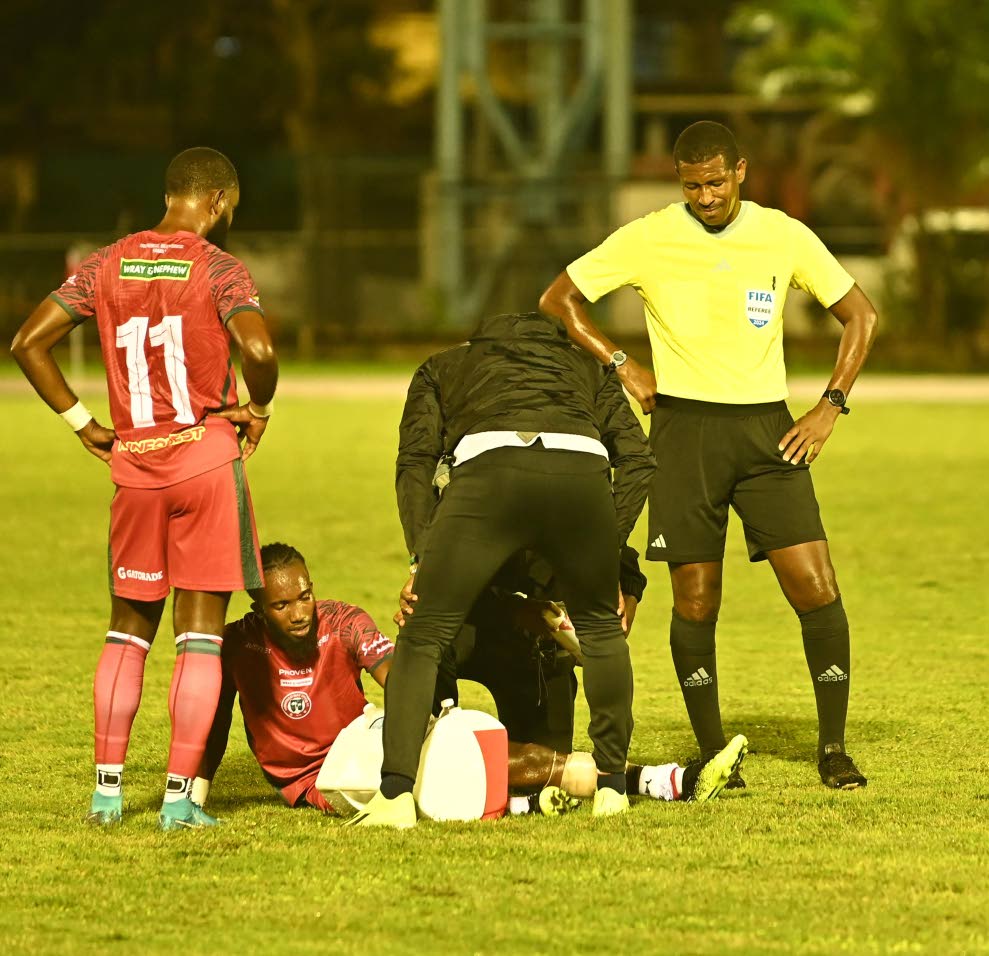
Despite a payment of $3 million, uncertainty remains over the resumption of the Legend Jamaica Premier League, as $200,000 remains outstanding to match officials. An emergency meeting involving the Jamaica Football Referees Association (JFRA) and Professional Football Jamaica Limited (PFJL) is scheduled for Monday as stakeholders seek to reach an amicable resolution and prevent further disruption to the competition.
The JFRA had withdrawn its services for Sunday's JPL fixtures, citing outstanding payments exceeding $3 million. The payment, however, was made on Saturday, November 21, a day before the scheduled matches, prompting a response from PFJL Chief Executive Officer Owen Hill.
In a letter addressed to Jamaica Football Federation (JFF) General Secretary, Gregory Daley, JFRA President Valdin Legister expressed disappointment that referees were still owed $3,009,120 despite a recent payment of $2.2 million.
Legister said the payment represented less than half of the approximately $5.2 million owed to match officials and argued that referees could no longer be expected to use their personal resources to facilitate the staging of the competition.
“This association is built on the principles of fairness and respect. This mild gesture of $2.2 million from a claim of $5.2 million shows neither,” Legister wrote.
He said the outstanding payments had placed an additional financial burden on referees, who were now struggling to cover the costs of travelling to and from matches.
“Referees can no longer use personal funds to subsidise a league with a handsome sponsorship package. They are simply not in a position to get to and from games at this time without increasing their personal financial burdens,” he stated.
Legister said the association wanted the matter resolved with the outstanding balance cleared and a proper payment arrangement established to prevent similar situations in the future.
He outlined two requirements for moving forward: clearing all outstanding payments and agreeing on a transparent payment system that identifies who is responsible for payments and when they should be made.
“We want to continue serving the game. We hope this is resolved in the shortest possible time,” Legister added.
Meanwhile, Hill, responding on behalf of PFJL, said the matter had not been formally communicated to the professional league body through its established channels.
However, he said PFJL recognised the seriousness of the situation and had taken proactive steps in an effort to protect the competition and prevent disruption.
Hill acknowledged the legitimate concerns of match officials but said the recurring payment difficulties pointed to wider structural and administrative problems within Jamaican football.
“We recognise the legitimate concerns of our match officials and the important role they play in delivering the league. Equally, these recurring challenges highlight the need for greater institutional coordination, clearer responsibilities and a sustainable framework for addressing these obligations,” Hill said.
He said the immediate priority was to work with the JFF, the referees association and the competitions committee to settle the outstanding payments and establish a system that would prevent a recurrence.
Hill also warned that ongoing difficulties could undermine the commercial progress of the country's top-flight competition.
“Ultimately, Jamaican football cannot develop commercially while fundamental operational challenges and structural gaps undermine any progress being made,” he said.
He reaffirmed PFJL's commitment to protecting the interests of all stakeholders and maintaining the professionalism, stability and credibility of the JPL.
The latest dispute once again places the spotlight on the longstanding issue of payments to match officials in Jamaican football, with the withdrawal of referees threatening the smooth staging of league fixtures.
The immediate challenge for the relevant stakeholders is to resolve the outstanding obligations and agree on a reliable payment structure to ensure that the dispute does not further disrupt the competition.