King Charles responds to Jamaica’s reparations petition; refers matter to Privy Council
Originally published by Jamaica Observer Read the original
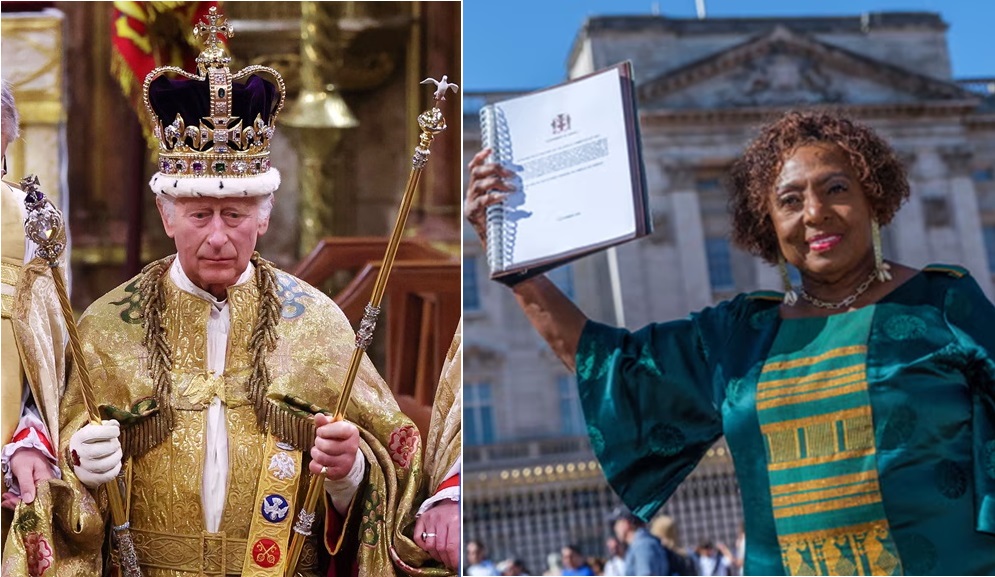
Britain’s King Charles has referred Jamaica’s petition for reparations for chattel slavery that was filed on 7 September to the Judicial Committee of the Privy Council.
Minister of Culture, Gender, Entertainment and Sport, Olivia Grange made the disclosure in a statement to the House of Representatives on Tuesday.
“We are awaiting directions from the Judicial Committee of the Privy Council as to the next steps to be taken in the case. We will keep the Cabinet and the Parliament updated on the developments,” she said.
Grange reminded that the filing of the petition was in keeping with the instructions of the House that "Jamaica should pursue reparations in the name of our African ancestors who endured hundreds of years of enslavement on this island, and in the name of the people of Jamaica”.
The effort is being spearheaded by the National Council for Reparations whose purpose is to research and advise the government on the pathway to reparatory justice.
Grange said the refusal of the United Kingdom to meaningfully engage on reparatory justice was what caused Jamaica to consider other options.
“We have chosen to pursue a legal pathway. A matter such as this might have been considered by the International Court of Justice. However, our advice is that Jamaica is prevented from commencing inter-state litigation against the United Kingdom before the International Court of Justice”.
Grange explained that the UK has placed specific reservations on the compulsory jurisdiction of the ICJ which prevent the Court from adjudicating on disputes between the United Kingdom and the government of any other country which is or has been a Member of the Commonwealth.
To overcome the hurdle, the reparations committee relied on the advice of the highly-regarded veteran attorney-at-law Frank Phipps. The advice was for Jamaica to petition the King using colonial law.
Grange also noted some of the criticism that followed the petition.
“We see that commentators have taken issue with the term petition, suggesting that we are going to the King on our knees. It’s simply the name of the process which is really a right to ask the King, the Head of State, to take some action on behalf of the people of Jamaica,” she said.
Grange highlighted that the ancestors who survived the Middle Passage and were taken to Jamaica endured the most horrific experience.
“Their status as human beings was denied. They were categorised as chattel, which means property that was bought, sold, and branded with hot irons to signify them as belonging to specific enslavers.
“They were abused with impunity — men, women, girls, and boys. They were raped. They were made to breed. They were forced to work for free. This went on everyday for hundreds of years. It was the gravest crime against humanity,” she remarked.
Grange said it was not enough for the leaders of countries that enslaved our ancestors to regret the suffering that slavery inflicted and to say to us let’s build a new future.
“They credit themselves with ending slavery without consideration of the successful struggle for freedom by the ancestors themselves including great heroes such as the Right Excellent Nanny of the Maroons, the Right Excellent Sam Sharpe, Tacky, Kojo, Accompong, and many others.
“Must we congratulate the arsonist for putting out the fire?”
-Lynford Simpson