Lead, Mia, lead!
Originally published by Jamaica Observer Read the original
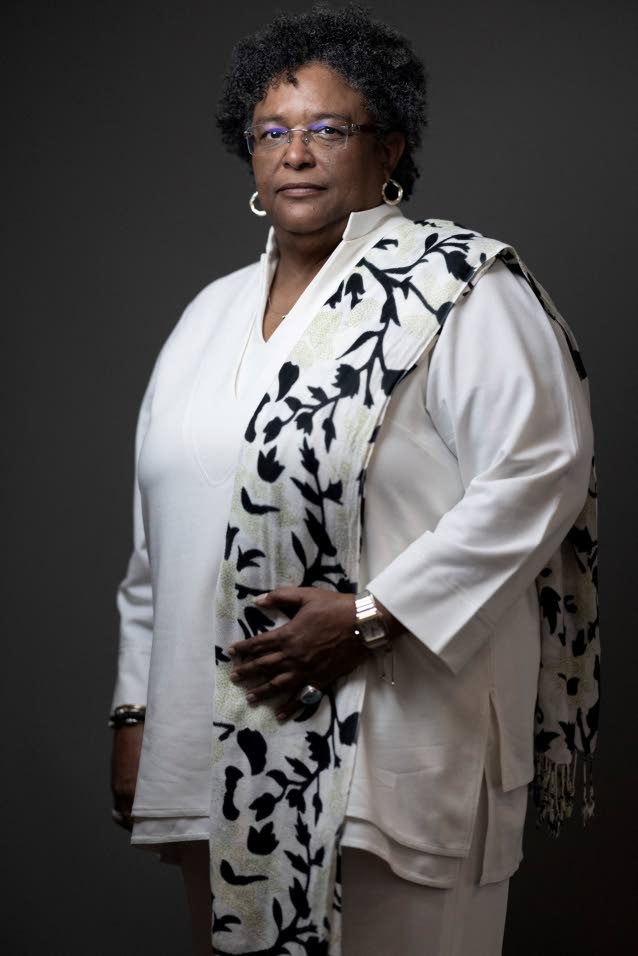
Last Sunday evening, at Mona, Prime Minister Mia Mottley told a room full of former prime ministers that the Caribbean Community (Caricom) will go no further without a political head. The rotating chairmanship, she said, does not serve the community. Someone must provide continuity, speak for the region, and make sure that what leaders decide actually gets done.
I agree with every word of the diagnosis. I disagree with the prescription.
Caricom does not need to create the post she described. It already has someone to fill it, and she gave the speech. Consider her credentials. Mia Mottley is the head of Government with lead responsibility for the Caricom Single Market and Economy (CSME), the very heart of the integration project. She has chaired the conference several times. She authored the Bridgetown Initiative, which made a small island’s case on debt and climate finance heard in Washington, Paris, and New York. When the world tunes in to the Caribbean, it is her voice it most often hears. If a political head is someone with a portfolio, a platform, and the trust of the people, then the community has one. She is simply waiting for a title.
She has done this before, without waiting for anybody’s permission. In 2006, as deputy prime minister of Barbados, she chaired the Caricom subcommittee on security for Cricket World Cup 2007. Out of that work came the Caricom Implementation Agency for Crime and Security, the Joint Regional Communications Centre, a regional intelligence fusion centre, a single domestic space, and a common visa. Ten countries, one border, in time for the first ball.
Dr Peter Phillips, her partner on that task force, was in the audience on Sunday. He will remember that nobody amended a treaty first. A deadline and a leader did the job.
So, Prime Minister, with the greatest respect: What are you waiting for?
The rotating chair is a constraint, not a prison. Nothing in the Revised Treaty of Chaguaramas stops the lead head for the CSME from building a standing machine of her own and putting it to work tomorrow. Here is where I would start:
First, the ambassadors, and there are two kinds. Every member State names an ambassador to Caricom, its envoy to the community itself, accredited to the Secretariat in Georgetown. They already carry the integration agenda for their governments, yet they rarely work as one team. Let them be her standing council, meeting monthly and tracking every decision of the heads until it is carried out.
Beyond the region, every member State also keeps heads of mission in Washington, Ottawa, London, Brussels, Addis Ababa, and at the United Nations. They meet now and then, but they do not operate as one corps. Mottley lamented on Sunday that Caricom has only observer status in New York, while the European Union speaks from the rostrum. Then let our heads of mission abroad act as one corps under her convening, with a single regional brief, a shared calendar, and one voice on climate finance, correspondent banking, and deportations. No treaty change is needed for that, only a telephone and a will.
Second, the young: For more than 30 years, every member and associate State has appointed Caricom youth ambassadors. They are an unpaid, ready-made network in all 20 capitals, and too often they are given little to do beyond International Youth Day. Give them the CSME. Make them the region’s field force for free movement, explaining rights at ports and promoting the skills certificate, and reporting every border official who turns a Caricom national away.
Third, the Diaspora: This is where I take issue with her arithmetic. Mottley proposes a 0.3 per cent import levy and a dollar or two on visitors to raise about US$90 million a year for the regional institutions. She is right that the problem is the mechanism and not the amount, and right that leaders promised automatic financing at Rose Hall in 2003 and then did nothing about it. But look at the scale. Caricom countries received some US$9 billion in remittances last year. Her entire budget for the community comes to about one per cent of what our people abroad send home every year without being asked.
I am not proposing a tax on remittances. Washington already takes one per cent of cash transfers, and our families have paid enough. I am proposing that she asks for a Caricom Diaspora Bond; a regional investment window; and a register of professionals in Toronto, London, Brooklyn, and Miami who would give a month a year to a regional agency. The Diaspora does not lack money or talent. It lacks an invitation from someone it trusts. She is that someone.
Fourth, her own money skills: A leader who steered Barbados through a debt restructuring, and who argues fluently with the International Monetary Fund (IMF) and the World Bank, does not need a new secretariat to design a regional financing plan. She can commission it from the Caribbean Development Bank, the central banks, and The University of the West Indies’ own economists, then table it at the next conference as a finished protocol, not a discussion paper. Let the levies go in, too. But let the Diaspora instruments go first, because they need no Customs officer and no unanimous vote under Article 236.
None of this diminishes her argument for a permanent political head. In time the community may well create one. But institutions follow leadership; they rarely produce it. The secretariat did not invent the single domestic space; a Barbadian deputy prime minister with a cricket deadline did.
The people of this region have already decided who speaks for them. Listen in a rum shop in Port of Spain, on a minibus in Kingston, or a call-in programme in Georgetown, and you will hear her name, not a committee’s. The mandate is not waiting for a treaty. It is waiting for her.
Prime Minister, you asked on Sunday who must speak for the Caribbean. Forgive the bluntness, you already do. Now lead!
Julian Rogers is founder and publisher of Caribbean Bridges. Send comments to the Jamaica Observer or julian@caribbeanbridges.com.