Legal minds question balance of power in Caribbean governance during ‘Reasoning’
Originally published by Jamaica Observer Read the original
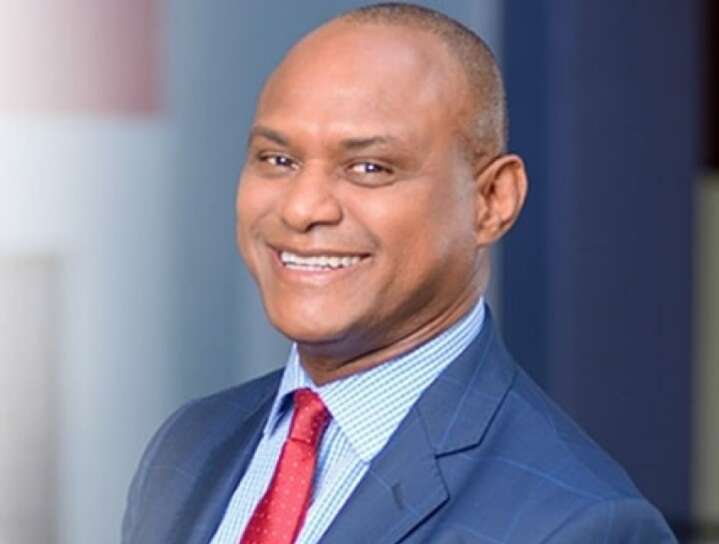
Key political figures and legal luminaries from across the legal, political and civic society landscape convened a "Reasoning" to interrogate a fundamental question for democratic governance: what latitude should the Court exercise when considering policy implemented by Parliament?
Dr Christopher Malcolm, principal of the Norman Manley Law School (NMLS), in his setting-the-stage presentation at the Reasoning event, under its Thought Leadership in Action at NMLS initiative, urged policymakers, jurists, academics, students and the public more generally to look beyond theoretical orthodoxies.
Citizens across the Caribbean region, he substantively contended, live under a structural illusion—a stark departure from standard civic learning that governance operates across three distinct and balanced branches.
“We speak about three arms of government, but in practice we recognise that, at best, we really have two: an Executive collapsed into a Legislature and the Court,” the NMLS principal stated.
He noted that "in substance regional systems, as well as others across the globe that are similar, tend to deliver legislation by the Executive rather than legislation by the Parliament.”
He questioned whether Parliament can genuinely claim to represent the electorate when Cabinet, if not the prime m8inister alone directing Cabinet, leads on governance, and "voting along strict party-lines tends to prevail".
In this vein, Malcolm asked: “If legislative decisions reflect party alignment rather than conscience-driven debate, should the Court intervene when what is presented as the people's will is actually the will of a very small group?”
Malcolm contended, however, that the Court presents its own paradox. While the Court can claim to be the most accessible to the people's branch of Government, it can at the same time also be considered as the branch that "is least accountable to the will of the people, with unelected judges being the applied standard for courts across the Caribbean region".
When rulings by the court strike down laws supported by public consensus, courts risk substituting judicial preference for democratic mandates.
Furthermore, while jurists often view the bench as a shield against parliamentary overreach, he cautioned against trading one form of overreach for another, stressing that legal culture must encourage constructive critique of judicial rulings rather than silent deference.
Joining the discussion, Dr Ralph Gonsalves, former Prime Minister and now Leader of the Opposition of St Vincent and the Grenadines, offered a counter-perspective on political power, while underscoring that there is a marked difference in public accountability between elected leaders and the bench.
“In our small societies, the so-called power of parliamentarians or even the executive is largely illusory,” Dr Gonsalves observed, arguing that governments cannot achieve progress without broad societal consensus.
Pointing to mechanisms of democratic oversight, the Vincentian former prime minister and leader of the opposition noted that while politicians face voters every five years, judicial oversight remains far more complex.
“To deal with a recalcitrant, authoritarian, or thoroughly biased judge takes a much longer period of time because you really have to impeach them—and that is the nuclear solution,” Gonsalves said.
Nevertheless, Gonsalves framed institutional friction as a natural element of Caribbean democratic development. “You are always going to have this tension between Parliament and the law courts,” he stated. “It is a desirable tension, so long as we stay within the boundaries of the fundamental law of the land, the constitution, and a set of values driving our governance.”
Building on what was said by Gonsalves, the Honourable Justin Simon, KC, former Attorney General of Antigua and Barbuda, brought concrete regional context to the forum by highlighting recent public attacks on the bench in Antigua and Barbuda.
Pointing to instances where executive commentary crosses into intimidation, Simon cited local political rhetoric.
“We have a prime minister who has threatened members of the judiciary, stating that he would not hesitate to declare them persona non grata in Antigua and Barbuda," Simon said.
Turning to the legislative branch, the veteran attorney-at-law agreed that Caribbean governance structures have effectively collapsed into a single entity.
Ralph Gonsalves (Photo: Naphtali Junior)