Montego Bay mayor seeks private partners to optimise SJMC assets
Originally published by Jamaica Observer Read the original
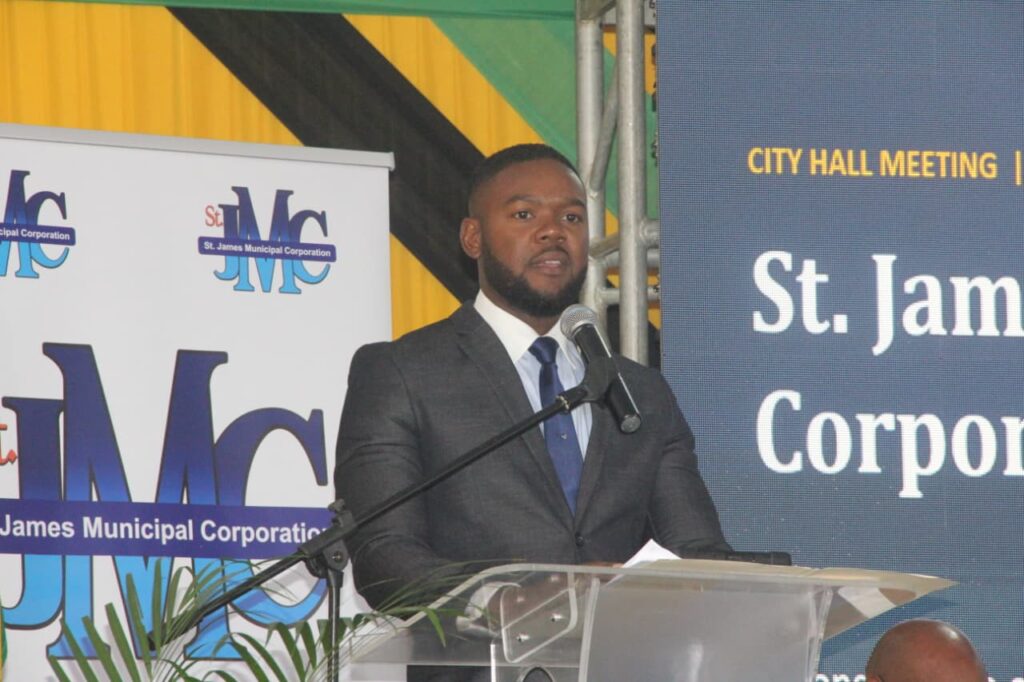
ST JAMES, Jamaica — As part of efforts to optimise assets owned by the St James Municipal Corporation (SJMC), Mayor of Montego Bay Councillor Richard Vernon said the corporation is exploring public-private partnerships (PPPs).
Speaking during the corporation's public budget forum last Thursday, Vernon said the SJMC is seeking to raise $450 million through this avenue to support its capital expenditure programme.
"I am issuing a direct open invitation this evening to our private developers, our financial institutions and our local entrepreneurs. Come to the table; let us discuss business," Vernon declared.
"Our doors are wide open for serious dialogue regarding strategic real estate ventures and public-private partnerships," he added.
The mayor was outlining the corporation's plans to undertake $1.086 billion in capital expenditure during the 2027/2028 budget period.
He said the funding was necessary to finance projects such as repairs to the Charles Gordon Market, which was damaged during Hurricane Melissa, similar repairs at the Jarrett Park sports facility, and infrastructure development at Bogue Lands, among other initiatives.
While the corporation expects to receive $456 million through the Tourism Enhancement Fund (TEF) and sponsorships, as well as $180 million in insurance payments, Vernon said asset optimisation would also play a significant role in raising the funds needed.
Speaking to the Jamaica Observer on the sidelines of the event, the mayor explained that the corporation would explore divestment options for undeveloped or underutilised properties, working with private-sector investors.
"We have properties at Brandon Hill, we have properties at Leaders Avenue, and those are prime areas for real estate development," he said.
"Once persons are interested in those areas, we are willing to have a conversation because we want to repurpose our assets but, more importantly, develop the city to generate more employment, to develop the space in such a way that the services are properly delivered," he added.
Vernon said the discussions would also consider opportunities to provide housing for the wider population.
"To also ensure that we increase housing, not just for persons who are doing Airbnb and that sort of business but for persons who actually want somewhere to live, we also have property in Retirement area that if developers are interested in affordable housing" he disclosed.
During his presentation, the mayor told the gathering that the public and private sectors could complement each other and benefit from mutually agreed undertakings.
"We possess the land, the regulatory framework and the civic vision. You possess the capital and the execution capacity," he said.
"Let us partner to build modern commercial spaces, develop structured parking hubs and accelerate the urban renewal of Montego Bay through mutually beneficial transparent co-investment," he added.
Vernon said the corporation already had a model in place, pointing to the recent divestment of a major space in Montego Bay.
"We are no longer content to let prime municipal assets sit underutilised, and that is why we leased the Catherine Hall stadium," he remarked.
Although the strategy is a key component of the corporation's plan to finance its capital expenditure programme, Vernon sought to assure St James residents that all arrangements would follow the appropriate channels and procedures.
"Let me assure both our private sector partners and our citizens that this aggressive turn towards commercial joint ventures will be backed by the highest standards of structural oversight," he declared.
"Good governance is measured not only by what it builds, it is also measured by what it reported. Public trust is one of the most valuable assets any institution can possess. It cannot be purchased," he added.
He insisted that public trust must be earned and protected through transparency, consistency and accountability.
"Transparency requires more than promises. It requires evidence, systems, records and willingness to subject public decisions to public scrutiny," he said.
