New yam planting method expected to boost yield
Originally published by Jamaica Observer Read the original
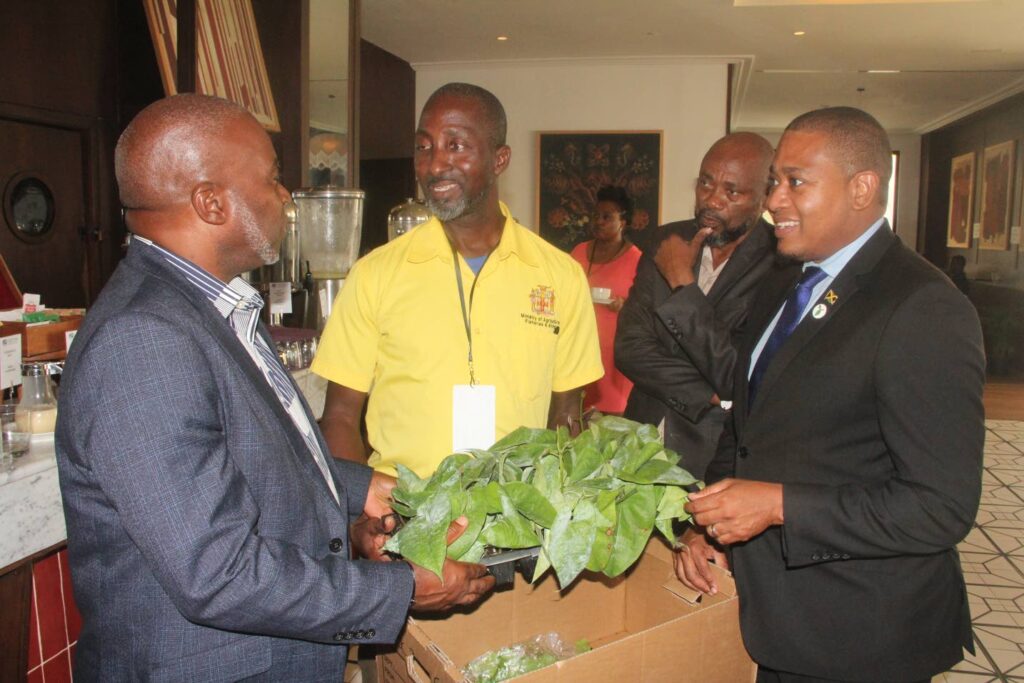
CORAL SPRING, Trelawny — Jamaican researchers now exploring the production of yams using leaf nodes say the technique yields about 10 times more than the traditional approach of using tubers, and Agriculture Minister Floyd Green is hoping local farmers will embrace the change.
“This could be completely game changing, it would increase our productivity tremendously, and that means greater returns on investment for our farmers. It’s not just about production, it’s about productivity. How can we produce more from the same acreages,” the minister told the Jamaica Observer Monday on the side lines of Caribbean Week of Agriculture.
Yam is Jamaica’s most popular tuber and is recognised worldwide, but Green believes the industry can achieve even more.
“We are the king of yam right now, but we have to ramp that up, because we’re still not satisfying demand abroad. It’s our number one export, but we’re still scratching the surface. So that is why the ministry is fully investing in driving this research and [during] the Caribbean Week of Agriculture we get the chance to share some of the things that we’re working on,” he said.
The minister was reacting to a presentation made by Montpelier Research Station in St James, on the second day of the conference. Plant Protection Officer Charles Webster told reporters about next steps.
“With this system, once it’s ratified and verified through research and demonstration, then I believe that it will revolutionise the whole yam industry because it’s not only just the soft or water yam that can use the system; the yellow yam, the harder type yam, can also use it,” he explained.
Yam production through leaf nodes, known as the leaf-bud cutting method, is described as a rapid vegetative propagation technique that uses small sections of a yam vine, each containing a single leaf, a bud and a small piece of stem, to grow high-quality mini seed yams, compared with the current approach of using tubers.
Presenting during the event’s Tuber Forum, Webster said the model could produce yield ratios of up to 1:300, compared with the current ratios of between 1:10 and 1:30.
“I know that once this gets off and gets off in a sustainable way, it can have a very big impact,” he said.

Plant protection officer at Montpelier Research Station displays plant seedlings grown from leaf nodes during his presentation, Monday, at Caribbean Week of Agriculture.
He said he first saw the technique being used in parts of the African continent and recognised the potential it could have in Jamaica. Local researchers began by growing the nodes in what Webster described as sterile media, using coir from coconut husk. “We grew them out in trays and realised that it works. Therefore we continue to do the research to ensure that it’s something that we can present to the public, [something] that is viable and revolutionary,” he stated. Like the minister, he is banking on the exposure of presenting at the ongoing conference to help get the message out to local farmers. “The challenge we might have is the adoption because I know that our farmers normally tend to stick to what they know,” Webster acknowledged. “That is why we have to do the demonstration, we have to ensure that we do the research and then we do the demonstration plots that can testify [about] what can be gained from it. I believe then they will adopt it because we hope that it will reduce the cost of the planting material to the farmers,” he said. The technique would use fewer yams to cultivate new plants. “The traditional system uses the tuber and the head. We need the tuber to eat but that system uses the tuber and therefore limits the amount available to us for table consumption,” the researcher explained. “However, this [leaf node] system uses the vines that you would normally disregard or throw out. So, either you use it to produce seed materials or… maybe, further on when you do the research, you can use it to actually produce table yams; because we have gotten grade one tubers,” said Webster.