Opposition senator questions Government’s commitment to accountability
Originally published by Jamaica Observer Read the original
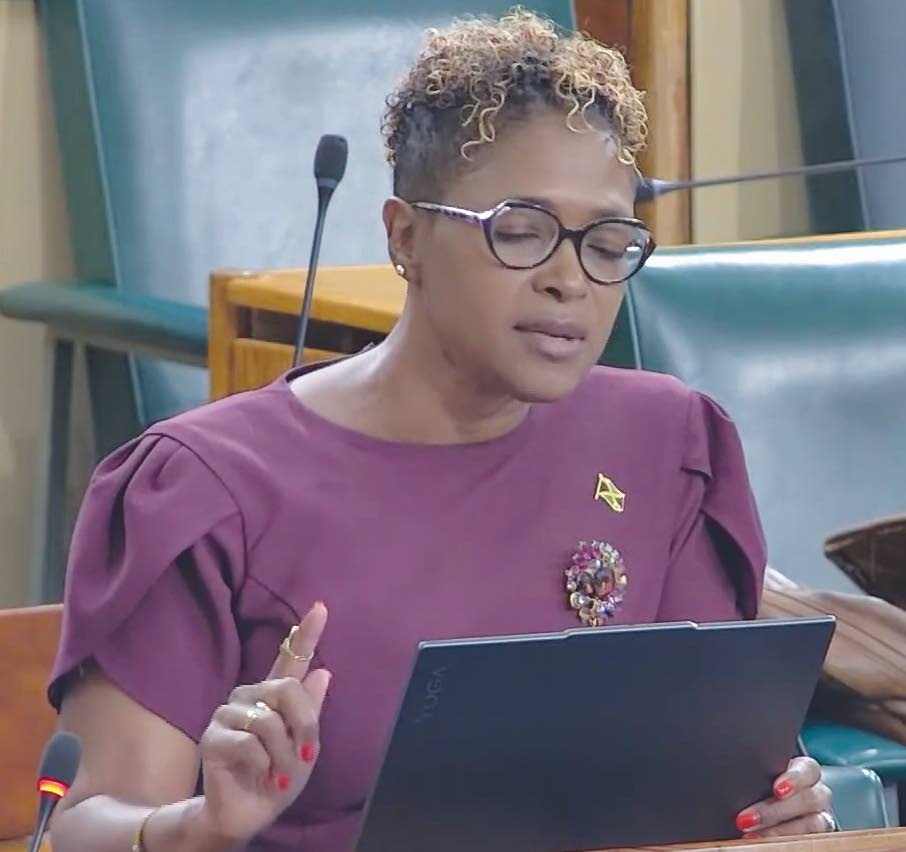
Opposition Senator Kisha Anderson has accused the Government of practicing accountability “only when it is convenient, when the questions are comfortable or when the answers are favourable”.
Anderson made the accusation Friday, during her contribution to the 2026/27 State of the Nation Debate in the Senate.
“Every Jamaican has the right to ask, ‘Weh di money deh?’, and every government has a responsibility to provide an honest answer and to account for its decisions, expenditure and performance,” said Anderson. She noted that while elections give governments the authority to govern, “what they do not give governments is the authority to operate without scrutiny”.
“The Jamaican people do not surrender their right to ask questions when they cast their ballots. Neither do they relinquish their right to know how their taxes are being spent, whether public commitments are being honoured, or whether the decisions taken in their name are improving their lives,” Anderson remarked.
She argued that accountability is not a foreign concept that Jamaica must now discover, the country having demonstrated, through experience, what can be achieved if it is taken seriously. The JMMB Director pointed to 2013 when the public debt stood at 147 per cent of gross domestic product (GDP) and the steps taken, with the involvement of the International Monetary Fund (IMF) and bipartisan support in the Parliament, to turn the situation around.
About the state of affairs in 2013, Anderson said, “I will not debate how we got there, as I know we all know that since independence both political parties have held state power.
“So in 2013 Jamaica had been to the IMF before, we had signed past agreements, but this time something had to be different. In May of that year when the IMF approved the 4-year Extended Fund Facility for Jamaica, it came with accountability - clear targets, strict reporting requirements and consequences for failing to meet our commitments”.
Anderson highlighted that requirements for public disclosure allowed Jamaicans to know whether their government was doing what it had promised, “And importantly, we strengthened accountability through legislation”. In this regard, she pointed to the reinforcement of the fiscal rules in 2014, establishing the framework for reducing public debt to 60 per cent of GDP by 2025/26.
Said Anderson: “The IMF programme changed the terms of accountability in effect from ‘trust us’ to ‘show us’ and accountability did not stop there. As a responsible Jamaican collective, we were mature enough under the leadership of Dr Peter Phillips at the Ministry of Finance to establish the Economic Programme Oversight Committee (EPOC)”.
Anderson told her fellow lawmakers that EPOC was part of the then Government's commitment to transparency, led by the independent private sector. She noted that it brought together representatives from business, trade unions, civil society and the State with a straightforward mandate to monitor whether the Government was meeting its targets and report its findings to the Jamaican people, plainly and regularly.
“Every quarter, EPOC reported publicly on performance relative to target and any risks that existed. EPOC engaged with the Jamaican people and in one such engagement with residents in Swallowfield, (now) Government Senator Keith Duncan said, 'To have oversight means that you hold the Government, any Government, to do what dem supposed to do.'
“Any Government; EPOC was not a partisan instrument. It began under one administration and continued under the next,” Anderson highlighted.
She reminded that in 2016, Prime Minister Andrew Holness re-established EPOC and told its members that it was "‘very important that the Government be kept on its toes.’”
She cited that even after the IMF arrangements ended, the Government signed a memorandum of understanding to keep EPOC in place because Jamaica had recognised the value of independent oversight.
The Opposition lawmaker also noted that EPOC’s responsibility for monitoring Jamaica's fiscal rules passed to a permanent statutory body in 2024 with the establishment of the Independent Fiscal Commission. She said temporary oversight became part of Jamaica's permanent institutional framework, demonstrating how accountability can turn commitments into measurable results.
Anderson also pointed to other examples of accountability, highlighting that a company listed on the Jamaica Stock Exchange that raisees money from the Jamaican public must publish its unaudited results within 45 days of each quarter.
“It must file audited accounts within 60 or 90 days of its financial year-end, and a full annual report, including management's explanation of the numbers, within 120 days.
“If a company expects to be late, it must explain why and indicate when its reports will be submitted. And if it fails to report, trading in its shares can be suspended until it complies. The Exchange exercises this power and publishes monthly regulatory reports identifying companies that are late,” said Anderson.
“Should a Government that spends hundreds of billions of the people's dollars be held to a lower standard?” she asked.
She added that, “If these reporting standards and consequences are good enough for the shareholders of a listed company, surely they should be good enough for the shareholders of Jamaica: its citizens, the Jamaican people".
