Pain and agony at Mandeville Regional
Originally published by Jamaica Observer Read the original
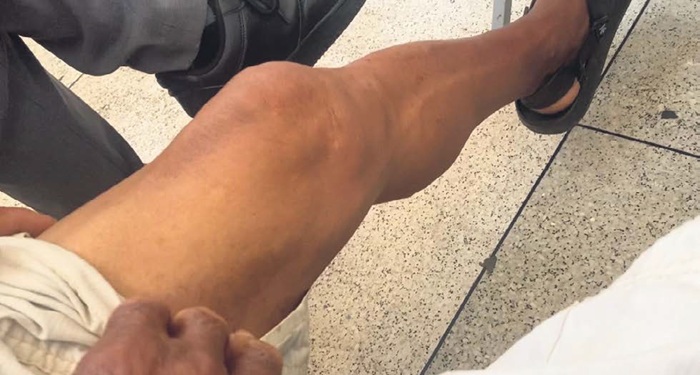
MANDEVILLE, Manchester — A 75-year-old outpatient was among scores of people who either left Mandeville Regional Hospital or waited in pain as most junior doctors withdrew their services on Friday.
“This is not what I am accustomed to, and a lot of the people who were here waiting along with me, they left. I even left too and returned, yet I am still sitting and waiting. I am suffering from pain right now.
I don’t know what cause it and there is nobody to tell me what it is,” the senior citizen who had a swollen left knee told the Jamaica Observer on Friday.
The doctors were protesting the delay by the Industrial Disputes Tribunal (IDT) in handing down a ruling as it relates to overtime payments. Senior medical officer at Mandeville Regional Hospital Dr Everton McIntosh told the Observer that he was “hoping and praying that normalcy” would resume by late Friday or early Saturday.
“If this goes into the weekend then it becomes a lot more stressful, because the few doctors who we have won’t be able to continue indefinitely,” said McIntosh.
He warned the public of the significant delays to access health care at the already overcrowded facility manned by 24 consultants up to mid-afternoon on Friday. “If your condition is not serious, if you are not very sick, perhaps you should consider not coming to the hospital today [Friday]. Our present patient count is 315…
We still have a significant number of patients. A big part of the problem is that over the past several months, since Hurricane Melissa, we have been inundated with patients coming for admissions — particularly medical patients with complications of diabetes, hypertension, heart disease, stroke, cancers, and those kinds of things. “In any hospital, the majority of the staff would be the junior [doctors], and then there are the consultants who would lead them.
We should have had a total of 133 doctors on duty but just the consultants are here, which is about 24, who are actually working,” added McIntosh. He said all departments and wards were left without adequate staff on Friday. “We can see the discrepancy there out of a total of 133.
That has grave implications for the ability for us to cover all of the areas adequately in terms of the wards, the emergency departments, the outpatients and the clinics, so it is not physically possible for the few consultants to carry that workload,” McIntosh said while pointing to a drastic scaling down of routine procedures.
“For example, our outpatient clinics where you see patients who are walk-in patients, those services have basically been suspended for the day [Friday],” added McIntosh. He said people who turned up at the hospital were given a rescheduled appointment date and/or prescriptions. “Similarly, elective surgeries [that were] planned maybe weeks or months before to do a particular surgery, those have had to be postponed as well.
We are only focusing on emergency care, serious emergencies,” said McIntosh. “The whole idea is to ensure that we have adequate coverage for persons who are very ill so that nobody will die or suffer serious complications due to lack of care. All those persons who are well enough who can wait will be asked to wait.
“Even at the wards, what we have done also to reduce the workload is to discharge those persons who are stable, and do not require high-level care, and can survive if they go home with some instructions and with medication. Some of them will be asked to come back early to the clinic to be assessed, just to ensure that they are maintaining good health,” added McIntosh.