Protecting the environment or just another tax?
Originally published by Jamaica Observer Read the original
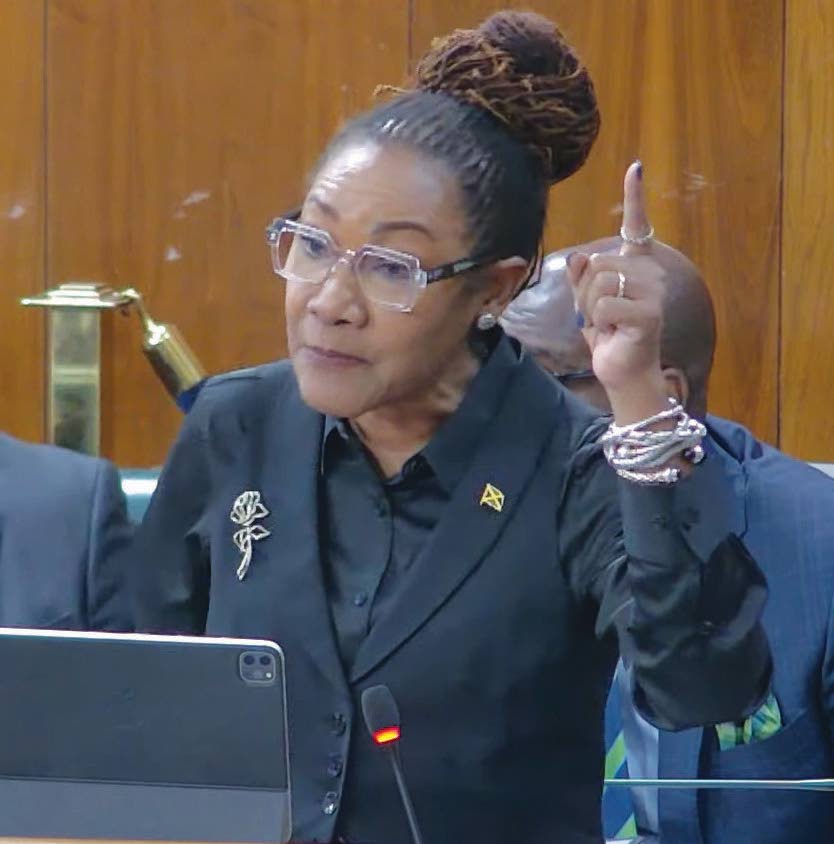
GOVERNMENT Senator Rose Marie Bennett-Cooper and her Opposition counterpart Allan Bernard disagreed strongly about the impact of the Environmental Protection Levy as the legislation was debated in the Upper House on Friday.
Bennett-Cooper argued that the levy, which becomes effective October 1, is much more than a tax as it will ensure measures are implemented to protect the environment. However, Bernard questioned how much has been actually done to protect the environment since the levy was first implemented in 2007.
“I believe that, in considering this Bill, we must distinguish between the instrument and its purpose. The levy is the instrument. But the greater purpose is environmental protection. And so, as we consider this legislation, we must keep our eyes firmly on the environmental mischief that it seeks to address. We must focus on our responsibility to protect the Jamaica that we have inherited, not only for ourselves, but for the generations that will come after us,” said Bennett-Cooper.
She argued that the effects of climate change, pollution, improper waste disposal, and the degradation of the country’s natural resources are becoming increasingly difficult to ignore.
“In fact, we do not have to look very far to understand the scale of our environmental problems,” declared Bennett-Cooper as she pointed out that since February 2022 when barrier interceptors were installed at the mouth of nine major gullies as part of the Kingston Harbour Clean-up Project, they have trapped more than 7.25 million kilogrammes of waste.
‘This is not an environmental problem we have to imagine. We can see it. We can measure it. We can physically pull it out of our gullies,” the Government senator argued.
She also highlighted that Ocean Cleanup, a non-profit organisation dedicated to developing and scaling solutions to rid the world’s oceans of plastic, estimates that waterways connected to Kingston Harbour could be responsible for approximately 947,000 kilogrammes of plastic entering the Caribbean Sea each year.
“The problem is not simply the waste. It is also the way our patterns of production, consumption, and disposal can impose costs on the environment that are ultimately borne by all of us,” said Bennett-Cooper as she underscored that Jamaica’s coastline is one of the country’s greatest natural assets.
“Our beaches attract visitors. Our seas support fisheries. Our coral reefs, mangroves and other marine ecosystems provide protection and support livelihoods. When these resources are degraded, the cost does not remain with the person who discarded the plastic,” she remarked.
Bernard began his presentation by noting that apart from the imposition of a levy, the Bill goes back 19 years to regularise its collection. In this context, he said Parliament is entitled to ask a very simple question: Where, in this Bill, is the environmental protection?
Bernard reeled off several other questions including: Where is the statutory architecture that connects the money collected to the environmental problem it is supposed to solve? Where are the environmental targets? Where are the measurable outcomes? Where is the dedicated financing mechanism? Where is the reporting requirement? Where is the obligation to tell Parliament and the Jamaican people, year after year, not simply how much environmental protection levy was collected, but what environmental protection Jamaica received for the money?

BERNARD...before we increase an Environmental Protection Levy, Parliament should ask what 19 years of this levy has actually meant for the state of Jamaica’s environment
Continuing, Bernard said, “We can see them, we smell them, we drive through them, we wade through them when it rains”. According to Bernard, increasingly, Jamaicans are asking whether they can even access some of the natural resources that constitute their environmental inheritance. “So before we increase an Environmental Protection Levy, and before we retrospectively regularise 19 years of its collection, Parliament should ask what 19 years of this levy has actually meant for the state of Jamaica’s environment,” added Bernard. According to the Memorandum of Objects and Reasons of the Bill, the intent is to address the “negative impact on the environment arising from the consumption, use and disposal of imported and locally manufactured goods.” According to Bernard, while that is a perfectly legitimate objective the design of the legislation should allow us to follow a clear chain. The Opposition senator said such a chain would note that economic activity creates environmental harm, that the State imposes an environmental levy which generates resources and incentives, and that those resources and incentives reduce environmental harm. He said the chain would also see the State measuring the improvement and Parliament holding Government accountable for the results. “That is the chain I expect to find in legislation imposing an environmental levy,” said Bernard. “But when I read this Bill, I can clearly see the first half of the chain — I can see who pays, I can see how much they pay, I can see who collects it, I can see when returns must be filed, I can see provisions governing books and records, I can see tax credits”. “What I cannot readily see is the second half of the chain. Where does the environmental protection happen?”