RIDICULOUS!
Originally published by Jamaica Observer Read the original
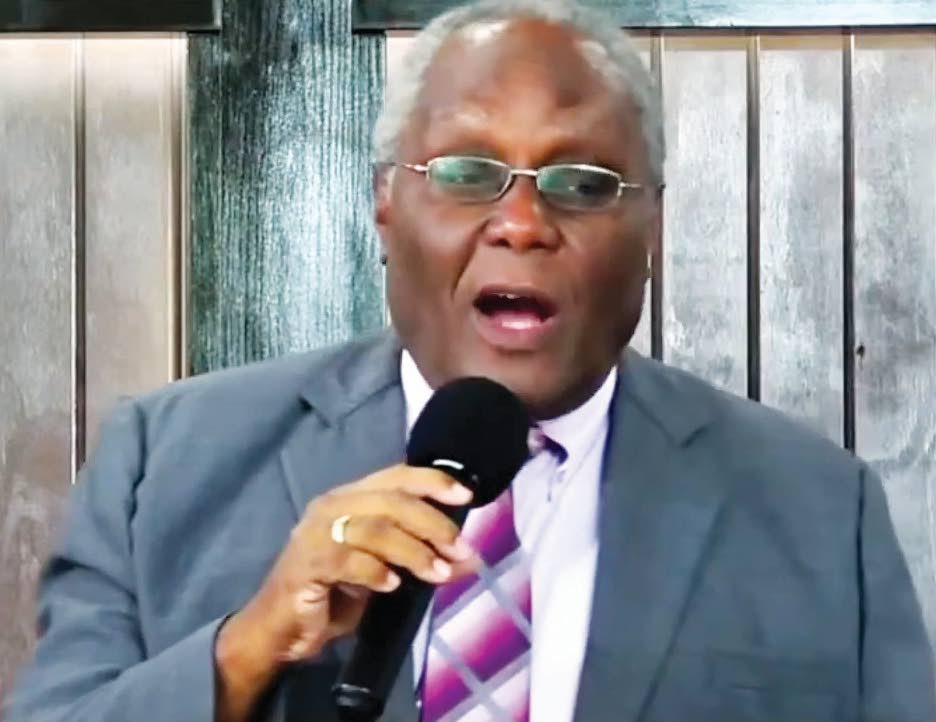
Jamaica Coalition for a Healthy Society (JCHS) President Dr Wayne West has described as ridiculous and devoid of reason Tuesday’s unanimous ruling by the Judicial Committee of the United Kingdom Privy Council favouring a challenge brought by Jason Jones against laws criminalising consensual same-sex relations between adults in Trinidad and Tobago.
According to West, if the ruling is used as a precedent, it will result in chaos for Caribbean societies.
Jones, in capping a long-running legal battle, had gone to the Privy Council seeking declarations that sections 13 and 16 of Trinidad’s Sexual Offences Act (SOA) 1986 infringe his fundamental rights under the Constitution.
Section 13 of the Act prohibits “buggery” while Section 16 prohibits “sex acts” other than sexual intercourse. Section 16 makes an exception to this prohibition for sex acts carried out in private between a male and a female who are both over the age of 16 and consent to the act.
In its ruling handed down on November 10, the Privy Council allowed the appeal by Jones, a gay man, and dismissed a cross-appeal by Trinidad’s attorney general.
The court held that Sections 13 and 16 of the SOA 1986 infringed Jones’ fundamental rights, “and must be interpreted subject to the Constitution so as to make it clear that they do not apply to criminalise private, consensual sexual relations between adults of the same sex”.
On Wednesday, West told the Jamaica Observer that the JCHS will be examining the ruling further but he provided his initial reaction.
“Whereas we in the our group and in the Church recognise the value of the rule of law, we will be speaking to this because this is really very silly, and we can’t afford to let our societies follow what the British are doing at the moment
— running their societies based on desire and passion rather than reason and design and purpose.
“I would say that the concept of a so-called right to buggery causes one to consider what is the philosophical basis for such a right, and also how does such a right come about in the context of the fact that the universe is designed and it has purpose… men and women are designed in a particular way with purpose to reproduce. We don’t drink coffee with our nostrils; we drink coffee with our mouths,” West argued.
“Many years ago [Greek philosopher] Aristotle said that ‘Law is reason, free of passion’… clearly, the [ruling] that the Privy Council made is all about passion because it does not entertain design and purpose in the natural order of the universe at all, and I think that when you start making law based on passion or desire, you are running down a path of chaos,” West told the Observer.
“You are leading to chaos, and that’s why Aristotle had the sense, the wisdom, to recognise that if you start making law that’s based on passion and free of reason, you are leading your society into chaos, and we see this happening in western societies that are doing that,” added West.
Jason Jones, who took his challenge to Trinidad and Tobago’s laws criminalising consensual same-sex relations between adults to the Judicial Committee of the United Kingdom Privy Council, raises a triumphant fist outside the apex court. (Photo: BBC)
He said an example of the chaos that can emanate is embodied in the events leading up to the 2025 ruling by the UK Supreme Court to settle the legal definition of a woman. “That is how ridiculous it had become, because the buggery law is not about what people do in the privacy of their bedroom, it is about what is going to be law and public policy, the principle that informs law and public policy in the public sphere,” West contended. He urged Jamaica’s Parliament to recognise the Privy Council’s ruling as one free of reason and based on desire. “If we use that as precedent for order in our societies, it’s going to lead to chaos. It’s a matter of time before adults in the society are unable to say what a woman is, and other such ridiculous things that are happening in places like the UK. So we have to put that aside,” he argued. “We live under the rule of law, and there is a purpose for final courts of appeal. Now, we have to recognise the value of final courts of appeal in the context of the rule of the law, but that doesn’t mean that we are unable to say that a ruling by a final court of appeal is ridiculous… and that’s where I know Parliament must come in, step in, to protect the people,” said West. “It is dicey because we are a constitutional democracy... an act of Parliament can be evaluated by a court that can make a ridiculous ruling that is free of reason, such as the Privy Council has done. But nonetheless, we have to find a way to protect our society from ridiculous concepts, and so that is the role of the Parliament,” added West as he argued that the onus is now on the Parliament to protect Jamaica. The JCHS was one of 10 interested parties who opposed a constitutional challenge to Jamaica’s anti-sodomy law by gay rights activist Maurice Tomlinson. In 2023 the Constitutional Court ruled that the savings law clause in Jamaica’s Charter of Rights bars the courts from enquiring into whether three provisions under the country’s sex offence laws breach the constitutional rights of homosexuals. As such, the court said that the matter is “for Parliament and not the courts to provide the remedy so that the laws can be opened to scrutiny”. Sections 13(12) and 18 of the Jamaican Charter of Rights and Freedoms — which in 2011 repealed and replaced the Bill of Rights chapter of the Jamaican Constitution — immunise from constitutional challenge, existing laws that criminalise sexual relations between men and preclude legal recognition of homosexual unions, respectively. Tomlinson, a married Jamaican who lives in Canada but frequents the island, in 2015 filed a claim in the Supreme Court challenging the constitutionality of sections 76, 77 and 79 of the 1864 Offences Against the Person Act, contending that criminalising homosexuality amounts to breaches of the rights guaranteed to him by the constitution while further alienating and driving members of the LGBTQ community underground. He was opposed by the Government and the 10 church groups who argued that the court has no jurisdiction to embark on that enquiry because of the savings law clause.
