‘Rogue department’
Originally published by Jamaica Observer Read the original
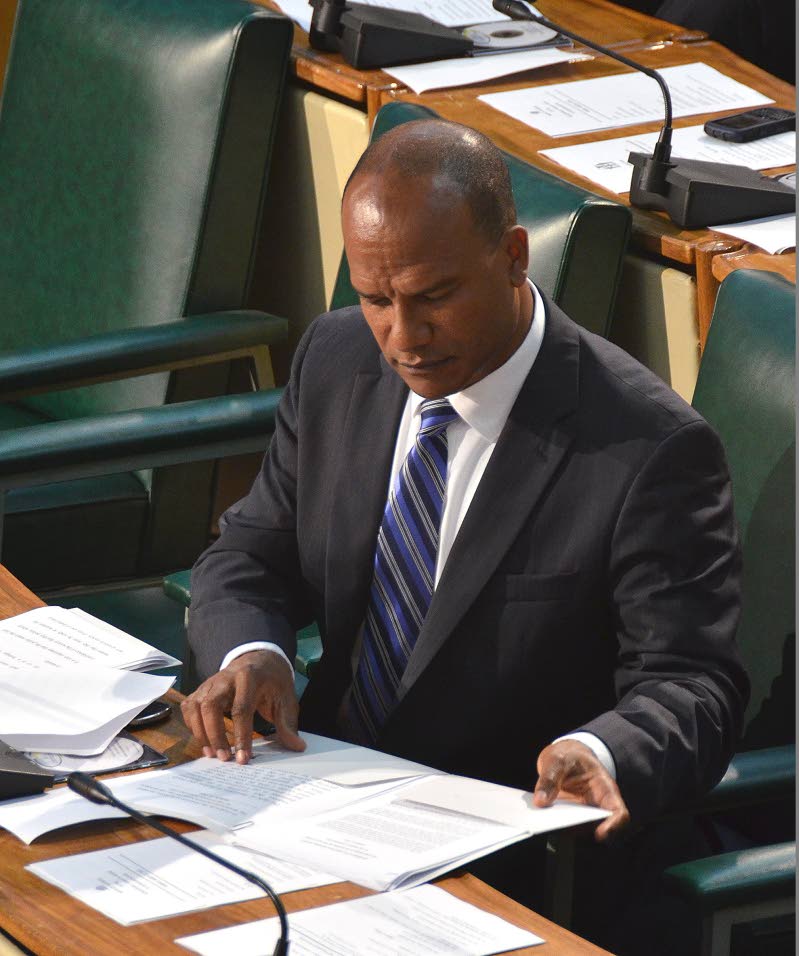
The newly established Ministry of Mining and Geology has come under fire over the failures of its predecessor, the Mines and Geology Division, which was accused of operating like a “rogue department”. This amid revelations that mining companies owed US$13.7 million in penalties for failing to rehabilitate mined-out land, while operators continued working after their licences had expired.
The criticism came from Member of Parliament for Manchester Southern Peter Bunting during Tuesday’s Public Accounts Committee (PAC) meeting, where officials were questioned about the division’s handling of licensing, enforcement and rehabilitation obligations.
Bunting said the division appeared to have operated without proper oversight, allowing serious breaches to go unchecked while failing to collect money owed to the State and protect communities affected by mining.
“It must have been just a hustle. But yet, the hundreds of quarries that they were supposed to be monitoring, they didn’t do effectively… it just seems like this department has been a rogue department… on a frolic of its own. Meaningful enforcement that we rely on [it] to do to protect the communities, to protect the environment for future generations, nobody can answer why these things weren’t done,” Bunting said.
The committee was examining a July 2026 performance audit by the Auditor General’s Department, which found serious weaknesses in the division’s monitoring of mining and quarrying activities.
The audit found that one mining operator continued working for approximately six years after its mining lease expired, while six quarry operators continued operating after their licences had expired. Five of the quarry operators submitted renewal applications between 30 and about 607 days after their licences had expired, while one did not submit an application.
Deputy Commissioner of Mines Stacey Plummer told the committee that the division had not consistently taken enforcement action against operators in such circumstances.
“In many instances I think it’s just working with them to get them legal again. Because in many instances, because of the other discussions we’ve also had, there’s a challenge in getting the renewal done. So the renewal is not timely,” she said.
Commissioner of Mines Roy Fitzgerald Nicholson acknowledged that the division’s previous system for monitoring licence expiry dates was partly digital and partly paper-based, with no automatic reminder to alert officials when a licence was approaching its expiry date.
“There was nothing in place to trigger; it was more of a manual thing where we look at the licence,” he told the committee.
Officials said they are now developing a central database to track licences and provide reminders ahead of their expiry dates.
However, the committee’s sharpest concerns centred on the division’s failure to enforce rehabilitation obligations and collect penalties from mining companies.
The audit found that, as at December 2025, three mining companies owed a combined US$13.7 million in penalties for failing to rehabilitate 264.14 hectares of mined-out land. One company accounted for 169.68 hectares or 64 per cent of the affected land, and US$9.89 million, representing 72 per cent of the total amount.
The US$13.7 million included an original obligation of US$7.9 million, with the balance made up of accumulated penalties. The Auditor General also found that the division did not maintain a single, reliable register to track the land requiring rehabilitation and the penalties owed.
Bunting questioned why the division had failed to pursue the money, particularly when mining companies could leave the country or become insolvent before their obligations were met. He also raised concern that major bauxite operators were not required to provide security deposits or restoration bonds in advance, to protect the Government and affected communities against the cost of restoring mined-out land.
Plummer explained that the exemption applied to bauxite companies under the Bauxite and Alumina Industries (Special Provisions) Act, which the division interpreted as removing their obligation to provide security for rehabilitation costs. Smaller, non-bauxite mining operations, however, were required to provide restoration bonds before receiving licences.
Nicholson confirmed that security deposits or letters of guarantee were not in place for bauxite mining operations. Bunting argued that this left the country exposed, particularly when companies stopped operating without completing the required rehabilitation.
“If a new operator comes, they’re not going to accept all the liabilities of the previous operator. So, at best, you might get some tiny percentage of what was owed in terms of restarting,” he argued.
He said the Government risked being left to shoulder the cost of restoring damaged land, despite the companies having earned revenue from mining.
The committee also questioned why the division had not made stronger efforts to collect the penalties, some of which had been accumulating since 2008.
Permanent secretary (PS) in the Ministry of Mining and Geology Darlene Morrison said she was unable to identify anyone who had decided against pursuing the money, suggesting that the collection efforts had simply not been properly followed through.
“It appears to have just happened that they did not properly pursue collection,” she said.
Robinson was particularly critical of the division’s failure to maintain reliable financial records and follow up on money owed to the Government. He questioned how officials could allow significant sums to remain outstanding without knowing precisely what was due or taking the necessary steps to collect it.
“Commissioner of Mines, I’m not really hard on the PS because she just came here. But I’m going to tell you the truth. As I said at the beginning, I don’t understand what was going on at this place. I don’t! Because the things we are talking about are basic. Basic!” Robinson thundered.
“I don’t want to use the term patty shop because patty shops are big businesses and proper businesses. But even a corner shop run better than this… Because they know who they trust things to, and they know who to collect from. We have millions of dollars out there, we don’t even know how much is owed. We’re not enforcing it to know how much we must collect. It can’t be acceptable,” he added.
The audit also found that the division did not consistently keep accurate records of royalty payments and quarry taxes. In March 2026, it identified US$828,000 in unpaid royalty principal and US$2.58 million in interest and penalties owed by two operators for the period January 2019 to December 2025.
Director of Evaluation and Revenue Orvin Artwell explained that the division relied on physical letters from the Bank of Jamaica to confirm royalty payments made into an account held by the Accountant General. Robinson questioned why such an important process still depends on the postal system in 2026.
“This is significant money, and we’re going to say in this day and age, it’s a physical letter we’re depending on to know whether the company meets its financial obligations. That can’t be right,” Robinson lamented.
In response, Morrison said the issue is being addressed.
