Seiveright wants crackdown on fake Jamaican craft items
Originally published by Jamaica Observer Read the original
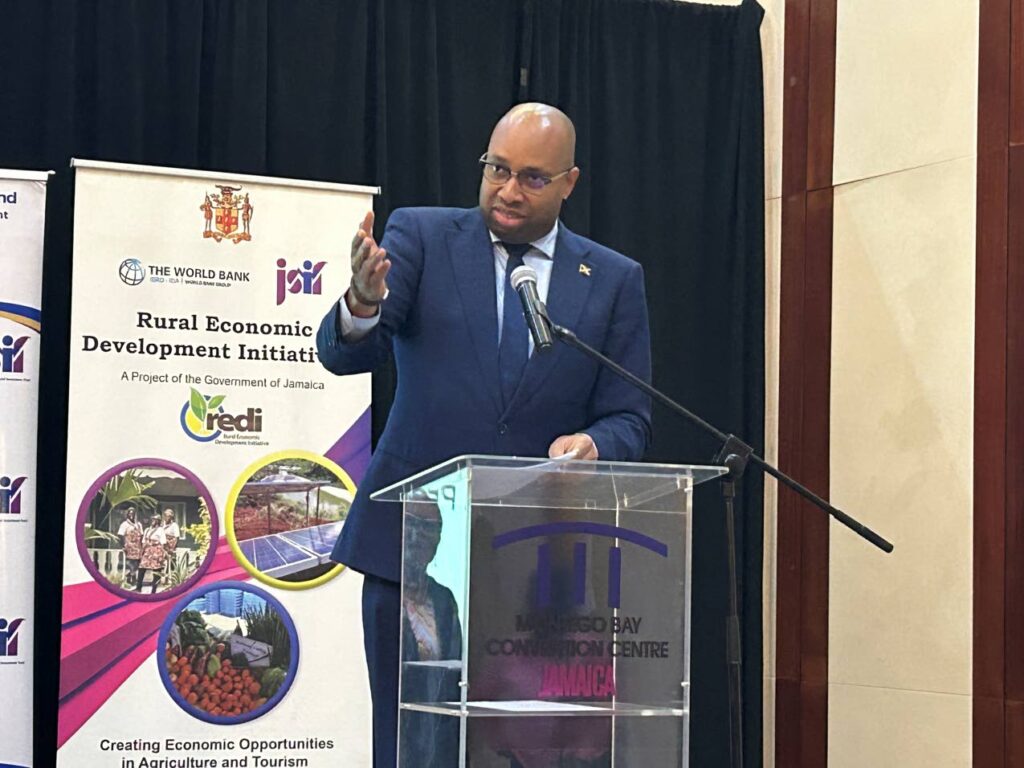
MONTEGO BAY, St James — Government minister Delano Seiveright is demanding stronger protection for the country’s craft producers, warning that imported products masquerading as Jamaican are undermining local artisans, businesses and livelihoods.
“Our artisans should not have to compete unfairly against imported products that imitate Jamaican culture, symbols, and designs and are then sold to visitors as Jamaican,” argued Seiveright, who is the minister of state in the Ministry of Industry, Investment and Commerce as well as chairman of the National Craft Council .
“When a visitor buys Jamaican craft, we want more of that money staying in Jamaica, supporting Jamaican hands and Jamaican families,” he added.
Seiveright was speaking Thursday at Montego Bay Convention Centre as he welcomed the signing of a $53.5-million contract for rehabilitation of the Old Fort Craft Market in Montego Bay, a project expected to benefit approximately 156 vendors.
He noted, however, that while improved infrastructure was important, the sector also needs greater access to markets, financing, training, and protection for locally produced craft.
Seiveright also stressed the importance of the Government treating the craft industry as both an economic and cultural asset because of its contribution to household incomes, employment and Jamaica’s tourism product.
He pointed to recent consultations involving the National Craft Council, Government officials and representatives of the Alliance Craft Traders and Producers Association of Jamaica, during which artisans, vendors, and market operators outlined long-standing challenges.
“I wanted the artisans, vendors, and market operators themselves at the table — speaking for themselves,” he said.
Among the concerns raised were ageing infrastructure, low customer traffic, limited access to hotels and tourism spaces, training, financing, intellectual property protection, marketing, and security.
“These are not abstract policy issues. These issues determine whether somebody goes home at the end of the day with enough money to support their family,” Seiveright said.
He said addressing the challenges would require greater coordination among government ministries and agencies and the private sector.
“We need a joined-up Government approach, working closely with the private sector and, importantly, with the craft stakeholders themselves,” he urged.
Through the National Craft Council, Seiveright said, work is advancing on infrastructure, training and business development, certification, protection of Jamaican craft, access to tourism markets and the finalisation of the revised National Craft Policy.
He said protecting the authenticity of Jamaican craft was particularly important as the country seeks to maximise the economic benefits of tourism.
The entrance to Old Fort Craft Market in Montego Bay. A $53.5-million contract for rehabilitation of the market was signed on Thursday. The project, expected to benefit approximately 156 vendors, is scheduled to begin on September 25 and will rehabilitate vendor shops, walkways, entrances and other essential facilities.
“Through the National Craft Council we have listened. We understand the frustrations; and now the focus must be on implementation,” Seiveright said. “Market by market, issue by issue, we will keep pushing for a stronger, more modern and more sustainable Jamaican craft sector,” he added. During the event, Tourism Minister Edmund Bartlett, in a speech delivered by Tourism Product Development Company (TPDCo) Executive Director Dr Wade Mars, repeated the often-issued challenge for craft vendors to modernise their products and selling practices while preserving the authenticity that attracts visitors. Bartlett urged vendors to move away from generic, mass-produced and imported items and focus instead on original Jamaican products made from local materials such as calabash, bamboo, lignum vitae, and clay. He encouraged them to create functional, travel-friendly products, modernise their designs and packaging, and use the stories behind their work to strengthen their appeal. Bartlett also urged vendors to embrace cashless payments, demonstrate their craft to visitors and replace hard selling with storytelling and hospitality. He encouraged them to utilise support from TPDCo and the Jamaica Business Development Corporation, including design workshops, quality standards and small business grants. The upgrading of the market is also expected to help. According to Jamaica Social Investment Fund (JSIF) Executive Director Omar Sweeney, the Old Fort Craft Market Rehabilitation sub-project will be implemented by JSIF through the second phase of the Rural Economic Development Initiative. The project is being financed by the Government of Jamaica through a loan agreement with the World Bank. Sweeney said the project, scheduled to begin on September 25, will rehabilitate vendor shops, walkways, entrances and other essential facilities. “The objective of this initiative is to create a safer, more accessible and more attractive environment for both vendors and visitors,” Sweeney said. Member of Parliament for St James North Western and Deputy Prime Minister Dr Horace Chang, said the Government wants the upgraded facility to become a major attraction along Montego Bay’s emerging waterfront. “We look forward to the development of Old Fort Craft Market to make it one of the central points on our emerging waterfront. That will be the best place to go in the Caribbean, have a walk, enjoy it,” said Dr Chang who is also Minister of National Security and Peace. President of the Old Fort Craft Market Marylin Falconer welcomed the rehabilitation project. “This is a great day for us. We appreciate it. We have waited a long time for it,” she told the media.