SLOW RESPONSE
Originally published by Jamaica Observer Read the original
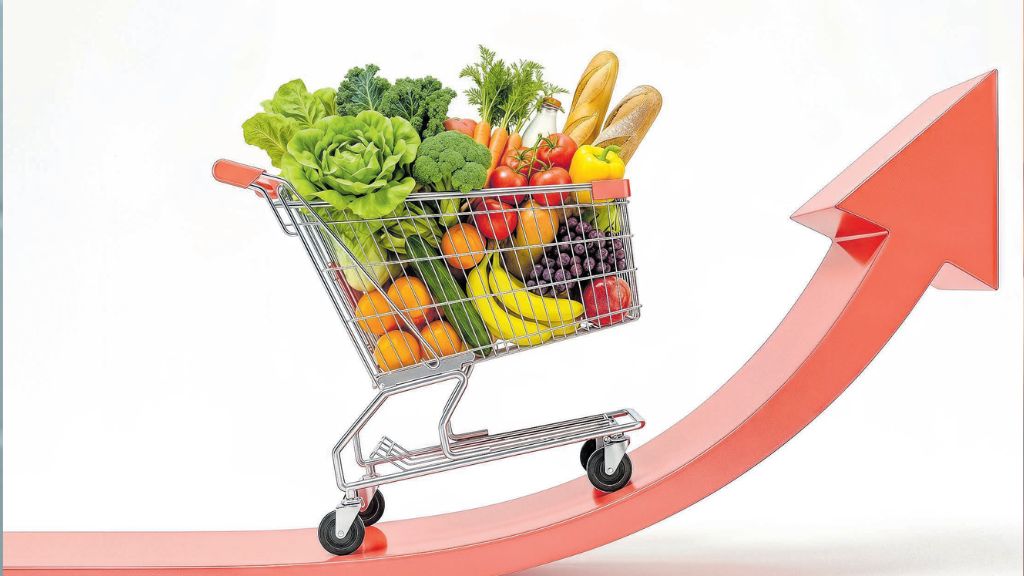
BANK of Jamaica (BOJ) researchers are questioning whether policymakers react too slowly when global food costs surge, after finding that increases tend to last longer but draw a slower response than oil price shocks.
The finding comes ahead of the BOJ’s next monetary policy decision on September 28, with inflation at 7.9 per cent in August, above the central bank’s four to six per cent target range.
The study, prepared by BOJ economists Calvin Grant, Ashaud Shirley, and Reneisha Craig, looked at how changes in global food, oil and alumina prices affect inflation, economic activity, interest rates and the exchange rate in Jamaica. It used quarterly data from June 2000 to March 2025.
The researchers found that when oil prices jump, monetary conditions tend to tighten sooner. Food price shocks, however, are more likely to be allowed more time to work through the economy before a stronger response comes.
For instance, after four quarters, a one-percentage-point food-price shock was associated with a small decline in the real interest rate, while the same-sized oil shock was associated with a small increase. The researchers said this suggests monetary authorities may initially choose to “look through” food price shocks.
In simple terms, interest rates may not rise as quickly as inflation when food prices start climbing, leaving monetary conditions relatively easy even as price pressures build.
That would matter less if food price increases faded quickly. But the study, which the authors cautioned does not necessarily represent BOJ management or its board, found the opposite.

The BOJ Monetary Policy Committee meets again on September 28, with new research pointing to a slower initial response to food-price shocks than to oil.
After four quarters, a one-percentage-point shock to global food prices produced a cumulative increase of about 0.95 percentage points in Jamaica’s quarter-on-quarter annualised inflation. The comparable increase was 0.21 percentage points for oil and 0.14 percentage points for alumina. Even after eight to 12 quarters, the effect from food remained much larger than the others, at roughly 0.9 to one percentage point, compared with 0.2 to 0.3 percentage points for oil and less than 0.1 percentage point for alumina. “The evidence shows Jamaica’s monetary response differs across commodity shocks and sometimes is misaligned with their relative persistence: oil shocks prompt faster tightening, while more persistent external food shocks initially face accommodative real rates,” the researchers said. The issue is especially significant in Jamaica, where food accounts for about 33.3 per cent of the consumer price index basket, compared with approximately 14 per cent in the United States. Processed food, which is more directly exposed to imported prices, makes up about 27.2 per cent, while energy and transport-related items account for a combined 16.8 per cent.A shopper selects groceries from a supermarket aisle. BOJ researchers say global food-price shocks tend to have a larger and more persistent effect on inflation than oil, even though the policy response is initially slower. (Photo: Garfield Robinson)
The study found that food becomes a bigger driver of inflation the longer the shock lasts. By the end of the near-term period examined, global food price shocks accounted for 21.8 per cent of the variation in domestic headline inflation, compared with 7.6 per cent for oil and 2.3 per cent for alumina. The researchers described food as the “single most important external driver of inflation uncertainty”. Still, oil has the quicker initial effect. On impact, a one-percentage-point oil price shock raises domestic inflation by 0.05 percentage points, compared with 0.02 percentage points for food. The researchers said food can take longer to show up fully in local prices because distributors and producers may absorb some of the increase before passing it on to consumers. Once those higher costs begin filtering through, however, the effects tend to last much longer.
The issue is particularly timely as oil prices remain volatile. Brent crude moved above US$100 a barrel earlier this month as supply concerns intensified in the Middle East, although prices have since eased somewhat. At the same time, local inflation has been pushed higher by rising food prices, with Statin reporting food as the main driver of the increase in August.
The study suggests that those two pressures do not affect Jamaica in the same way and may not require the same response.
Further, the researchers argue that monetary policy should take more account of what is driving inflation instead of treating all commodity shocks alike.
“A refined policy reaction function could formally test whether policy should vary with the source of inflation,” they said.
The paper also found that global food price shocks affect more than what consumers pay at the supermarket. By the eighth quarter, they accounted for about 9.2 per cent of variation in Jamaica’s output gap, compared with 5.7 per cent for oil and one per cent for alumina.
“External food price shocks explain 9.2 per cent by the eighth quarter, making them the most important commodity price driver of real activity,” the researchers said. Food shocks also accounted for 17.3 per cent of variation in the domestic real interest rate gap, compared with 5.1 per cent for oil.
The authors ultimately argue that monetary policy should distinguish more clearly between different types of commodity shocks rather than treating commodity-driven inflation as a single problem.