T&T Gov’t defends constitutionality of new crime legislation
Originally published by Jamaica Observer Read the original
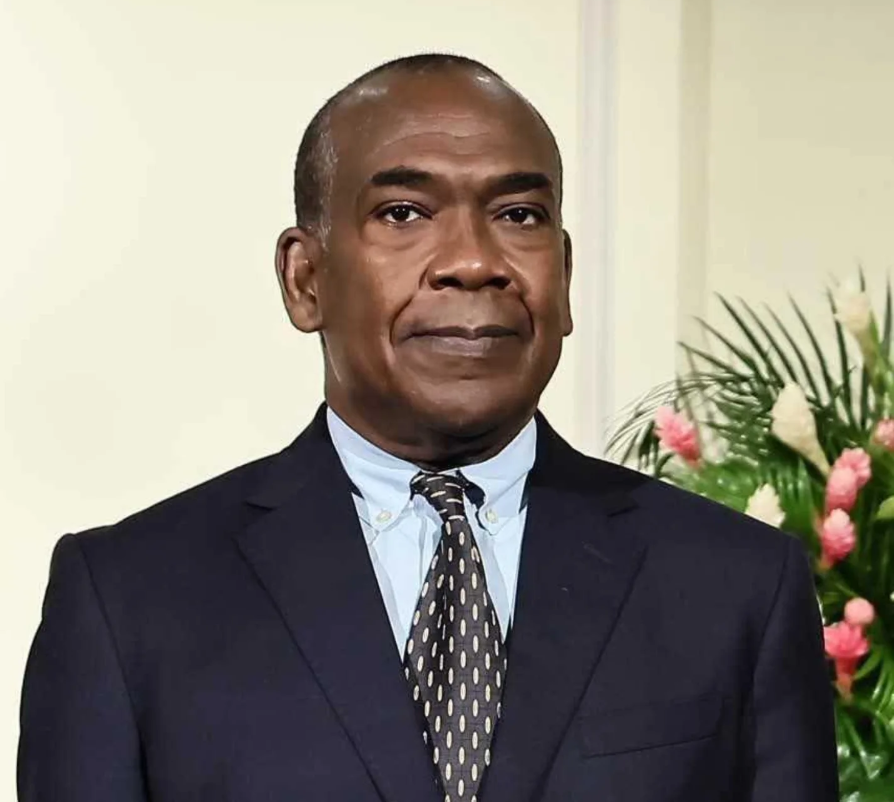
PORT OF SPAIN, Trinidad (CMC) – The Trinidad and Tobago government is defending the constitutionality of a new crime legislation it piloted Friday, one day after a state of emergency (SoE) ended.
Attorney General John Jeremie, who piloted the Special Operations Bill, told Parliament that the constitutionality of the bill is based on the balance that it strikes between the enhanced security powers granted to the services and the protection of fundamental rights and the rule of law.
“It allows for temporary security measures, cordons and curfews, to be established or declared in closed areas, but there is a large measure of oversight,” Jeremie said, noting that “while the bill gives security forces special powers, warrantless searches under specific circumstances, it is designed to be a limited and temporary measure and it is distinct from a state of emergency”
Jeremie said that the legislation does not grant powers equivalent to a SoE and that the Kamla Persad-Bissessar administration has e examined the constitutionality of limited states of emergency in Jamaica and in Belize.
Jeremie said that in both of those cases, the courts held that the declaration of consecutive states of emergency to treat with crime as a normal crime-fighting tool was unconstitutional.
He said in the case of Jamaica, the court held that the government had breached the principle of separation of powers by issuing consecutive states of emergency in late 2022.
“Now, this is important.The government in Jamaica did that without seeking parliamentary approval for extensions beyond 14 days as provided for in the constitution. We have done exactly that in this jurisdiction. We have come to this Parliament to seek extensions as required by law.
“The court found in the Jamaica case that that failure allowed the executive branch unlawfully to use a power reserved for parliament, thus making the declarations void,” Jeremie said adding that in the case from Belize, the Court of Appeal struck down the declaration of the SoE for reasons which “are not on point with ours.
“In any event, what is before us today is not a state of emergency.It is a piece of legislation. This piece of legislation is in force in both Jamaica and in St. Lucia. In both of those countries, the legislation has not been challenged, has not been ruled to be unconstitutional”
The government in January failed to get parliamentary aproval for the Zones of Special Operations (ZOSOs) which had faced criticism over human rights concerns and safeguards surrounding the proposed powers. Under the previous bill, the Prime Minister would have been able to designate communities as Zones of Special Operations, with joint police and Defence Force operations permitted within those areas.
Jeremie said that the government accepts that the new legislation “might interfere with the right of the individual to liberty and to the enjoyment of property” under the Constitution, as well as the right of the individual to respect his private and family life and the freedom of movement.
“Our view is that any such infringement is reasonable and proportionate in light of the cases of Suraj and Surat. In Suraj…the Privy Council upheld the constitutionality of the COVID-19 regulations and they went on to provide a definitive ruling on the interpretation of section 13 and the special majority requirement.”
But Jeremie said that the Privy Council explained that where legislation infringes fundamental rights and they are enacted by a simple majority, “as we shall do today, the threshold for justifying the limitation is higher on the state.
“On the other hand, where legislation is passed with a special majority under section 13, the court will afford greater deference to the balance struck by Parliament between the restriction of an individual’s fundamental rights and the interests of the whole community.”
Jeremie said importantly, the Privy Council also acknowledged that judges are not equipped to make certain decisions which are better suited to be made by elected officials who act under the advice of technocrats and experts who are based on data and evidence.
“This bill contains numerous safeguards to ensure that it is both reasonable and proportionate,” he said, adding that there is provision for the training of police officers and members of the Defence Force who are to operate in a district.
Jeremie among the safeguards is the ability to acquire permits in spite of the cordons and curfews, as well as limitations and protections afforded to citizens during a search and seizure.
“If you look at clause 15, sub clause 2, of course there is judicial scrutiny for the arrest or detention of citizens in a closed area. And in clause 21, there is provision for the use of body-worn cameras during the conduct of a special operation in a closed area.”
Jeremie said that at the heart of the bill is the government’s “resolve to maintain a safe country for all of our citizens” reiterating that this legislation is about the rights of the people who have borne the burden of violent crime.
“Grieving parents, families terrorised in their homes, businesses facing extortion and young persons threatened by gangs. The government intends to deal with those problems, and the government will accept its responsibility to deal frontally with the gangs which are in our midst,” Jeremie told legislators.