Unfair playing field
Originally published by Jamaica Observer Read the original
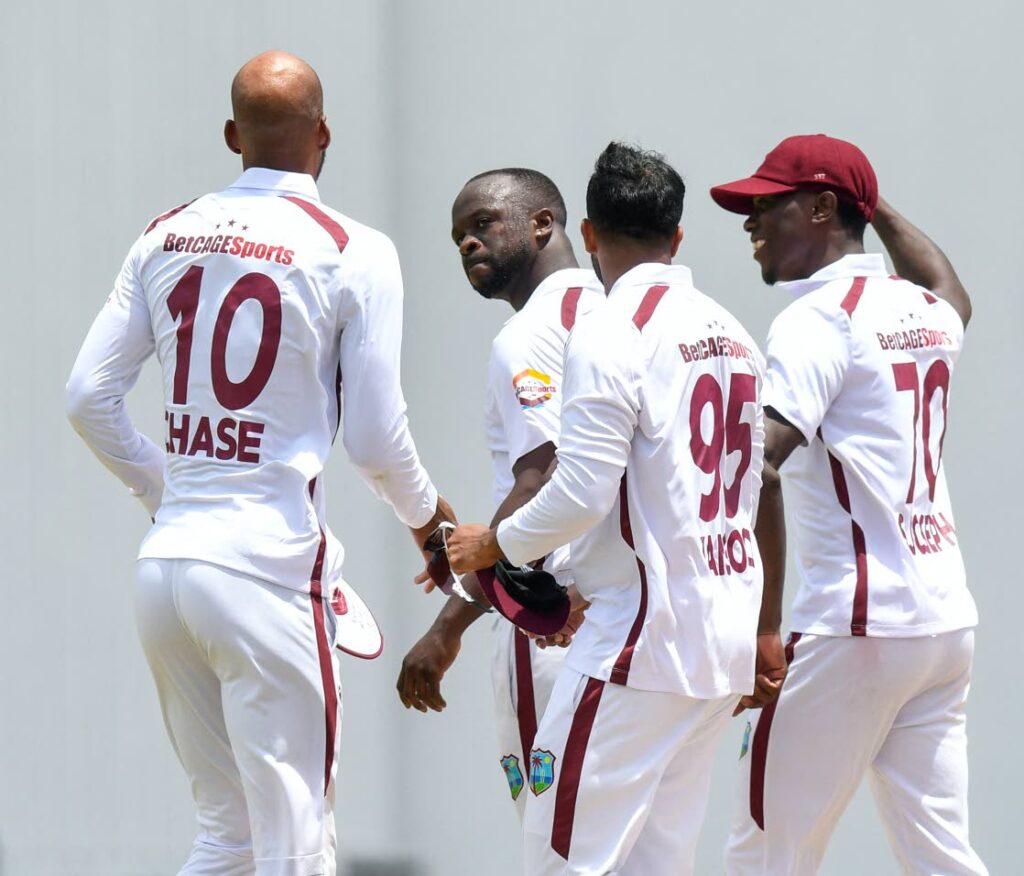
With Cricket West Indies (CWI) set to earn nothing from the men’s team’s tour of India, CWI CEO, Jamaica’s Chris Dehring, is urging the International Cricket Council (ICC) to reconsider its revenue distribution model which he believes is placing further strain on cricket in the Caribbean.
CWI has been under the global eye over the past month after revealing their significant financial struggles which has resulted in an array of changes in the set-up, highlighted by the 25 per cent reduction in retainer fees for internationally contracted players.
The deadline for the players to accept the contracts was last week and the names of those who have done so are expected to be revealed in the coming days. The Jamaica Observer reported earlier this month that Jamaicans Rovman Powell, John Campbell, and Vitel Lawes are among the players who were offered international contracts.
The trio were part of the West Indies who recently completed its white ball tour of India. The Caribbean side recovered from losing the One-Day International (ODI) series 1-2 by earning a 2-2 draw in the five-match Twenty20 (T20) series which ended on Saturday.
While it was deemed a thrilling contest on the pitch, Dehring revealed a darker reality of it, with CWI set to receive no financial benefit from the eight-match series.
“That is one of the great anomalies of world cricket where we play against India in India and the West Indies cricket gets nothing when a match that probably has a value and a revenue generation capacity of probably 20, 30 million dollars a series and we’re getting nothing,” he told The Scoop.
West Indies Captain Shai Hope (left) and John Campbell speak during the second One Day International cricket match against India at Barsapara Cricket Stadium in Guwahati on September 30, 2026. Photo: AFP
Dehring’s comments come days after fellow Jamaican and former CWI President Dave Cameron blasted the ICC’s revenue distribution model, which he believes unfairly favours cricket’s wealthiest nations, particularly India. Under the ICC’s 2024-2027 financial distribution model, India receives a reported 38.5 per cent of the governing body’s annual revenue believed to be US $600 million, compared with 4.58 per cent for Cricket West Indies (CWI), while the host board generally retains the domestic broadcast revenue generated by bilateral series. While Cameron, who served as CWI president from 2013-2019, has raised concerns about the financial imbalance during his stint, Dehring believes the roots of the problem stretch back nearly three decades to a 1997 vote by ICC members.West Indies batsman Sherfane Rutherford (right) plays a shot as India wicketkeeper Sanju Samson looks on during the second Twenty20 International cricket match at JSCA International Stadium Complex in Ranchi on October 9, 2026. (Photo: AFP)
“West Indies were very attractive as a team and everybody wanted us to tour, and so we would be paid a touring fee and essentially that touring fee was more than what we could make in the Caribbean hosting series, so we would make our revenues from the international tours that we would take to Australia, India, and England and that revenue helped to sustain West Indies cricket,” he said. “[But] all the countries recognised where television rights were going and they decided, ‘well, we don’t want to pay anybody our domestic television rights so we will keep it all to ourselves’. So India gets to keep the revenues based on a billion and a half people and the West Indies gets to keep all the revenues that it can generate on Antigua that has 100,000 people or St Kitts that has 30,000 people. It was just palpably unfair and we were outvoted nine to one by the member countries of the ICC, and from that moment, and I said it then, when that vote was taken, you’ve just signed the demise of West Indies cricket because you’ve taken away our main earning source.”Chris Dehring, Cricket West Indies chief executive officer Photo: CWI Media
Dehring believes the current financial model does not account for the economic realities of each member nation, particularly the varying costs of hosting international cricket. “Nobody has done any kind of economic study to understand or appreciate that to host a Test match in the Caribbean is far more expensive than to hold a Test match in England or in India simply because of the logistical costs which are all well documented,” he said. “When ECB [England and Wales Cricket Board] decides to hold a Test match at Lord’s one week and then the following week at Manchester, the ECB doesn’t have to move 21 tons of television equipment, TV crew, teams, and so on and fly them all up to Manchester — everybody goes on a bus or a train, and it’s maybe a £1,200 expenditure. For us, it’s a US$250,000 to $300,000 expenditure because we have to charter planes because we don’t have the sort of regular air schedule that we can simply use regular scheduled flights so we have to charter flights in order to meet the tour dates and so on. So it’s a totally different economic formula. I talk about a sort of purchasing power parity [and] there must be a cricketing equivalent to that in terms of the economic costs of hosting these tournaments or matches under the Future Tours programme that needs to be taken into consideration.” Despite his criticism of the ICC’s distribution system, Dehring doesn’t believe CWI can afford to wait for a change in approach. “We’re not going to rely on the ICC to change its financial distribution model, [although it] obviously would go a long way in solving the issue,” he said. “We have started on these initiatives to grow the game and grow our commercial revenues from outside of the ICC distribution, outside of bilateral tours, which we’ve seen now the cricket is evolving in that way and television rights isn’t what it used to be for bilateral tours, but we’re not going to rely on the ICC to change their distribution model even though we know it should be done.”

