Unite or watch others profit, Patterson tells Africa and Caribbean
Originally published by Jamaica Observer Read the original
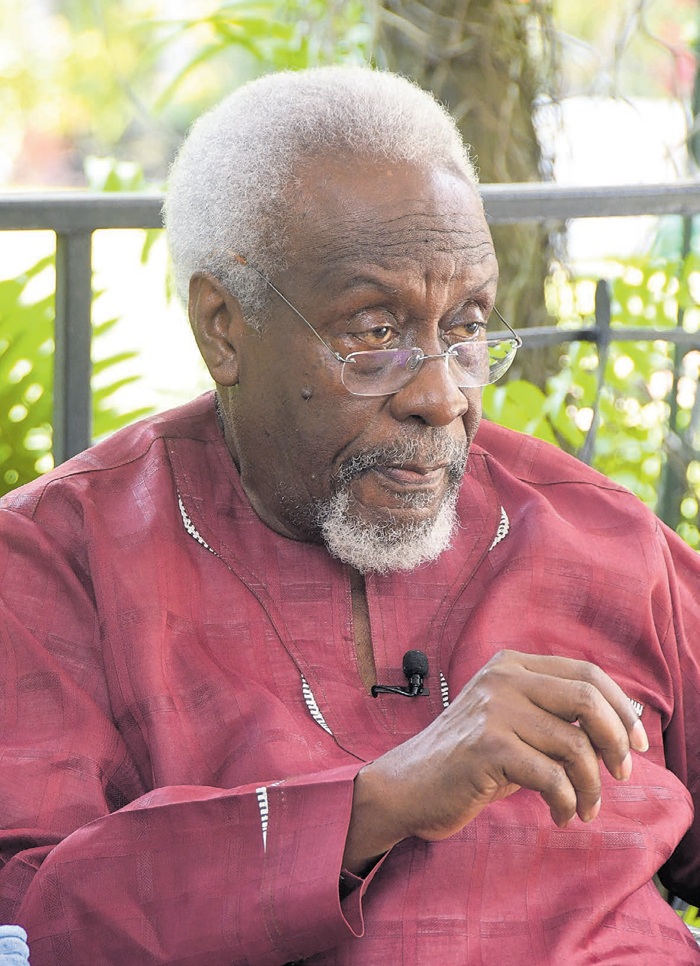
ACCRA, Ghana — Former Jamaican Prime Minister PJ Patterson has issued a blunt challenge to Africa, the Caribbean, and the worldwide African diaspora: stop leaning on goodwill and start organising power, or watch others keep capturing the value of African resources, labour and talent in a world where “right is replaced by might”.
Addressing the Third Africa in Transition Conference in Accra on October 8, Patterson, statesman-in-residence at The PJ Patterson Institute for Africa-Caribbean Advocacy at The University of the West Indies, called for a Global Africa Coalition uniting governments, regional organisations, financial institutions, universities, businesses, civil society, cultural institutions, youth and diaspora communities behind a single practical programme.
“Above all, in a turbulent world, unity is about more than historical kinship — it is power.” Patterson pointed to March 2026 when the United Nations General Assembly, in a resolution spearheaded by Ghana, declared the trafficking and chattel enslavement of Africans the gravest crime against humanity.
The measure passed with 123 votes in favour, 52 abstentions and three against — the United States, Israel and Argentina.
“We have not failed to notice those who abstained and those who opposed the resolution backed by 123 member states,” he told delegates, describing the outcome as “the fruit of our own brilliant scholarship, and united diplomatic resolve”.
“The world is bound to respond when there is co-ordinated action by Africa, the Caribbean, the diaspora and our allies,” he said, insisting that the campaign be “vigorously pursued” at the Commonwealth Heads of Government Meeting in Antigua and Barbuda next month and in the capitals of Europe.
The former prime minister warned that the multilateral system on which developing countries relied, “however imperfect, is fracturing”, leaving small and developing states exposed.
“The unequal post-war order is being demolished by a turbulent, hegemonic environment where power increasingly displaces law and right is replaced by might,” he said, arguing that collective action by Global Africa is no longer aspirational but urgent.
Patterson said Africa and the Caribbean’s combined weight are evident in Africa’s critical minerals, agricultural potential and the world’s youngest, fastest-growing population, as well as the Caribbean’s strategic geography, marine resources, sophisticated services and world-renowned cultural industries.
“Our greatest wealth, by far, is our people,” he said, arguing that the future belongs not to nations with physical resources alone but to societies that educate their people, create knowledge, master new technologies and build competitive enterprises.
But he was emphatic that the old bargain must end.
“As artificial intelligence and the knowledge economy reshape power, Africa and the Caribbean cannot remain suppliers of raw materials, labour, data and markets while value is captured elsewhere,” he said.
“We must build the capacity to produce and innovate.” He framed reparatory justice in the same transformative terms, as more than an apology for historical wrongs.
It “must encompass education, health, economic empowerment, technology, cultural restoration and full control by African and African-descendants over our own development”, he insisted.
Culture, he said, is not ornament but economics: African and Caribbean music, literature, film, fashion, sport and cuisine are “a source of jobs and intellectual property, and an instrument of influence”.
Patterson credited Afreximbank’s Caribbean expansion and the AfriCaribbean Trade and Investment Forums with beginning to build “practical infrastructure for a relationship long sustained mainly by goodwill” and urged delegates to design “constitutional machinery that is dynamic, inclusive, and results-driven.” He called for the African Union’s recognition of the diaspora as Africa’s Sixth Region to be “catalysed to become organised power and sustained co-operation”, and said the proposed coalition must link “reparatory justice with development; education with innovation; culture with commerce”.
He also pressed for history to sit at the centre of the project, saying, “Economic emancipation without historical consciousness is unfinished business.
Our responsibility, here and now, is to give that relationship direction and institutional form: To turn affinity into solidarity, solidarity into power, and power into measurable improvements in the lives of our people.” Invoking the slave forts of Ghana’s coast, Patterson said, “As we gather again in Accra, there must be no turning back.
Let us instead embark this time from the gates of no return to recast the African identity from dispossession and displacement towards purpose and power through an inseparable partnership within a formidable Global African Coalition.” The third Africa in Transition Conference, held October 8-10 at the ISSER Conference Facility at the University of Ghana, Legon, in Accra, is organised by the Africa Caribbean Centre for Development, a body registered in both Jamaica and Ghana and chaired by Ian Boxill, professor of Comparative Sociology and Development at The University of the West Indies, Mona.
Under the theme ‘Fostering Transformation of Global Africa through Education, Investment, Innovation, and Partnerships’, the conference brought together scholars, policymakers, entrepreneurs, and civil society practitioners from across Africa, the Caribbean, and the wider diaspora.
