Witness testifies to being paid ‘extra’ during Ruel Reid political campaign
Originally published by Jamaica Observer Read the original
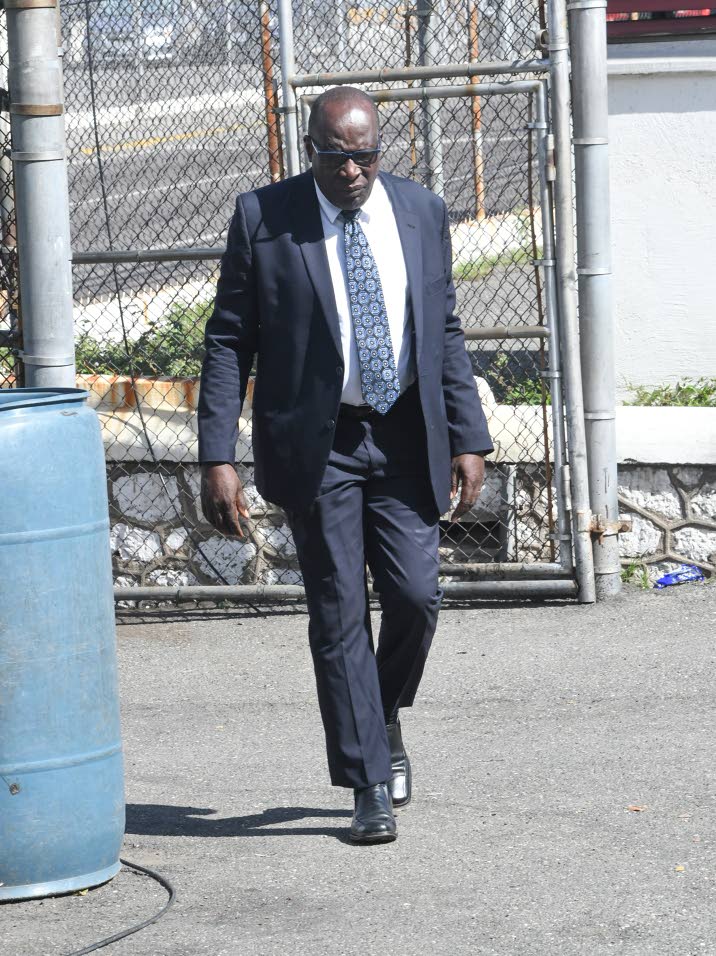
A government employee in service to former Education Minister Ruel Reid testified Wednesday that he was paid extra money, between $30,000 and $330,000, for time spent working while Reid campaigned for a position as Member of Parliament (MP).
That series of payments, as well as who exactly bore responsibility for paying stipends to students engaged in a government programme at Caribbean Maritime University (CMU), were the subjects of testimony in the ongoing fraud trial of Reid and his co-accused when trial resumed at the Kingston and St Andrew Parish Court.
Two witnesses took the stand — one, an employee of the Universal Service Fund who was cross-examined, and the former government employee.
The court heard testimony from the man who had worked closely with Reid, of him spending significant amounts of time daily with the then minister between 2016 and 2019.
After identifying Reid in the courtroom, the witness detailed work trips around Kingston as well as other parishes that the then-minister had undertaken, including, in particular, St Ann.
When questioned by the prosecution on why Reid would have gone to St Ann, the witness told the court that at the time Reid was aspiring to become the Member of Parliament for St Ann North Western and would visit the area for graduations, funerals, etc.
At that time, the witness detailed that his base salary was just over $100,000 per month for work that often saw him putting in extended hours.
The witness testified about a conversation with Reid where the then-senator expressed concern about the long hours the witness and another employee were spending alongside him as he worked towards his aspiration to become MP, indicating that he wanted to assist them with giving him their undivided attention.
“So he said he would speak to the PS [permanent secretary] about assisting us with a stipend,” the witness explained.
He further testified that the stipend, paid directly to his account around eight or nine times, started out at $30,000 before being raised to $60,000, then $100,000, then after looking back at his statement, added that it went up to $120,000.
He also indicated that another one-off payment of $330,000 for use of his vehicle was made.
The witness also testified that he had deposited money on behalf of Reid to different banks.
The USF employee, on the other hand, was grilled by Hugh Wildman, who represents former head of CMU Fritz Pinnock, on an agreement between CMU and the USF regarding the Technology Advancement Programme (TAP) financed by the USF and partly carried out by CMU.
The witness gave testimony that the programme targeted unattached youth, meaning unemployed young people who were out of school, and indicated that CMU was engaged to carry out a three-month teaching component of the course.
She maintained, after several questions from Wildman, that under the agreement there was no provision for stipend or financial support to be provided to students by CMU.
She added that there was, however, a $10,600 weekly stipend to be provided to students in the programme, paid bi-weekly, entirely by the USF.
Wildman suggested that the witness’s response that USF had paid the students was incorrect, to which she disagreed.
The witness testified that in order to be paid, the students would have had to provide their banking information, and acknowledged that not all students in the cohort had bank accounts at the start of the programme.
Wildman asked multiple questions of the witness concerning CMU’s role, if any, in the payment of stipends, questioning whether the school had filled the gap for students who did not have bank accounts at the start of the programme, to which the witness responded, “I do not know if CMU had to fill the gap.”
Wildman went on to query whether the employee knew if CMU had submitted vouchers to the USF for reimbursement for paying stipends to the students, to which she responded, “To my knowledge, CMU did not pay stipends to the students.”
The attorney suggested to the witness that CMU paid a $10,600 stipend to students who were without banking information, an arrangement that only ended after the students were able to provide banking information, to which the witness responded that she had no knowledge of that.
He went on to ask the witness about national coordinators engaged by CMU to assist with the TAP programme, suggesting to her that coordinators paid stipends to the students on behalf of CMU.
Senior Parish Judge Sanchia Burrell intervened initially but eventually allowed Wildman to proceed, putting his suggestion to the witness, to which she said, “I disagree with your suggestion.”
When Wildman suggested to her that the coordinators would submit bills to CMU for repayment of money given to students, the judge intervened, indicating to the witness she did not have to answer.
During re-examination, the prosecution asked the witness whether the students who did not have bank accounts were eventually paid by USF, she responded that once their banking information was shared, USF paid all stipends due to those participants from the beginning of the programme up to when they provided their banking details.
Testimony is expected to continue tomorrow in the matter in which the defendants Reid; Pinnock; Reid’s wife Sharen Reid and daughter Sharelle Reid; and Jamaica Labour Party Councillor Kim Brown Lawrence are accused of participating in a scheme that siphoned off $25 million from the Ministry of Education and the CMU.
